If you’re in the ecommerce game and you sell jewelry, then you know how important good images are. Your potential buyers are considering spending their money on a potentially expensive piece that they can’t touch. They can’t move your piece into the light to see how the gemstone touches it, and they can’t weigh it in their hand. So your visuals have to do all the convincing. Clean and detailed photos promise that luxury. Sloppy, blurry photos, on the other hand, kill conversions in the blink of an eye.
That’s exactly where AI product photography steps in. AI jewelry product photography helps you create polished, high-end visuals faster and cheaper than booking a studio every time a new collection drops. According to industry data, brands using AI-powered product photography workflows have reduced production costs by up to 60%, and it makes sense. They’re speeding up turnaround times hugely. For ecommerce brands juggling constant launches, that’s no small feat.
We’ve compiled this guide on how to use AI for product photography in the jewelry space, how AI editing works, how to grow your catalog, and when to level up beyond AI into full CGI.
Fundamental AI tools for jewelry photography

Before you dive into full AI jewelry product photography workflows, you need to understand the core tool categories you’ll probably be working with. Think of these as the engines behind modern jewelry photography with AI.
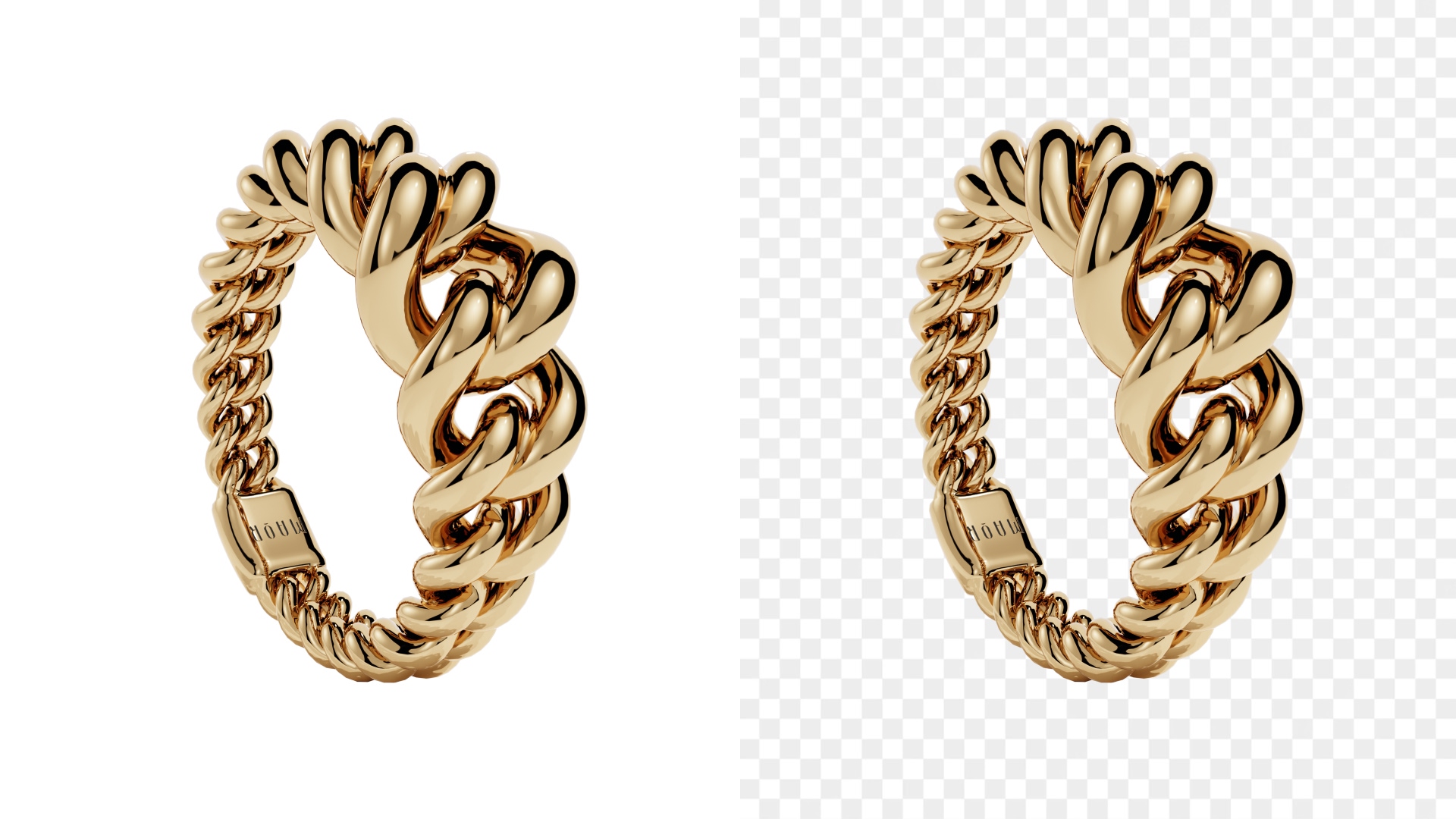
AI background removal tools
These tools do exactly what they advertise: they automatically detect your jewelry piece and remove the background. And they do it with pixel-level precision (the likes of which you probably wouldn’t manage manually). They’re gold (pun intended) for delicate chains, prongs, and all that pesky negative space between gemstones.
Ecommerce product photography always benefits from white backgrounds and clean cutouts. So this sort of tool is worth considering.
AI lighting and reflection optimization tools
Jewelry photography is all about light behavior. It’s light that makes silver, gold, or gems look premium, or shine in a really unique way. AI for product photography can also analyze metals and stones, then adjust highlights, contrast, and reflections to your liking.
Meaning gold keeps its warmth, silver stays crisp, and gemstones retain depth instead of looking flat or blown out.
AI material recognition engines
This is the next great tool when working with jewelry. Advanced AI jewelry product photography systems can identify surface types — polished metal, brushed finishes, pavé settings, so on — and apply tailored enhancement rules. It’s the same logic as with light: you get the enhancement your particular texture needs.
This reduces the risk of over-editing and helps maintain realism (and we can’t stress enough how important that is for premium jewelry images).
AI retouching and imperfection correction tools
It’s virtually impossible to take a close-up shot of a tiny jewelry piece without getting dust, micro-scratches, or minor inconsistencies. AI product photography platforms can detect and clean these automatically. Just make sure you don’t get a fake, “too perfect” look.
AI batch processing and catalog automation tools
When your inventory grows, individual editing becomes unsustainable (which is probably why you’re reading this article?). AI batch tools allow you to process oodles of images with consistent presets. That’s why AI jewelry product photography can be a true operational advantage.
Now, let’s see how to actually make great jewelry photography with AI.
- 3D modeling
- White bg.
- Minimalistic
- Simple prop
- Custom
- 3D modeling
- White bg.
- Minimalistic
- Simple prop
- Custom
How to create stunning jewelry photography with AI
Step 1: Start with a clean base image
Even the smartest AI for product photography needs a solid starting point, and that’s always you. So shoot your jewelry on a simple background with consistent lighting and high resolution. The better your raw image, the better your AI jewelry product photography results will be. Think neutral tones, minimal reflections, and laser focus every time. AI enhances your image, but it can’t turn a blurry afterthought into a miracle hero shot.
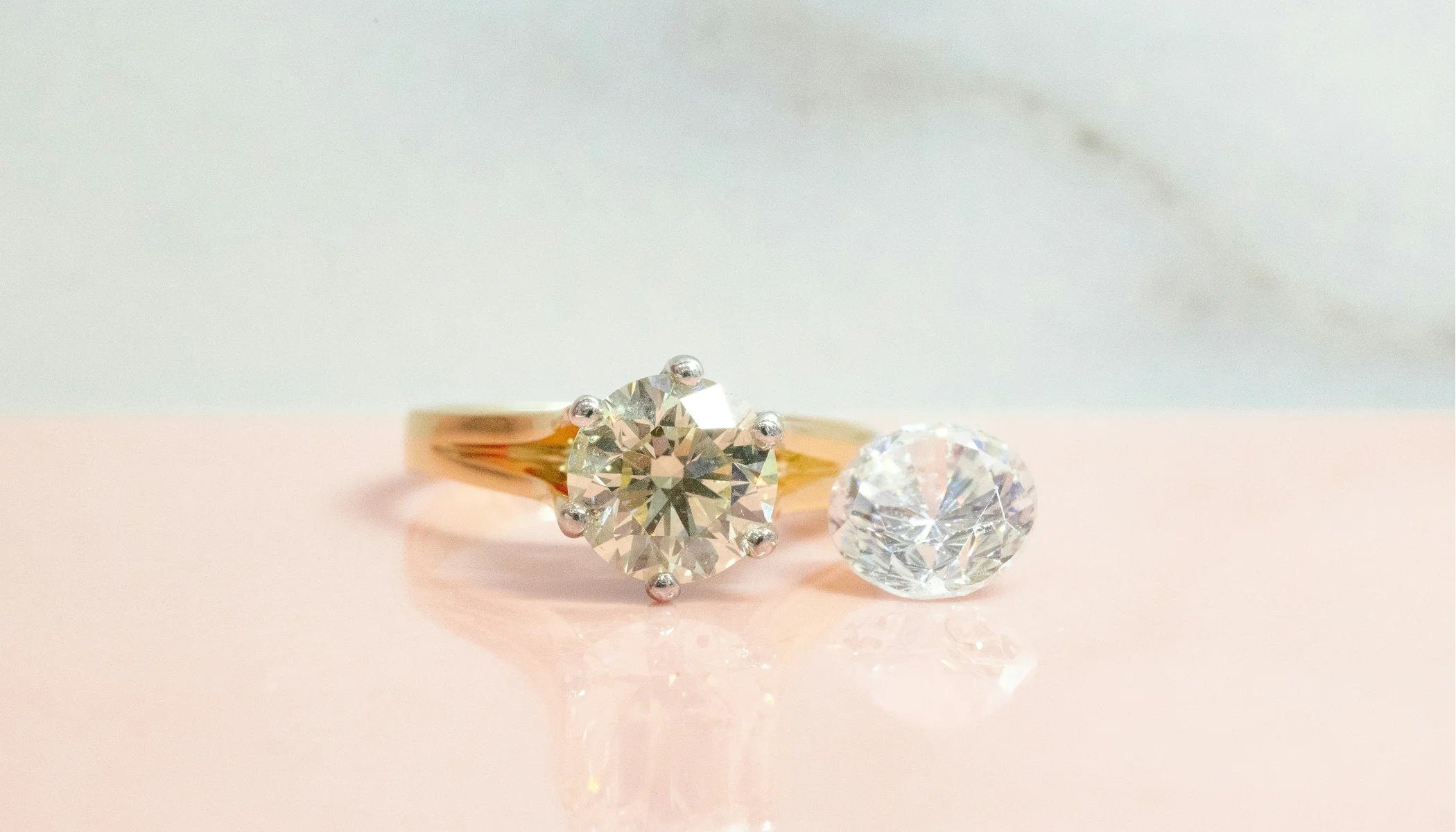
Step 2: Remove and refine the background
This is where you upload your image into an AI product photography tool. Most platforms automatically detect edges, remove the background, and generate a clean cutout (even around tiny prongs and chains). From there, you can replace it with a pure white ecommerce background or generate lifestyle scenes that communicate your style or campaign idea.

Step 3: Enhance lighting and materials
Jewelry photography lives or dies by how metals and stones reflect light — as we already stated above. AI for product photography can automatically adjust highlights, shadows, and contrast based on the materials it detects. And yep, you should 100% think about lighting and materials before you put up any jewelry photos on your platform.
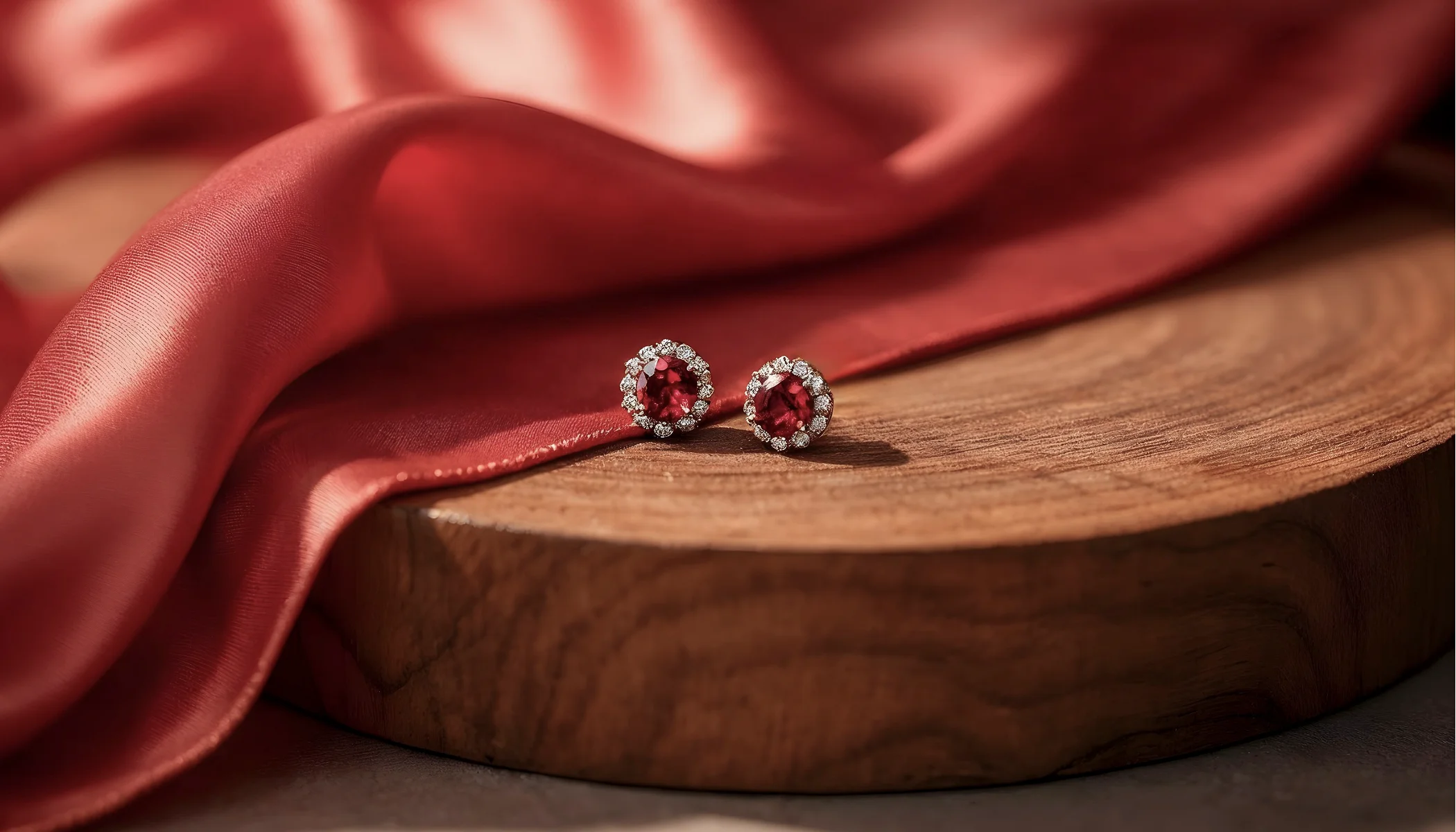
Step 4: Correct color and polish details
AI jewelry product photography tools can refine white balance and remove minor dust or smudges. For premium ecommerce visuals, retouching techniques help achieve cleaner edges, more accurate colors, and a refined final image. You don’t even have to manually select them; any good AI tool should find them and remove them. After this, you can subtly sharpen edges and polish every detail until your image screams premium. But then again, make sure it doesn’t look fake. Sometimes buyers prefer a realistic photo to one that’s been obviously made with AI.
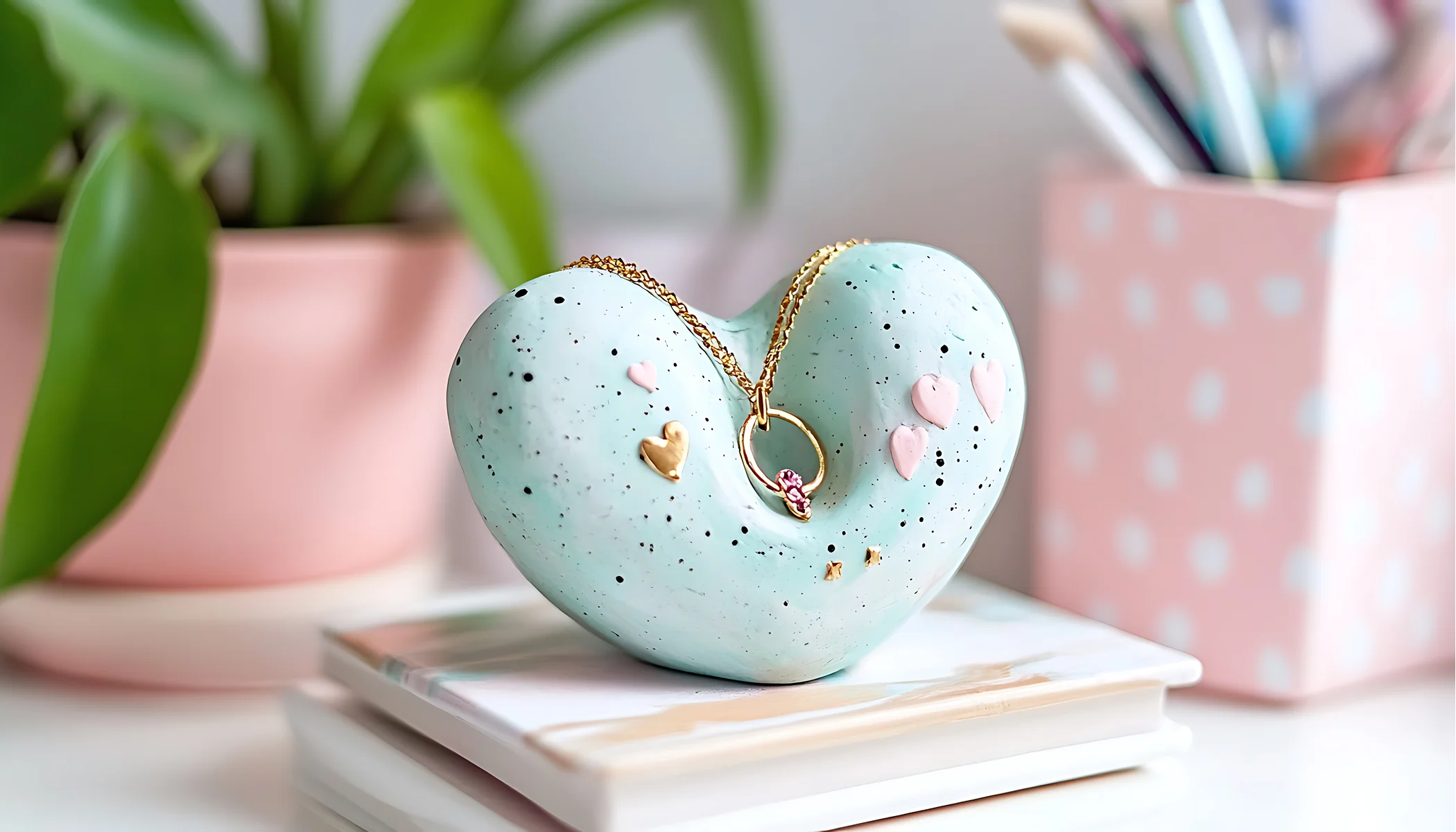
Step 5: Generate variations for marketing
You may need a social media crop or a marketplace-compliant white background. In fact, platform variations are endless. Luckily, AI product photography platforms can auto-generate multiple versions optimized for different ecommerce channels.

AI editing and post-processing for jewelry photography
AI editing has really revolutionized jewelry photography workflows just over the last few years. Instead of spending hours manually masking fine chains or adjusting reflections, AI jewelry product photography tools handle:
- Precise background removal (even for intricate pieces)
- Smart highlight control on metals
- Natural gemstone enhancement without oversaturation
- Batch color correction for entire collections
The magic of AI product photography here is consistency — and you really need this on your platforms to communicate that your brand is serious. You can upload 100 rings and apply the same visual style in minutes. Online shoppers will likely thank you for it.
But here’s the catch: AI works best when guided. If you push enhancements too far, jewelry can start to look synthetic and AI-made. Ironically enough, this pushes buyers away. More on the solution later.
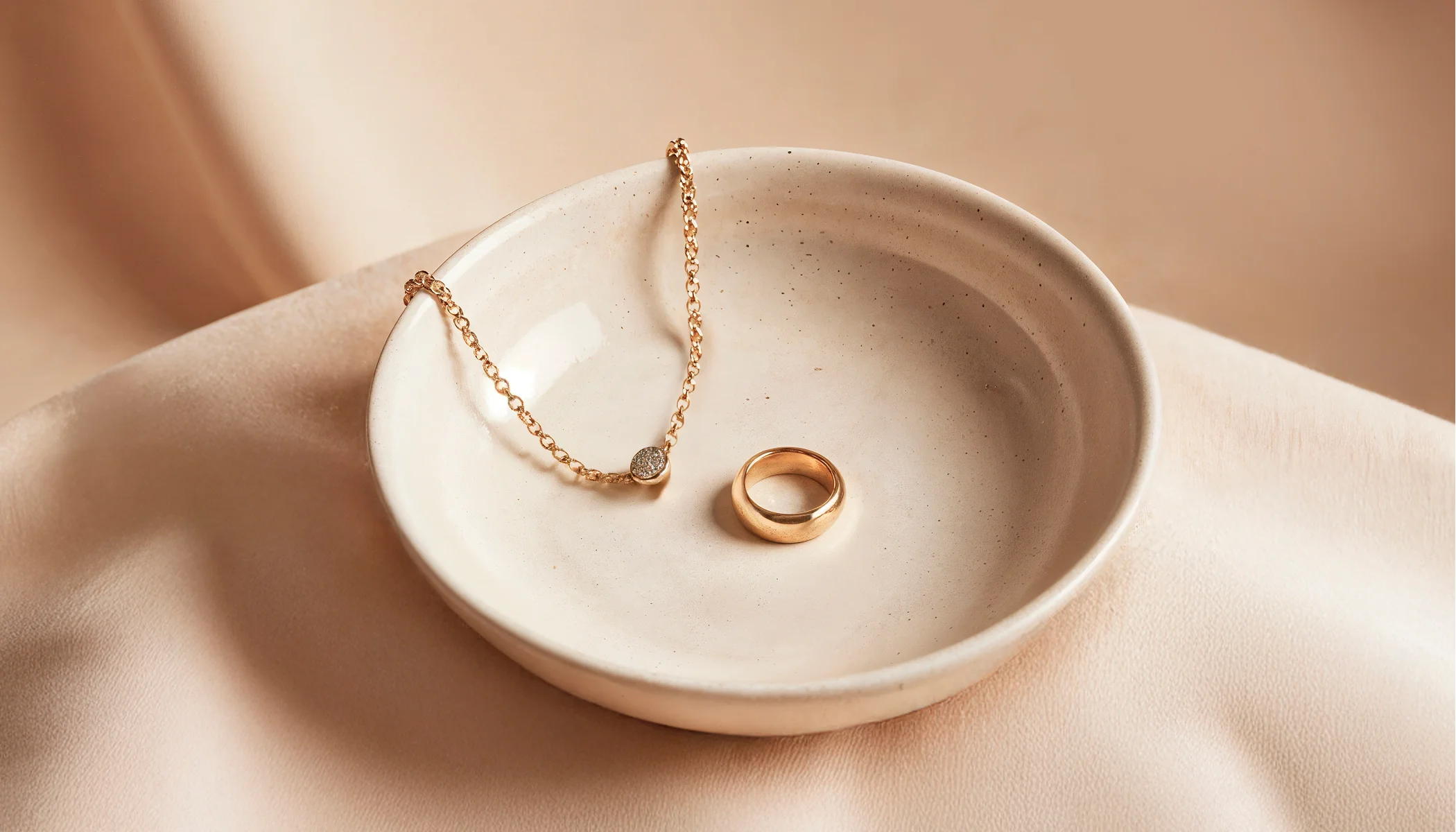
Scaling production: automation and batch processing
This is where AI for product photography really flexes. When you’re dealing with seasonal drops or large inventories, AI jewelry product photography lets you:
- Process hundreds of images in bulk
- Apply consistent style guidelines automatically
- Auto-generate metadata and tags
- Create platform-ready variations in one go
Some ecommerce brands report reducing production time by up to 80% after implementing AI product photography workflows. That’s way faster launches and way quicker updates when you introduce new colorways or gemstone variations. And there’s a special kind of appeal to scaling jewelry product photography without scaling your budget, isn’t there?
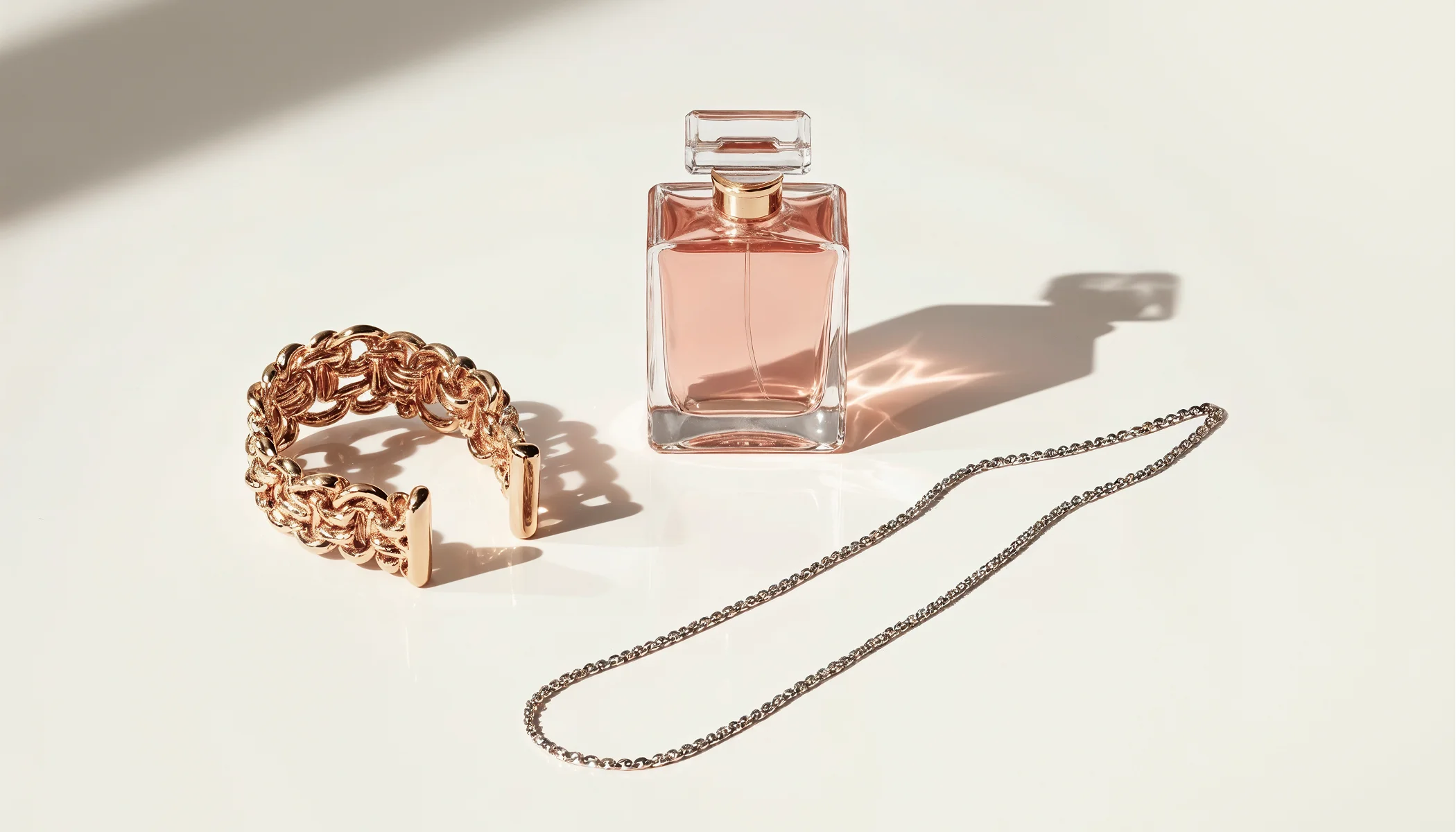
Choosing and using AI photography tools
If you’re exploring AI jewelry product photography, here’s what to look for:
- Background removal accuracy: Essential for delicate chains and detailed prongs.
- Material-aware lighting adjustments: The tool should recognize metals and gemstones.
- Batch processing capabilities: Critical for scaling product photography.
- Ecommerce export options: Platform-ready formats save time.
- Custom preset control: You want brand consistency, not generic AI results.
- Integration flexibility: Make sure it fits your existing ecommerce workflow.
The key isn’t just picking the trendiest tool right now, but choosing one that’s fit for your specific jewelry photography goals. Still, AI isn’t perfect. Here’s why.

Future trends and limitations
AI jewelry product photography is evolving fast, but it’s not magic, and many cracks are already starting to show (in photography and beyond).
Emerging trends include:
- AI-generated lifestyle scenes without physical props
- Virtual try-on tools powered by AR
- Automatic size estimation via smartphone cameras
- Smarter material detection for hyper-realistic lighting
Let’s talk limitations now. AI product photography can create “happy accidents.” Like reflections that don’t quite make sense, shadows that fall in the wrong place, proportions that change from one photo to another. You probably know the memes with 5-legged cats.
When your brand sits in the premium or luxury space, those tiny inconsistencies can break trust before your buyer even considers buying. That’s where the conversation shifts from AI vs traditional photography… to CGI vs AI.
Professional CGI: elevating jewelry visualization
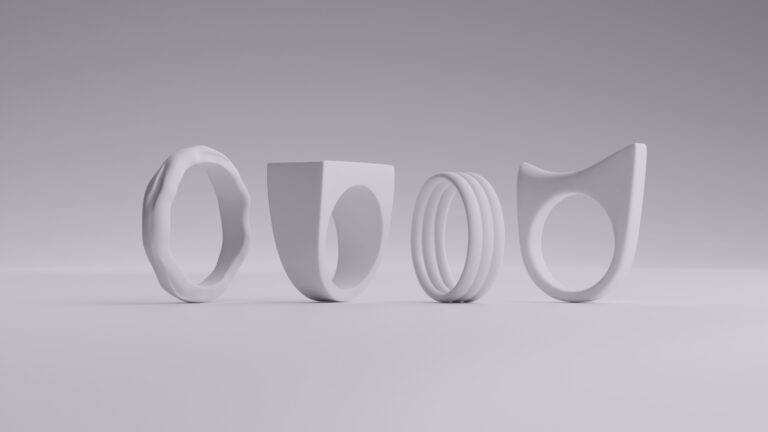
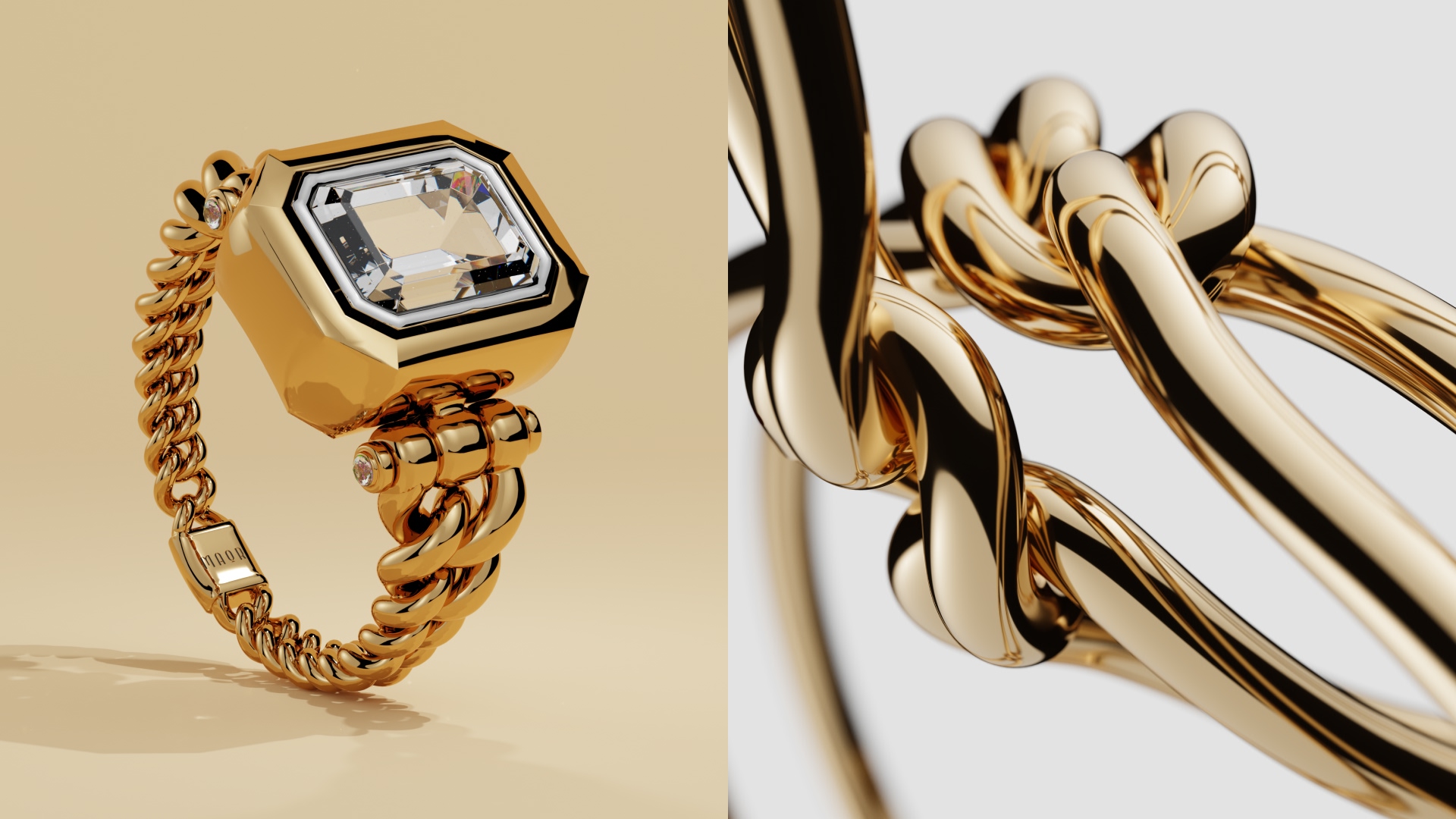
AI jewelry product photography is efficient. CGI, however, is both efficient and precise. Professional CGI artists build your jewelry as a photorealistic 3D model. So every single reflection, refraction, and material property is intentionally designed, based on photos and measurements you send.
Compared to AI product photography, CGI offers:
- Absolute consistency across angles and collections
- Perfect control over lighting and material realism
- The ability to create images before production exists
- Easy customization for stone colors, metal types, and variants
- Long-term cost efficiency by eliminating repeated photoshoots
If your brand is premium, CGI is a must. When customers zoom in, they should see the real deal. And of course, consistency is not a problem. In fact, most A-list brands work with CGI artists to ensure this perfect visual consistency across launches, campaigns, and years.

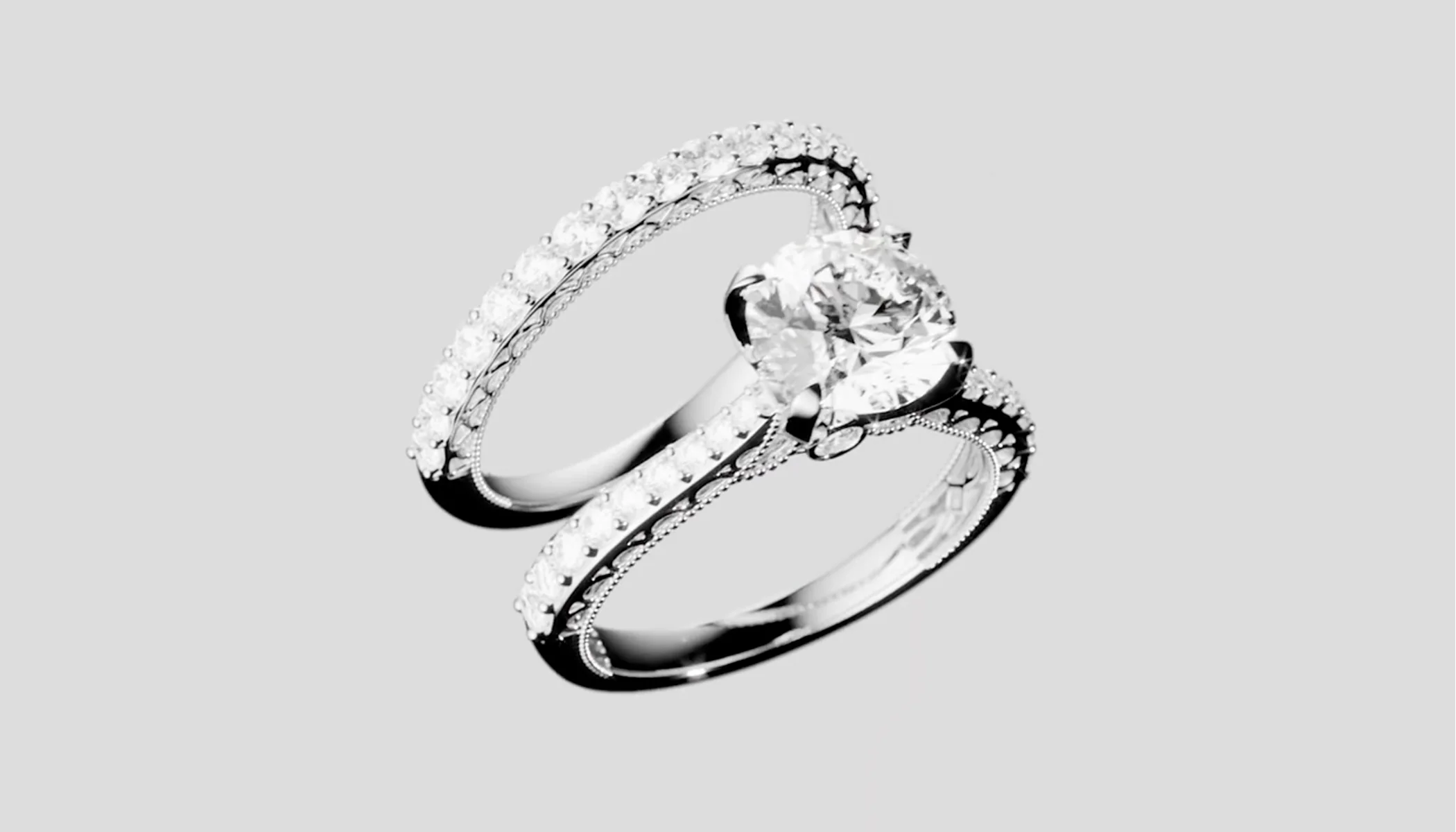
And yes, this is where Welpix wants to say hi. We specialize in high-end jewelry visualization that goes beyond basic AI jewelry product photography. Plus, we work remotely, so you can be anywhere around the globe, and your workflow will be just as fast and smooth. Get in touch with us today and we’ll walk you through how everything works.


Wrapping up

AI jewelry product photography has changed the game for ecommerce brands and there’s no doubt about it. We’re talking lightspeed production and lower costs time and time again. No wonder many brands are at least trying it out. Still, if you need flawless luxury visuals, full control, and future-proof assets, CGI is the next level.
So maybe give us a short and we’ll explain how CGI can help your catalog grow and turn your buyers into loyals.
FAQ
What is AI jewelry product photography?
AI jewelry product photography uses artificial intelligence tools to automate background removal, lighting enhancement, color correction, and other editing processes in jewelry product photography workflows.
How does AI product photography help ecommerce brands?
AI product photography reduces production time and costs, improves consistency across product catalogs, and enables fast generation of marketplace-ready images for ecommerce platforms.
How to use AI for product photography in jewelry?
Start with high-quality base images, upload them into an AI for product photography platform, apply background removal and lighting presets, refine materials, and generate multiple optimized versions for different ecommerce channels.
Is AI jewelry product photography suitable for luxury brands?
It can work for mid-tier brands, but luxury brands often prefer CGI for absolute precision, material control, and flawless realism in high-end jewelry photography.
What is the difference between CGI vs AI in jewelry visualization?
AI enhances existing photographs using automation, while CGI builds fully controlled 3D models from scratch. CGI offers more precision, consistency, and flexibility for premium jewelry product photography.
Can AI tools handle different metals and gemstones?
Yes. Modern AI for product photography tools can detect and optimize settings for gold, silver, platinum, and various gemstones — though results still depend on image quality and proper setup.
Is AI product photography cost-effective for large catalogs?
Yes. For brands managing large inventories, AI jewelry product photography dramatically reduces editing time and operational costs while maintaining consistency across ecommerce product pages.