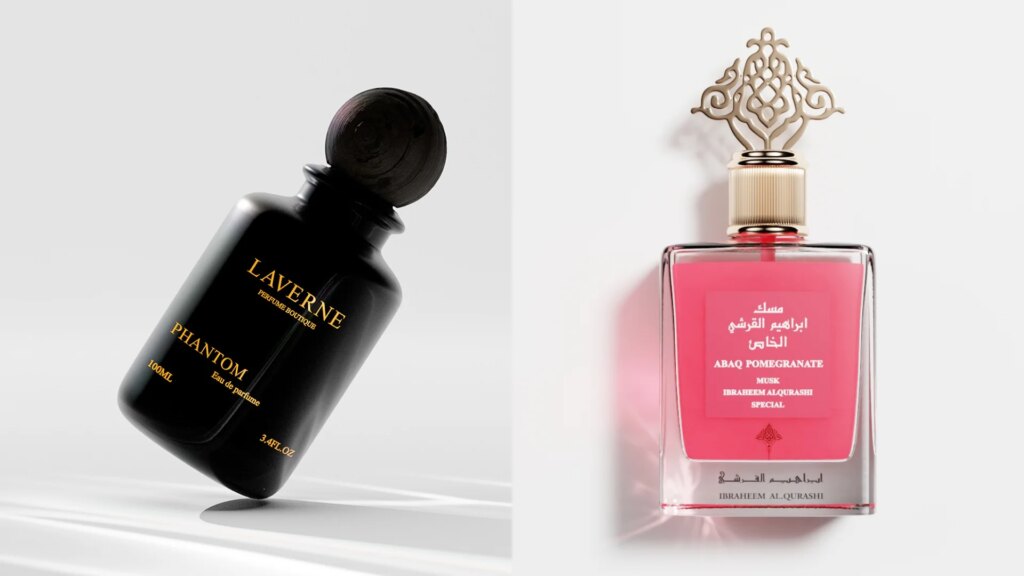
Makeup kit photography is about showing many small products, colors and textures in one clear, attractive picture. Palettes, lipsticks, brushes and compacts all have glossy cases, fine details and colors that must look exactly like the real thing.
This guide covers the gear, lighting, composition ideas for kits and flat lays, color accuracy, editing, and when CGI is the easier way to create makeup images.
The Shots a Makeup Kit Needs

Shot | What it shows | Tip |
|---|---|---|
Closed kit on white | The packaging as the customer receives it | Pure white background, front or three-quarter view |
Open kit | All shades and tools inside | Shoot from directly above or at a high angle (about 30 to 45 degrees) so every pan is visible |
Flat lay | The whole set laid out | Clean grid or a loose, styled arrangement |
Swatches | The real color of each shade | On skin or on a white card, labelled |
Details | Textures, shimmer, brush hair, embossing | Macro lens and soft side light |
Styled scene | The brand mood | Props, color backgrounds, movement |
Know Your Products


Before the shoot, look at what you’re photographing and what makes it special.
- Palettes: the shade names, finishes (matte, satin, shimmer) and any pressed pattern.
- Lipsticks and glosses: the bullet shape, the case and the finish.
- Brushes: the shape of each brush and the softness of the hair. Clean, untouched brushes look best.
- Compacts and cases: mirrors, logos and closures, which are often reflective.
Plan which details matter most to the buyer and make sure each one gets its own shot.
Equipment for Makeup Photography
- A camera with manual controls. A modern phone works for social posts, but a camera gives you sharper details and more control.
- A macro lens for textures and shimmer.
- A tripod, especially for flat lays shot from above (or a camera arm).
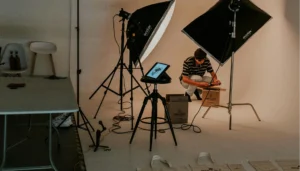
- Two softboxes or LED panels with diffusion, and white cards or reflectors.
- A grey card or color checker for accurate colors.
- Clean backgrounds: white sweep, colored paper, marble or acrylic.
- Cotton gloves, a blower brush and cotton buds for cleaning.
Lighting Makeup Products
- Soft, even light from two softboxes at about 45 degrees shows colors accurately and keeps shadows gentle.
- Side light brings out texture and shimmer in pressed powders and glitter.
- Large diffused sources keep glossy cases and mirrors free of hard reflections.
- One light type only. Mixing daylight and warm room lights changes the colors, which is one of the biggest risks in makeup photography.
Composition Ideas for Makeup Kits

- Grid flat lay: every product in a neat grid, shot from directly above. Clean and great for product pages.
- Loose flat lay: products slightly overlapping with a few props, like flowers or fabric, for social media.
- Hero and supporting cast: the main product large in front, the rest of the kit softly behind it.
- Open and closed: the closed kit next to the open one, to show both the packaging and the shades.
- Swatches and product: shade swatches next to the pans they come from.
- Movement: crushed powder, a lipstick smear or a splash of gloss make a still image feel alive.
Keep a consistent style across the range, with the same light, background and angles, so your store looks tidy and your brand is recognizable.


Got it — we're on it
Tell us a bit more and we'll tailor the sample. Totally optional.
Thank you!
We've got everything. We'll get back to you by email soon.
Getting Colors Right
Wrong colors are one of the main reasons makeup buyers are disappointed. To avoid it:
- Shoot a grey card or color checker at the start of each setup and set the white balance from it.
- Shoot in RAW.
- Edit on a calibrated monitor.
- Compare the edited image with the real product side by side before you publish.
Editing Makeup Photos
- Remove dust, fingerprints and stray powder.
- Clean the edges of pans and cases.
- Keep shimmer and texture natural, and don’t over-smooth.
- Check colors against the real product and your swatches.
- Export in the sizes your store, marketplaces and social channels need.
Makeup Kits in CGI

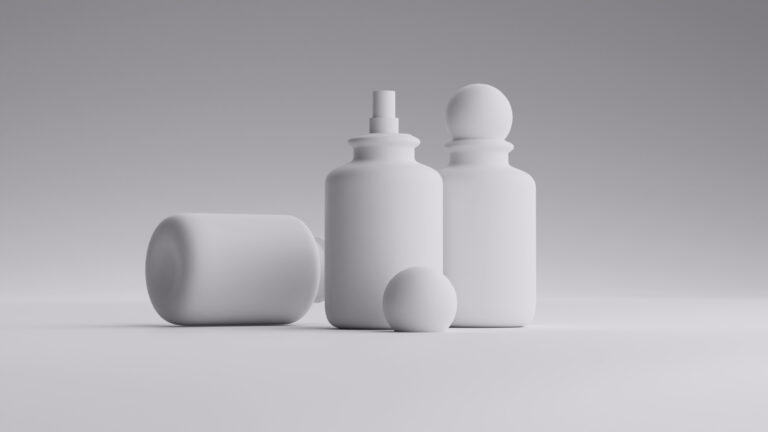
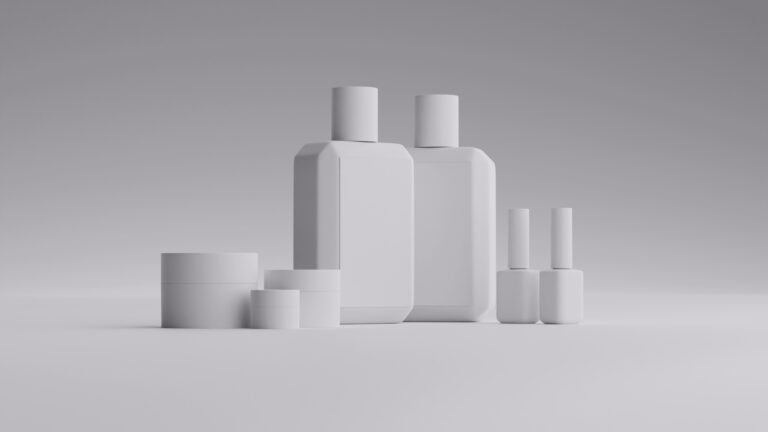
Makeup brands often need images before the products are manufactured, or the same kit in many shade versions. In CGI, the kit is built once in 3D, and every shade, angle and scene is a new render. Colors stay consistent across all images and are matched to your shade references, cases have no fingerprints, and effects like crushed powder or splashes are fully controlled.
Makeup brushes in CGI
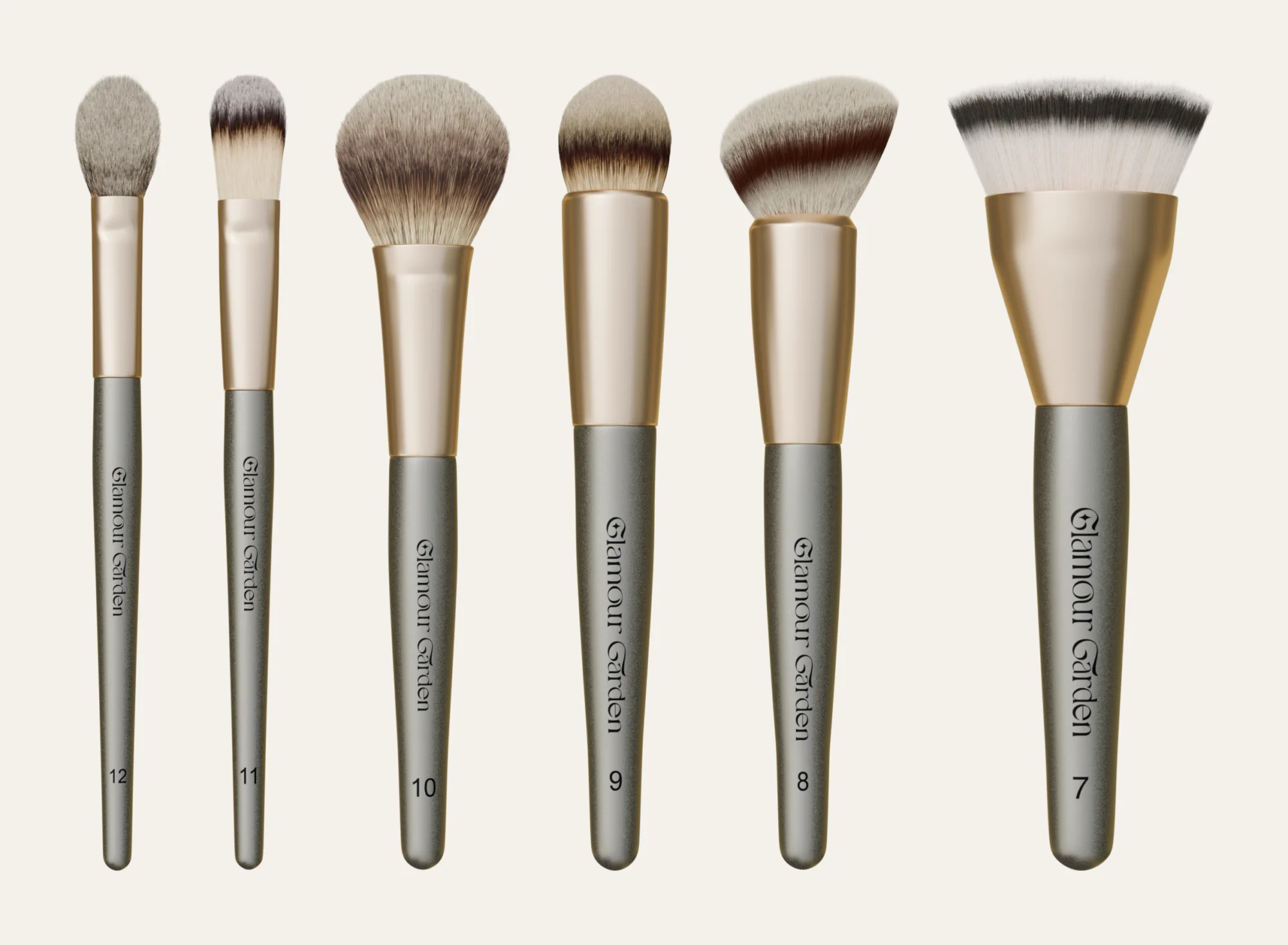
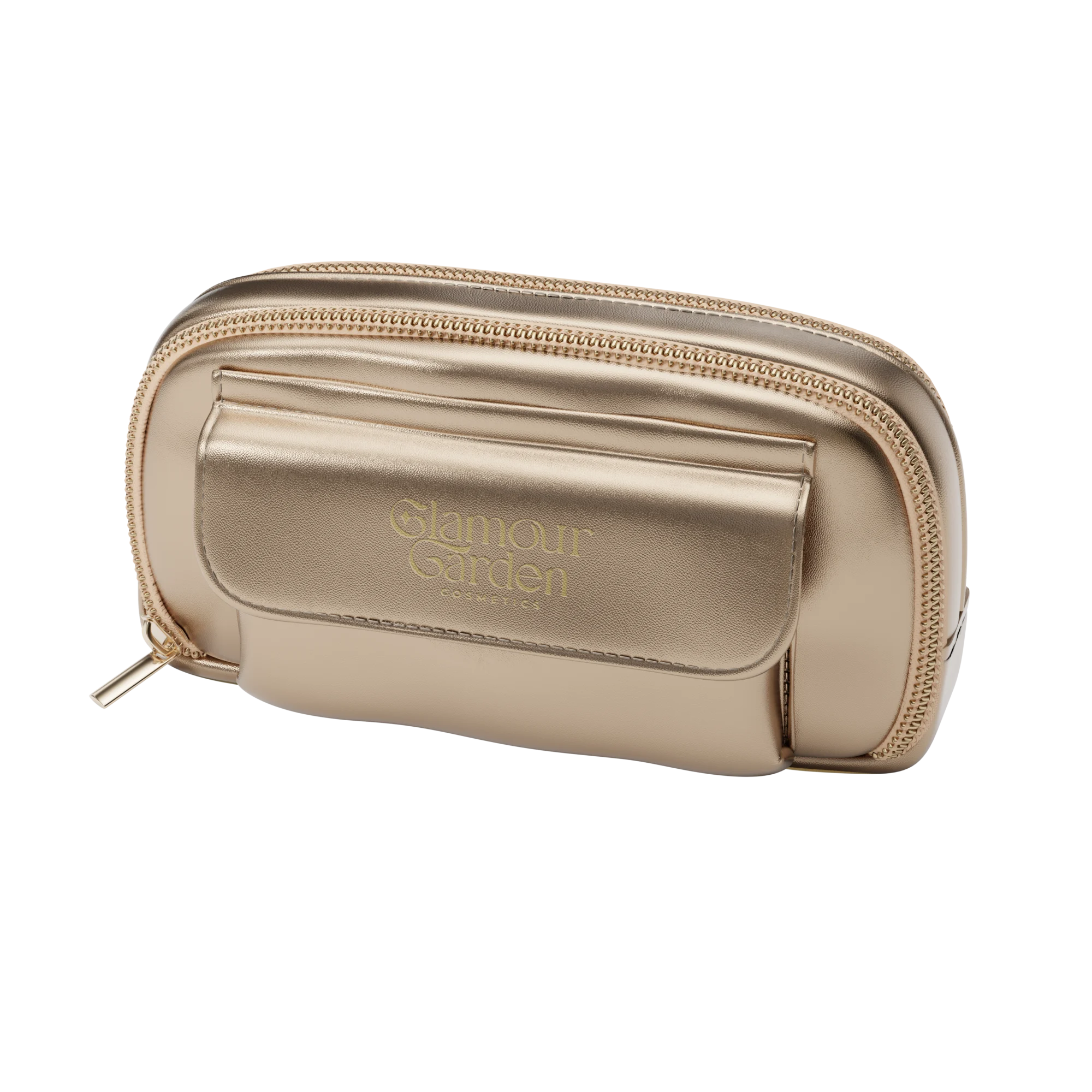
Brushes are a good example of what CGI does better than a camera. Plastic handles and silver or gold ferrules reflect everything around them, and a single brush can have thousands of individual hairs. In CGI, the reflections on the handle and ferrule are fully controlled, and the hairs are simulated one by one, so we can shape them and color them exactly the way the brand wants, consistently across the whole set. The six brushes and the bag above show the level of detail on metal, bristles and fabric. The video below shows how it works, and our guide to makeup brushes photography goes into more detail.
At Welpix, CGI images cost €49 (white background), €99 (minimalistic), €149 (simple props) or €299 (custom scene) per image, plus a one-time 3D modeling fee of €29 an hour. See real projects like Nice One, with print-ready 3D renders for Calla Makeup, and Match, a 15-second 3D animation for a new cosmetics line. More on our cosmetic photography page and in our beauty product photography ideas.
- 3D modeling
- White bg.
- Minimalistic
- Simple prop
- Custom
- 3D modeling
- White bg.
- Minimalistic
- Simple prop
- Custom
Got it — we're on it
Tell us a bit more and we'll tailor the sample. Totally optional.
Thank you!
We've got everything. We'll get back to you by email soon.
Wrapping Up
Great makeup kit photos come from knowing your products, soft and even light, careful composition and, above all, accurate colors. Shoot the closed and open kit, flat lays, swatches and details, and keep one consistent look across your range. When you need images before launch or many shade versions, CGI can save time and keep every color consistent.
FAQs
How do you photograph a makeup palette?
Shoot it open, from directly above or at a high angle (about 30 to 45 degrees), with soft even light from two sides. Add side light to show shimmer, and shoot swatches so buyers can see the real colors.
How do you get accurate colors in makeup photography?
Use one type of light, shoot a grey card or color checker to set the white balance, shoot in RAW, edit on a calibrated monitor and compare the image with the real product.
What background is best for makeup products?
White for product pages and marketplaces. For social media, soft colors, marble or acrylic work well, as long as they don’t change how the product colors look.
How do you photograph makeup brushes?
Use new, clean brushes, shoot them on a plain background with soft light, and add side light to show the texture of the hair. Arrange them by size or in a fan shape.
Can makeup kits be photographed in CGI?
Yes. The kit is built once in 3D and then rendered in every shade, angle and scene. It’s especially useful before launch, for many shade versions and for effects like crushed powder or splashes.