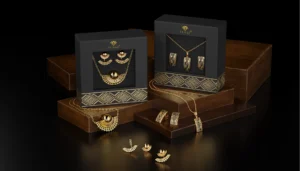
We loved our collaboration with Nice One (and their Calla Makeup campaign) especially because we got the opportunity to show how our organized workflows can deliver CGI for cosmetics at a high level. We used a centralized dashboard to do real-time revision sessions. This made their work so much quicker: they got impeccable 3D renders for their shipping boxes before those even existed.
This approach also helped us solve complex feedback overnight. Like perfecting super-specific brush textures or fine-tuning lighting. This saved everyone vital time. And the visual results are plain to see. Their unboxing experience was elevated beyond “pretty.”
There are so many luxury beauty brands on the market today, it really just doesn’t cut it to have “good” images anymore. You need to be iconic, aka choose a brand philosophy, match it with stunning visuals, and stick to the style with 100% consistency. Now, traditional photography used to be the gold standard for such brands. But as of 2026, it often falters, as it’s constantly faced with the super-stylized demands of modern branding.
A studio, as fancy and professional as it may be, is still ruled by the laws of gravity and limitations of optics. We needed more for our recent work with Nice One, the Middle East’s leading ecommerce platform, and their trendy private label, Calla Makeup. Art Director Zainab Sharrofna needed high-fidelity assets for an ambitious rollout: two distinct designs for each of their five shipping box sizes (ten unique layouts in total).
And the main issue: these products were still unreleased, meaning there were no physical samples for a traditional shoot. CGI was there to help. Here’s how we nailed the impossible physics (and delivered designs equally gorgeous and complex, like the “In the Clouds” lip oil holder set) well before manufacturing was over. And here’s what our client got at the end of this project.
Deep dive: step-by-step CGI workflow and technical expertise breakdown
Planning and the creative brief

The project lived, as they all do, in our dashboard. That’s a centralized hub where art directors (in this case, Zainab, who manages a whopping 28 private label brands) can follow the whole process and maintain absolute creative control. This dashboard has a team-member integration and stage-filtering. These help us align on complex creative directions (like the “flying open” composition for the “I’m Blushing” line, which you’ll find below).
Component 3D product modeling

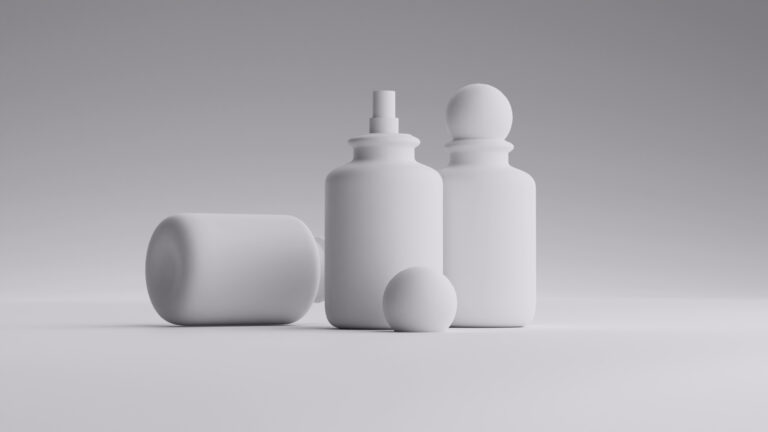
We put the initial workload at roughly 12 hours to model and texture the nine core products. Here are some key moments we want to talk about:
- Interpreting abstract geometry: For the “In the Clouds” lip oil holder set, the creative direction leaned into a cloud-like look built from stacked, flowing rings. Our job was to turn that idea into real 3D (so precise, but keeping that dreamy vibe)
- The “Kitten Paw” applicator: This was a big technical hurdle for the “I’m Blushing” and “Bunny Cheeks” products. We adjusted the geometry (meaning we employed high-density hair grooming curves) until it matched the “puffy” physical reference with those soft, dense bristles
- Mechanical symmetry: The “Eye-Conic” eyeshadow palette took a lot of TLC, too. We dedicated hours to its hinge mechanism and lid symmetry, just to make sure the refractive properties of the internal mirror remained accurate when rendered in an open position.
Texturing and shading

We use texturing and shading (as we always do after modeling) to transform a cold 3D model into a full sensory experience… the kind that makes buyers want the product. Our goal is to simulate how light interacts with materials at a molecular level. Then, we give them that perfect shine (or gloss or whatever our client desires) until you want to reach through the screen and grab them. For this project, we used Subsurface Scattering (SSS) to mimic how light comes through velvety pressed powders, plus custom Refractive Indices for the frosty semi-transparent lids.
That’s why we call this part achieving the “Impossible Shot.” Not only did we nail these micro-details, but we added hyper-realistic liquid droplets and bubbles that defied the laws of physics. For the “Glazed Lips” lip gloss, we engineered digital bubbles that hugged the product. And after Zainab’s feedback, we applied custom color gradients to these bubbles, making them darker than the product itself to ensure the gloss popped against the background. Basically, a level of control impossible in physical photography.
Product lighting

To avoid that awful flatness you sometimes see in amateur CGI, we simulated a professional studio environment using global illumination. That included a right-to-left gradient shift. Meaning we skipped radial or centralized lighting, which often flattens a product’s silhouette. Take a look at the final images to see how the labels and bottle curves have that premium, 3D feel essential for high-end print
Project results: final assets, client value, and commercial success


We give our clients evergreen marketing tools. They’re basically reusable assets, which means they get you a higher ROI than one-time photo shoots. They can be updated a million times in a million new labels or colors. As the Calla Makeup line expands, they promise to do just that.
CGI vs. Traditional Photography: Nice One Value Comparison
|
Feature |
CGI (Welpix) |
Traditional Photography |
|
Inventory |
No physical samples or prototypes needed. |
Requires final physical prototypes and stock. |
|
Flexibility |
Unlimited revisions (e.g., adjusting bubble gradients or lid tilt). |
Requires expensive, time-consuming reshoots. |
|
Time-to-Market |
Assets completed before products leave the factory. |
Must wait for manufacturing and shipping for a shoot. |
Carousel of Related Success Stories: Building on this project’s success, Nice One expanded their partnership with Welpix to the Ola Hair brand. We’re currently developing high-end renders for various hair devices to be used in their new packaging and branding. We think that also proves our ability to handle both liquid cosmetics and complex hardware.
Conclusion: authority passing and next steps for your CGI project
We don’t see CGI as a mere replacement for photography, but rather as a high-fidelity evolution of it. CGI gives our clients a level of flexibility and quality that matches the zero-defect standards of the luxury market. It goes without saying that high-fidelity visuals signal a high-quality product, or that ecommerce today is super-hyper-saturated by great images. Any premium brand will need perfect photos that reflect a unique philosophy if they want to compete (and, you know, sell).
At Welpix, we’re a strategic partner in your brand’s long-term visual authority. Nice One chose us not only for our technical ability to render Subsurface Scattering and complex topology, but for our super-organized system. Think about it: it was easy enough for Zainab to manage this project alongside 28 brands!

I was impressed with our collaboration with Welpix on our Calla Makeup campaign on all fronts. First off, their flexibility during real-time revisions went above and beyond. Then, their team understood our vision right away, and fine-tuned details (like product transparency, composition, brush textures) until we were 100% aligned.
They saved us valuable time and delivered top quality assets that told our brand’s story just as we wanted them to.
Understanding the investment: project pricing and transparency
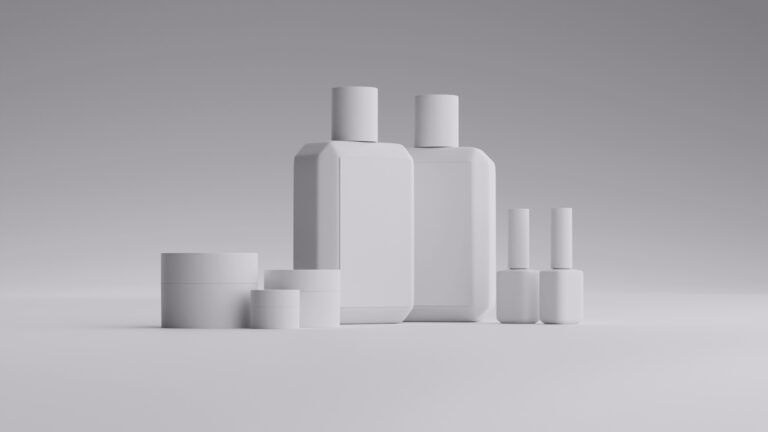
CGI pricing at Welpix (very transparently) reflects two aspects: technical labor and asset complexity. The Calla Makeup project was based on a 12-hour modeling and texturing estimate, plus a per-image charge based on the creative style.
To help you identify the right tier for your budget and campaign goals, we suggest watching our “Style Direction and Estimation” video.
- 3D modeling
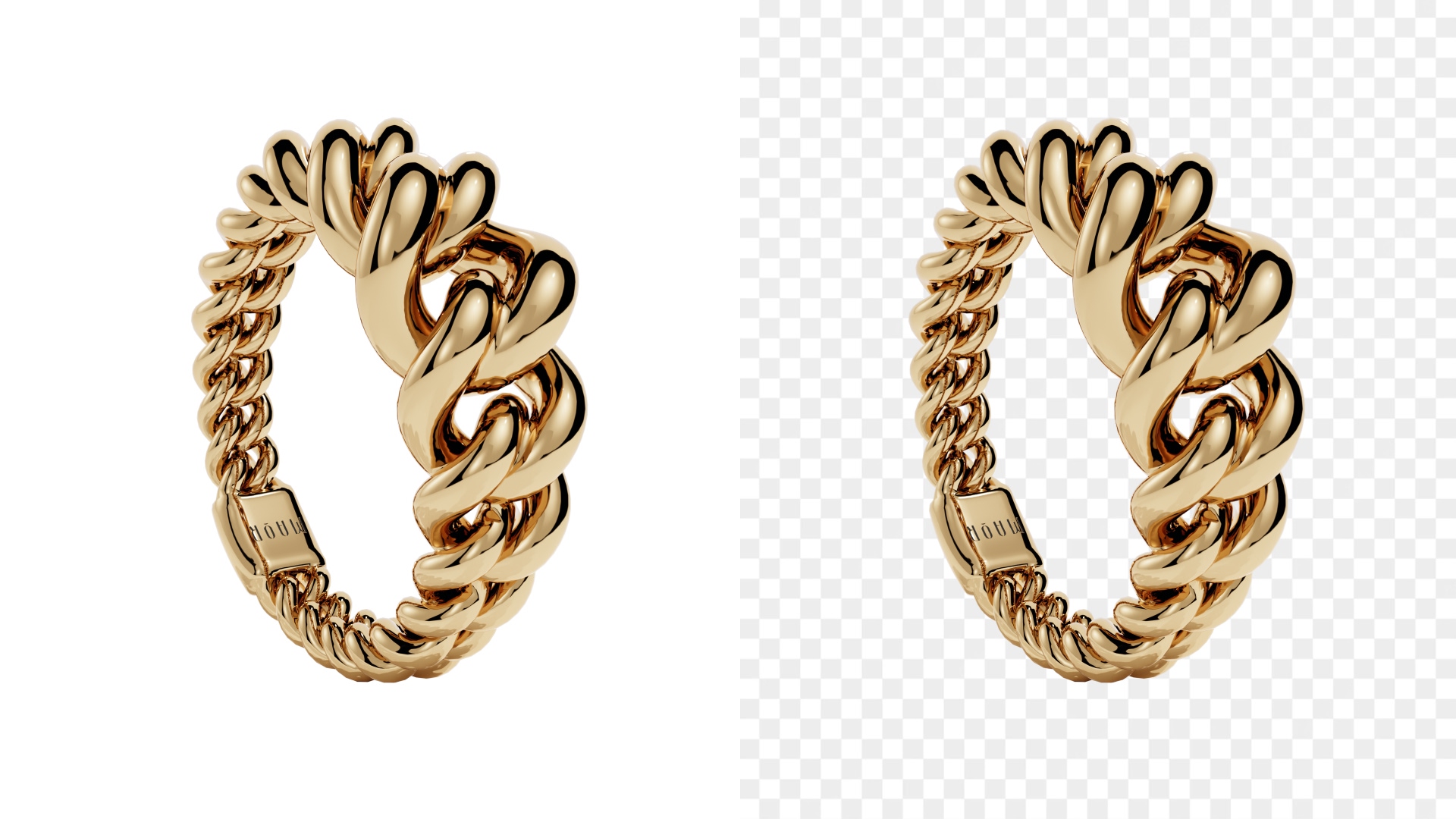
- White bg.
- Minimalistic
- Simple prop
- Custom
- 3D modeling
- White bg.
- Minimalistic
- Simple prop
- Custom