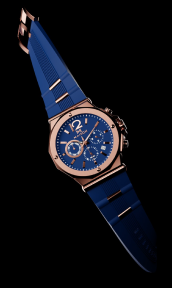
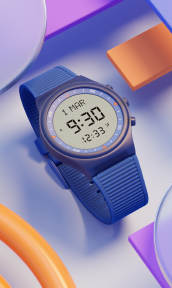
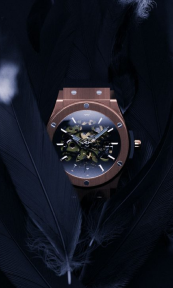
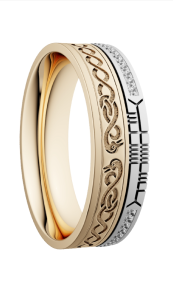
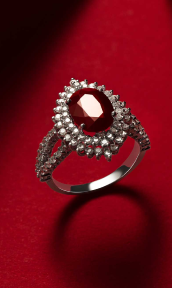
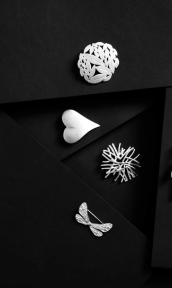
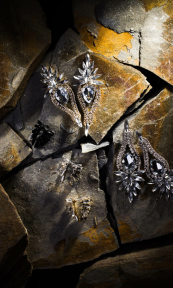
The more high-impact a brand’s visuals, the higher its credibility. And for luxury brands, the stakes rise fast. Jewelry brands just can’t cut it (pun intended) today without a strong online presence. For Jewelry Depot Houston, it was exactly the case.
Jewelry Depot Houston is a family-owned boutique business with a generations-long legacy and a stunning collection of pieces. Our collaboration with them began with the founder’s son, Alon. He wanted to help modernize the company when his father’s illness forced him to take the reins. He knew they needed to revamp their website from a simple storefront into a high-end experience. He gave us an inspiration too: Audemars Piguet’s minimalist elegance. And a direction: a digital space where the “jewelry speaks for itself,” which it has to do for obvious reasons — online shoppers can’t touch or try on the pieces.
This is easier said than done, though. For tiny (and incredibly valuable) jewelry, physical photoshoots are a logistical minefield. First off, you have to ship thousands of dollars’ worth of product. Then, you have to capture those intricate details and show the product’s high quality through a photo. Showing a diamond ring up close, for example, requires a complex process called “focus stacking,” plus intense post-production afterward. Over half the work in traditional jewelry photography is spent on retouching, by the way: removing dust, smudges, scratches, and other imperfections that are unavoidable in a physical studio. Emphasis on “physical.”
This is where we come in. Or, in other words, CGI. Here’s a case study on how we turned Alon’s creative vision into a versatile arsenal of gorgeous digital assets.
Deep dive into our step-by-step CGI workflow
1. Planning: Establishing the creative vision

All our CGI Jewelry photography projects begin with a consultation on the creative vision. Until both sides are clear on the direction, our team can’t proceed. Alon needed a series of short, looping animations for JDH’s website revamp. They’d be used as banners and loading screens, so they needed to be optimized for both desktop and mobile viewing.
The first big step for us was gathering high-quality reference materials. We already had a few low-res iPhone photos, but they had been heavily edited, so our team couldn’t discern those fine details that you need for a perfect jewelry model. We thus advised Alon to grab the same smartphone but “take it next to the window in daylight, put it on a white paper… get as close as possible to it and take a picture.” And yep, that did it.
From those reference images, we then made a shared creative brief. Think collab slides and spaces for our client to jot down any feedback or specific requests. This is also where we gathered Pinterest-like mood boards and competitor website shots to draw inspiration from and nail those nine signature pieces in Alon’s collection.
2. Modeling: Building digital perfection from the ground up

The 3D modeling stage is the technical foundation of all CGI projects (and not just ours!). This is where we reconstruct every piece of jewelry, one by one and detail by detail. Each becomes a 3D model, also called “raw geometry.” Before you think this is done with a click, though, recreating a single piece can take up to a week.
But even throughout this process, we didn’t stop talking with our client. In fact, our 3D modeler kept in touch with Alon for every step of the way, incorporating his feedback in every round so it’s done as fast and seamlessly as we possibly could. Here are some of the adjustments he asked for:
- Correcting diamond counts to match the real-world pieces.
- Adjusting prong sizes to be smaller and more refined.
- Increasing material thickness to give the pieces a more substantial, high-quality feel.
- Ensuring individual components could be assembled without overlapping: a vital step to prevent glitches and enable successful animation.
When all was said and agreed upon, this model became a permanent digital twin of the physical product. That’s great news for Alon: this digital asset can be used again and again, for new product shots and different campaigns, at a fraction of the original modeling cost.
3. Texturing and shading: Applying lifelike materials

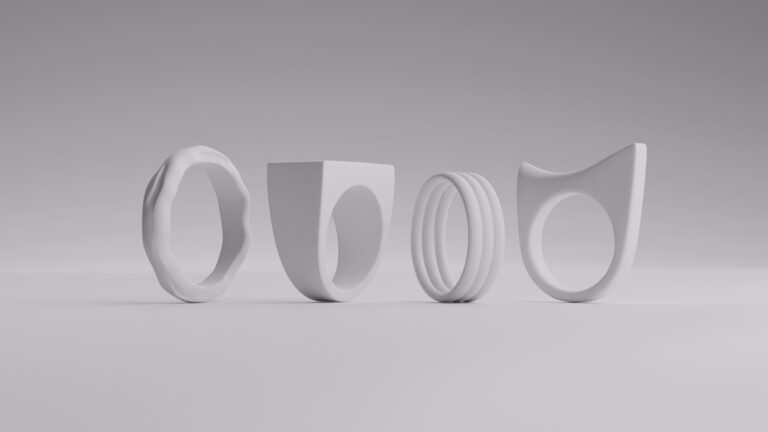
Our team’s next step was to apply digital materials to transform those gray 3D models into photorealistic products that looked just like the real thing. Different materials were assigned to distinct parts of the geometry (gold, silver, various gemstones).
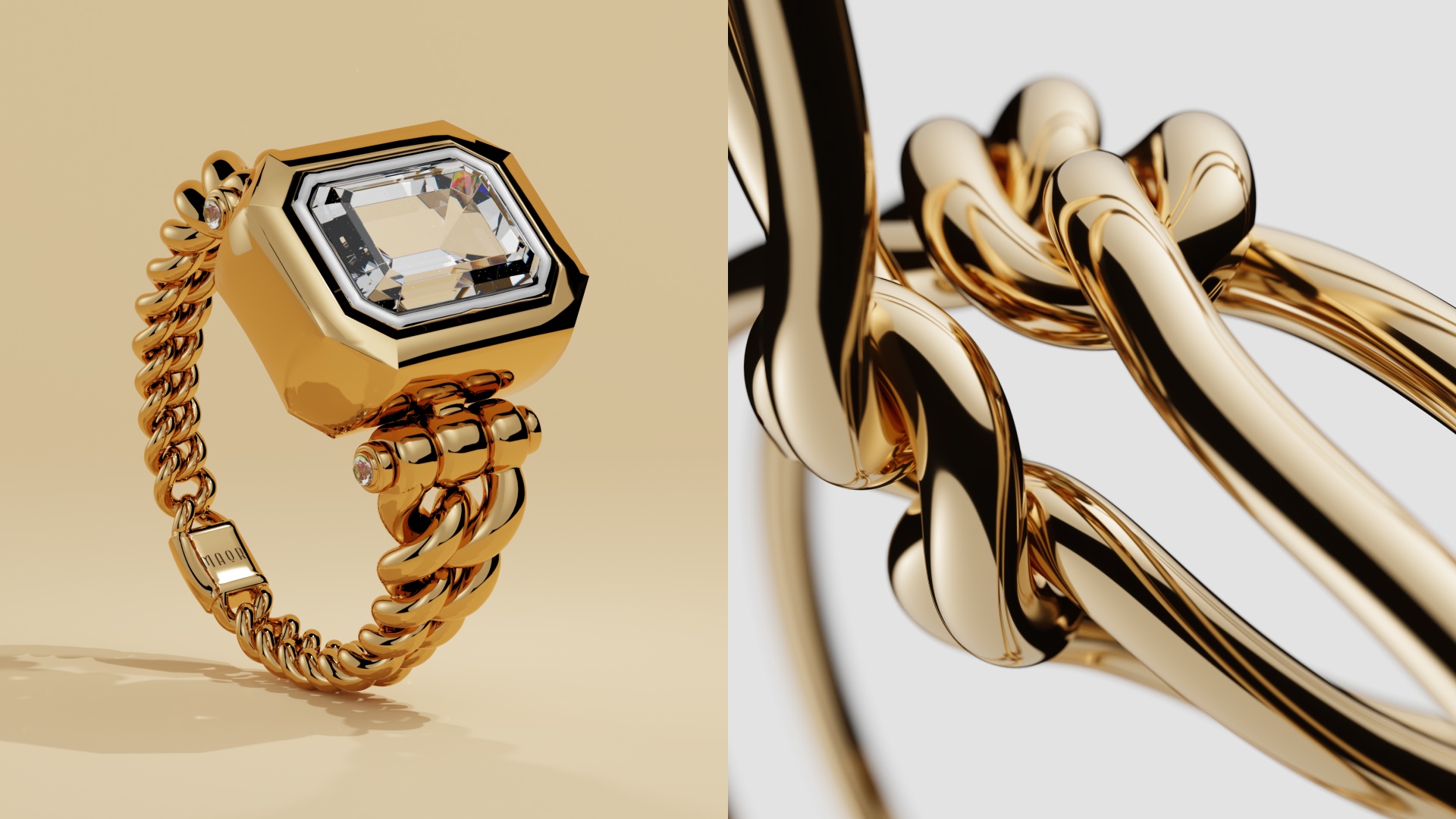
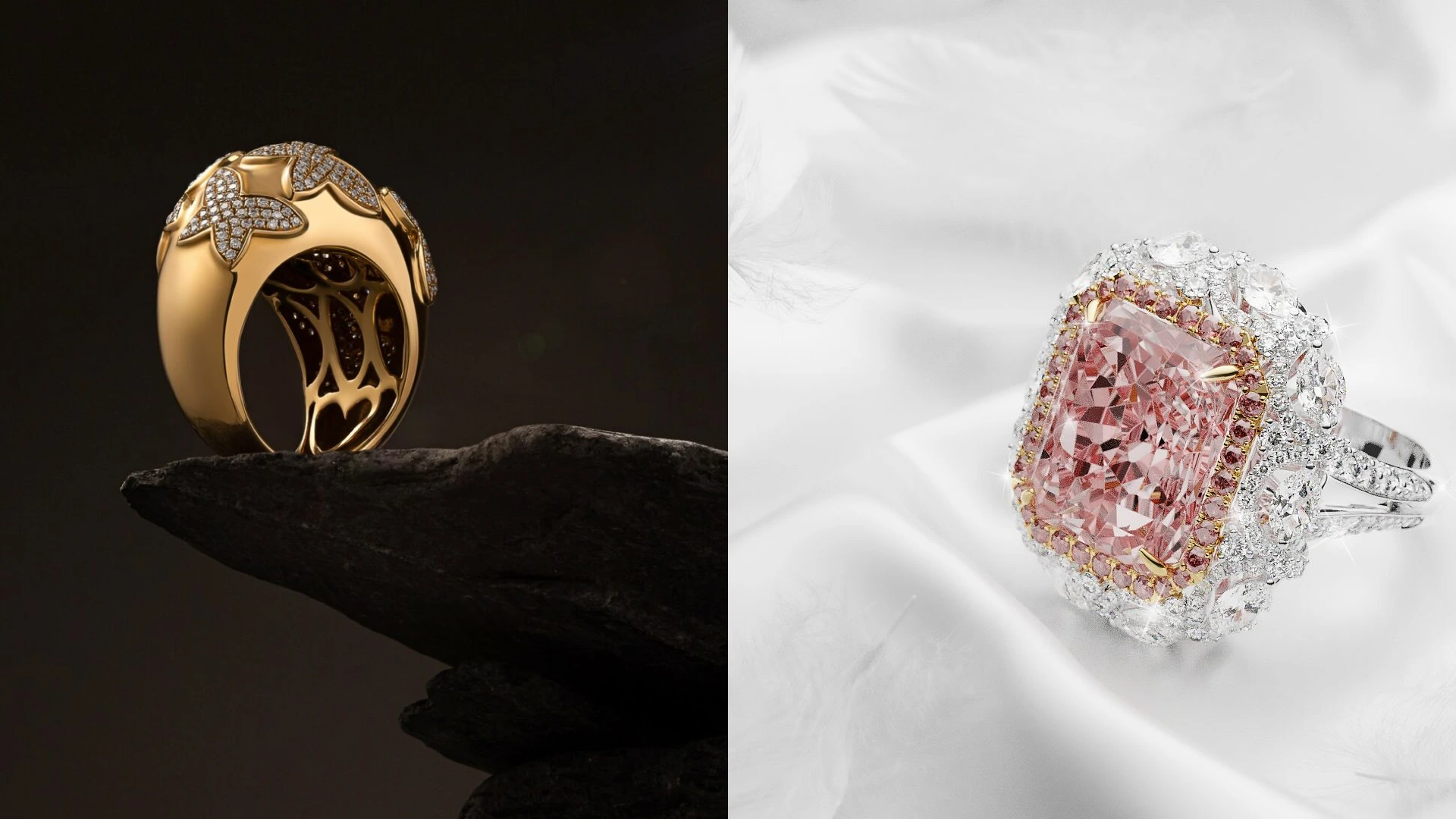
Our biggest challenge was rendering diamonds. That always takes technical prowess at its very best. But as luck has it, we have the best modelers, plus over a decade of trial-and-error studies. We’ve perfected digital materials that realistically refract light and get that signature “glitter and shine” effect that customers find in high-end diamonds.
There was another technical hurdle in this phase: preventing materials from intersecting. If a diamond touches the metal prong holding it in place, for example, it can lead to glitches and unnatural refractions during the rendering process. So every time our modeler finished a material, they corrected any intersections using Boolean operations.
4. Rendering and animation: The virtual photography studio

The rendering and animation phase is where it gets really fun! Think technical preparation meets creative execution. This is the process we like to call the “unlimited photography studio in a computer.” Meaning our client has total creative control and zero physical constraints (the likes of which you get in a photography studio).
Here, we act as virtual photographers. Simply put, we replicate traditional photography techniques but inside a computer. The huge pro is that, in CGI, we have infinite control over camera angles, lenses, and focus, so we can capture “impossible” shots with perfect light and very much repeatable results.
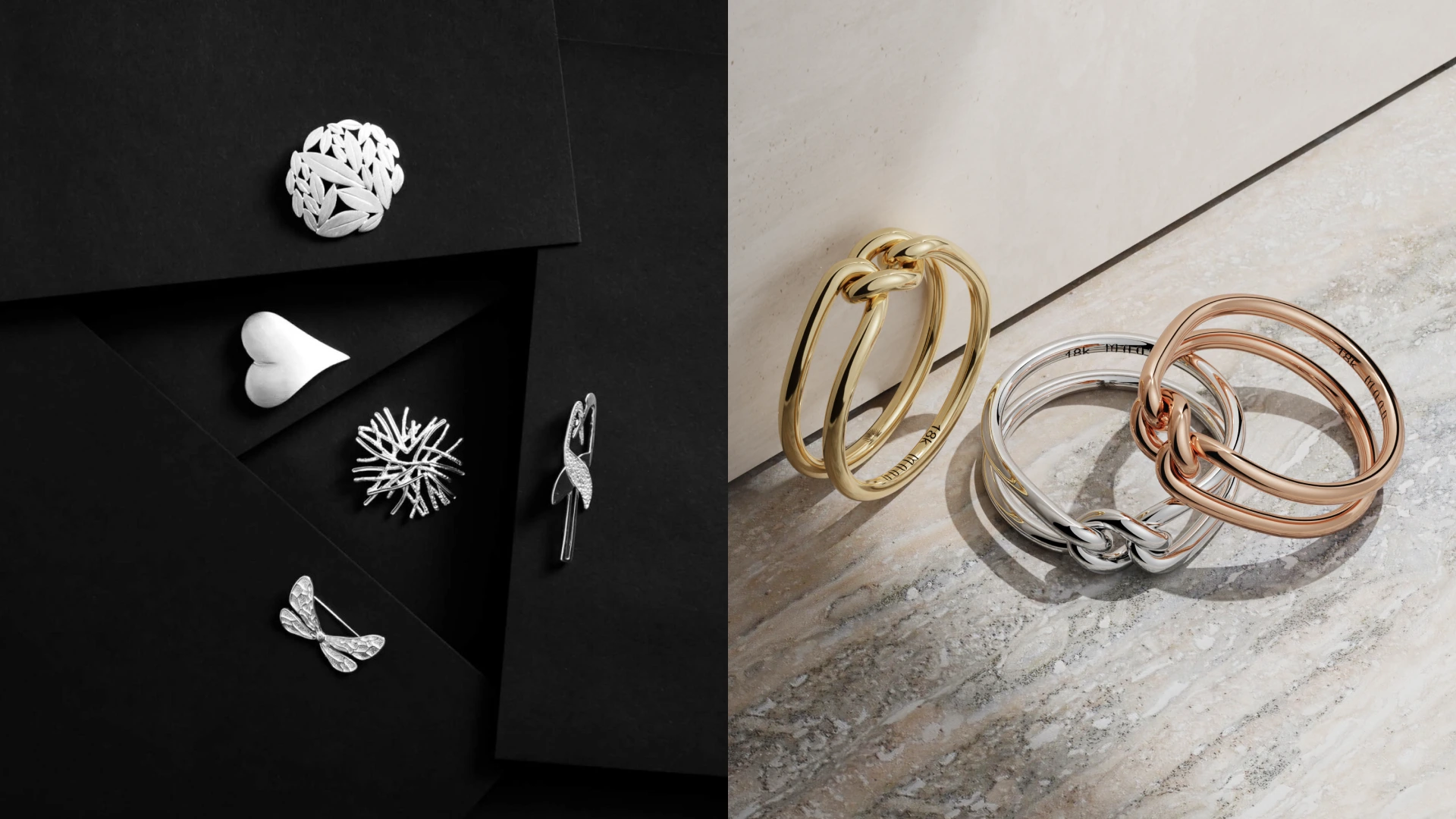
Remember those short, looping jewelry animations we needed to do? Well, we made them for JDH’s website and social media. In fact, we did three aspect ratios: 16:9 for website banners and TV screens, 9:16 for mobile stories, and 1:1 for social media posts. The stage was set for Alon’s brand revamp.
Project results: Delivering a versatile arsenal of digital assets


The final asset suite we delivered let Jewelry Depot Houston create the high-end experience Alon had envisioned. He was happy, and so were we. Some of the final deliverables:
- Short, looping video animations designed for website banners, loading screens, and social media.
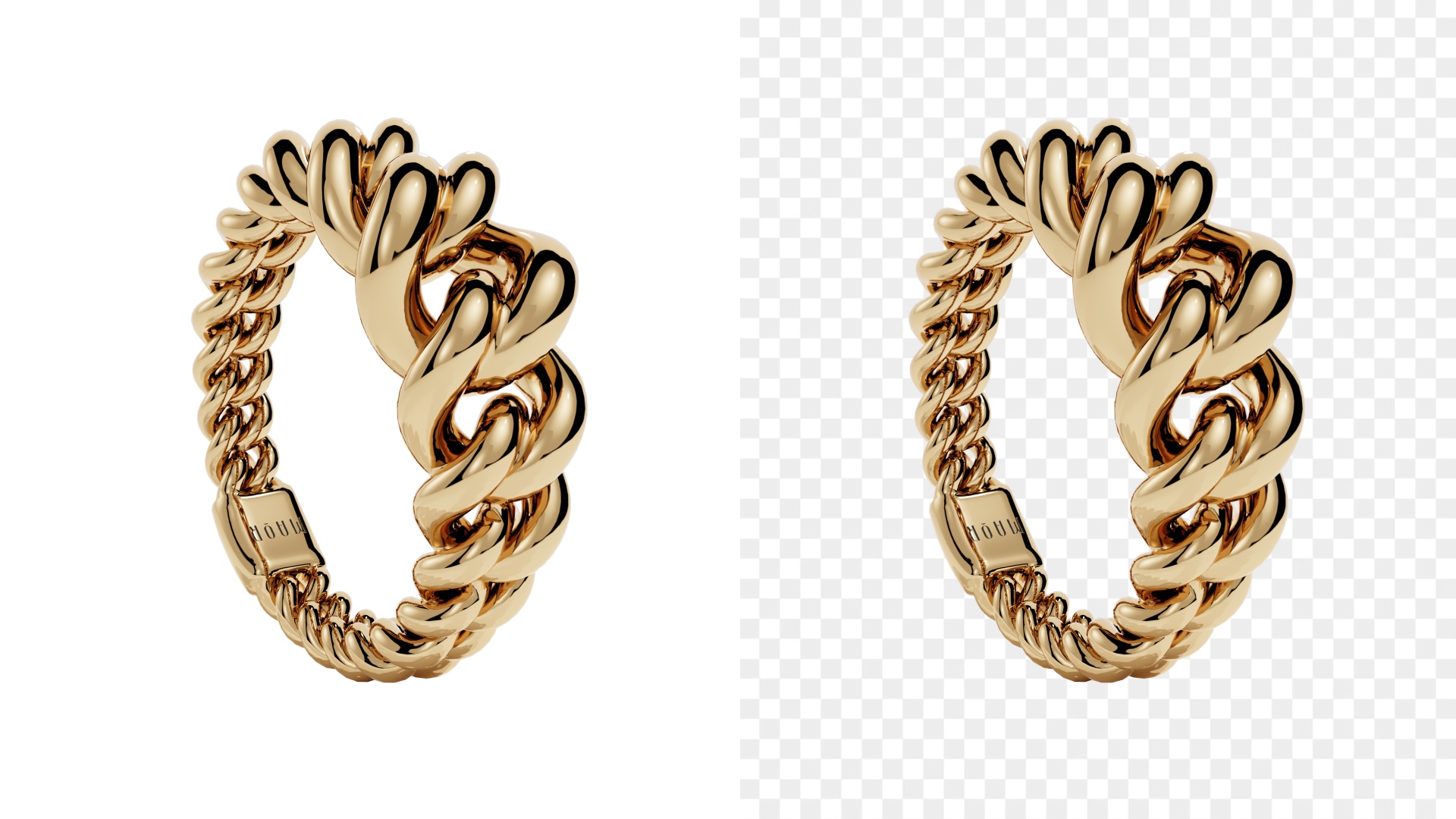
- High-resolution CGI product photography for all nine signature pieces in the new collection.
- Assets formatted for a comprehensive range of aspect ratios to ensure flawless presentation on any platform (16:9 for website banners and TV screens, 9:16 for mobile stories, and 1:1 for social media posts).
But final files aren’t everything. In fact, what makes CGI so valuable is the lasting value our client gets:
- Cost and time savings: No expensive photoshoots, no costly shipping of valuable goods, and no budget-draining retouching. With CGI, the product is perfect from the start.
- Unmatched quality: Every image was spotless, free of dust, smudges, or fingerprints, with perfect lighting and crisp detail. That’s pretty much impossible to capture consistently with a traditional camera.
- Ultimate flexibility: Jewelry Depot Houston now owns permanent 3D models of their signature pieces. These digital twins can be reused in any future campaign, styled in new environments, or used in new animations at a fraction of the initial cost. That’s premium long-term ROI.
Conclusion: Why CGI is the future for luxury product marketing
For JDH and many other brands, CGI is an all-around smarter tool. You get 100% precision from groundbreaking tech plus unlimited creative possibilities — what could be better? This tech x artistic vision fusion, we believe, is the core advantage of CGI. We’ve seen a lot of technicians failing at creative tasks or artists getting stuck in technical ones. At Welpix, we make sure our tools are digital, but our results are grounded in the principles of realistic, compelling photography that make luxury brands like Alon’s shine.
On top of that, we can collaborate remotely across the globe, so we work faster and cheaper than any traditional photography studio. So if you’re ready to create impossible shots and elevate your brand CGI jewelry photography, get in touch with us today.
The cost: Learn how we price our projects
We keep repeating that CGI is cheaper than traditional photography, but there’s a reason behind this. Think of all the photoshoots, reshoots, travel, and actual products saved. But that’s not all. Take a look at our pricing table to see how transparent it is, and how easy it is to calculate depending on what you want. Do you want an image or an animation? Should the background be white, use simple props, or custom (with unlimited creative freedom)? Use the calculator and, why not, speak with our team today!
- 3D modeling
- White bg.
- Minimalistic
- Simple prop
- Custom
- 3D modeling
- White bg.
- Minimalistic
- Simple prop
- Custom
FAQ
What reference materials do you need to start a 3D modeling project?
While 3D CAD files like Rhino files are helpful, they aren’t necessary. We can build a perfect 3D model from high-quality photos or a slow-moving video of the product taken from multiple angles. The key is providing clear, high-resolution visuals so we can see every detail.
How do you achieve such realistic sparkle and reflections on diamonds and metal?
It’s a combination of art and science, really. The accuracy is a result of years of practice and trial-and-error. We use specialized digital materials designed to refract light exactly like real diamonds, and we replicate professional studio lighting setups inside the computer to create flawless, realistic reflections on shiny surfaces.
Why is CGI better than traditional photography with retouching?
Traditional jewelry photography requires a complex process called focus stacking, plus extensive retouching to fix imperfections, dust, and smudges. This can be more than half the work. With CGI, the product is digitally perfect from the start: no retouching or extra costs involved.
What types of final images and videos can you deliver?
We deliver a full range of assets tailored to your needs. For this project, we provided short video animations and still images in a wide range of aspect ratios: 16:9 for website banners and TV screens, 9:16 for mobile stories, and 1:1 for social media posts.
How does your team handle complex or handmade jewelry designs?
Our process is super collaborative and detail-oriented. For complex pieces, we work through an iterative revision process. We build the model, share it for feedback, and make precise adjustments (like correcting prong sizes or material thickness) until the digital model is a perfect match for the physical piece.