
E-commerce is paving the future of the eyewear sector. As modern consumers prize convenience in their shopping, fashion brands and eyewear retailers rely heavily on their online storefronts to reach and serve their customers better. Everyone benefits from this setup: with eyewear sellers requiring fewer physical stores for walk-in customers, they can save more on rent and pass those savings onto customers, who can easily order and receive their products at home.
This system works. According to ECDB, the sunglasses e-commerce market in the US is poised to reach $5.77 billion by 2024, comprising 31.9% of the fashion accessories e-commerce market. The share of sunglasses purchases made on desktop PCs, tablets, or smartphones via website or app also went up to 28.4%, and market researchers expect this chunk of digital sales to increase by an average of 7.7% to 38.2% by 2028.
As such, small eyewear businesses and online eyewear sellers naturally need to invest more in their e-commerce efforts. One way to do so is to make an effort and take eye-catching product photos that show the details of different sunglass models up close, attracting buyers by showcasing unique designs and high quality.
However, taking photos of sunglasses can be challenging, as the surface of the lenses can reflect the flash of the camera. With lighting tips and other tricks, however, you can capture stunning photographs of sunglasses, regardless of their material or shape. Here’s how:
Experimenting with colors

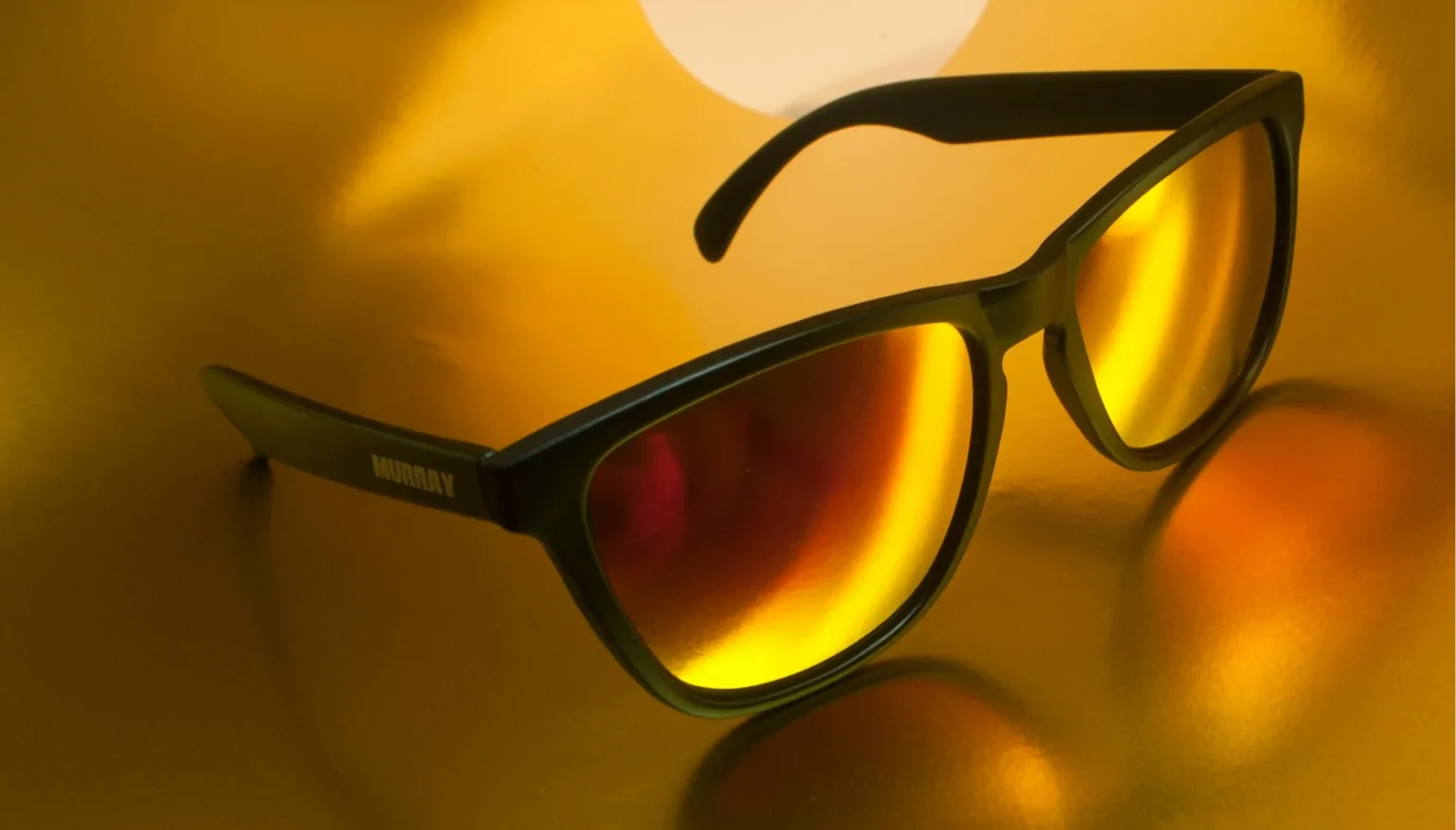
Lighting is crucial for creating shadows and highlights and playing around with studio lighting can help test how colors come out. Depending on the style and look of the sunglasses you’re working with, you can use lighting to match or contrast different hues with different sunglass lens tints or frame colorways.
Eyewear brand Ray-Ban has lots of colorful women’s sunglasses, ranging from the Clubmaster Classic that comes in tortoiseshell frames and lens tints like Havana Gold and G-15 Green, while the Emy Bio-Based line features playful lens tints like pink, violet, and blue.
For these Emy Bio-Based line models, putting on equally colorful lighting can help highlight the sunglasses or make their colors pop, making them look more appealing to trend-hunting shoppers. Another way is to contract brightly colored sunglasses with a darker background to help the shades pop.
Expressing moods
Sunglasses have different “vibes” to suit the occasion, whether you’re dressing to impress with flashy new trends or roughing it outdoors with sports, driving, or fishing. As such, lighting is key to capturing these varying moods. Knowing how to play with different lighting setups can help you highlight the sunglasses’ different use cases.
For example, stylish sunglasses models are great for studio lighting for more polished photographs with colors that pop. Meanwhile, sunglasses used for sports or outdoor purposes may be better photographed under natural outdoor lighting.
In a previous post, we highlighted how natural lighting can give your product photos a specific mood or aesthetic. This is especially true for sports sunglasses, where you can combine natural lighting with other outdoorsy props or elements to emphasize the purpose of these glasses. For example, sports sunglasses like the new Ferrari line nods to Formula 1 history (combined with the latest in smart eyewear technology), so making use of flashy lighting setups and using colorful lighting can also highlight the shiny blue and yellow racing-themed colorways of the eyewear.
Diffusing your light

When figuring out your lighting setup for your specific sunglasses, it can also help not to use too much lighting. As mentioned in our introduction, some sunglasses materials can be more difficult to photograph. Mirrored sunglasses have been a style trend for years due to their specific look. Many action film posters, for example, use mirrored sunglasses to highlight other elements of the film.
At the same time, mirrors are notoriously difficult to photograph due to possible light reflections and harsh glares from your camera flashes or other lighting equipment. In this case, diffusing your lights can help. One of the most common types of mirrored sunglasses is the aviator lens shape, which can be a challenge due to the oversized lenses.
Aside from diffusing your light, you can also experiment with other props or colors by reflecting them onto the lenses so that the mirror lenses aren’t just blasting white light from your camera flash or lighting setup.
Highlighting shapes
Another tip for lighting your sunglasses photography is to use light and shadows to highlight shapes, especially as sunglasses come in more avant-garde styles. We’re living in an era where 3D-printed eyewear frames are incredibly popular, while many eyewear designers are innovating traditional sunglass shapes, creating unique or even asymmetrical silhouettes.
Case in point, Ray-Ban recently released the first-ever concave sunglasses that were manufactured using patented technology. Dubbed the Ray-Ban Reverse sunglasses, the new line curves slightly inward towards the eye instead of outward. This is a great opportunity to play around with angles and lighting to show off this unique point of the eyewear.
Playing with harsh lighting can also create interesting shadows, highlighting unique shapes and silhouettes, which will help the sunglasses you photograph stand out from other sunglasses on the market.
Other ways to highlight sunglasses shapes include using harsh overhead lighting for a flat-lay approach, helping emphasize lens shapes and sizes.
Showing off-frame materials
Finally, lighting can also be crucial for showing off frame materials. Sunglasses made with metal frames, for example, can be a good canvas for light reflections to help highlight the material, whether glossy or matte. It’s still important, however, not to use too much lighting to prevent too much glare from camera flashes or other elements.
On the other hand, clear or transparent sunglass frames can be a struggle to shoot due to the translucent material. For this type of sunglasses, set up your lighting as part of the background of the shoot instead of placing the lights around the product.
You can also lower the lighting intensity to help the clear frames stand out against the background instead of simply letting light pass through. Meanwhile, other frame styles that use unique materials like wood or bamboo can significantly benefit from angle and lighting to highlight textures or accents.


Wrapping up
E-commerce has undeniably transformed the eyewear industry, enabling brands to reach a broader audience while offering customers convenience and cost savings. As the market continues to grow, especially in the sunglasses sector, high-quality product photography becomes paramount.
By mastering lighting techniques, businesses can effectively showcase the unique features, materials, and styles of their eyewear, ultimately driving more sales and standing out in a competitive digital marketplace. As consumers increasingly rely on visuals to purchase, investing in exceptional product photos will be key to capturing attention and enhancing the overall shopping experience.
FAQ
Why is lighting important in sunglasses photography?
Lighting is crucial for creating shadows, highlighting colors, and emphasizing the shape and material of sunglasses. Proper lighting techniques can prevent glare and reflections while making the sunglasses appear more appealing to potential buyers.
What challenges come with photographing mirrored sunglasses?
Mirrored sunglasses can reflect light from the camera flash or studio lighting, causing unwanted glare. To avoid this, it’s best to diffuse the lighting and experiment with angles or props that reflect onto the lenses.
How can I make colorful sunglasses stand out in product photos?
You can use complementary or contrasting lighting to make the colors pop. For example, using a darker background can help brightly colored frames or lenses stand out, or you can use lighting that matches the hues of the sunglasses.
What’s the best way to photograph sunglasses with transparent frames?
For clear or transparent frames, lighting should be positioned as part of the background instead of directly around the product. Lowering the intensity of the lighting can help the frames stand out against the backdrop.
Can natural lighting be used for all types of sunglasses photography?
Natural lighting is excellent for outdoor or sports-focused sunglasses, enhancing their purpose and mood. However, for studio shots or fashion-forward designs, controlled studio lighting may be better for achieving polished, professional photos.