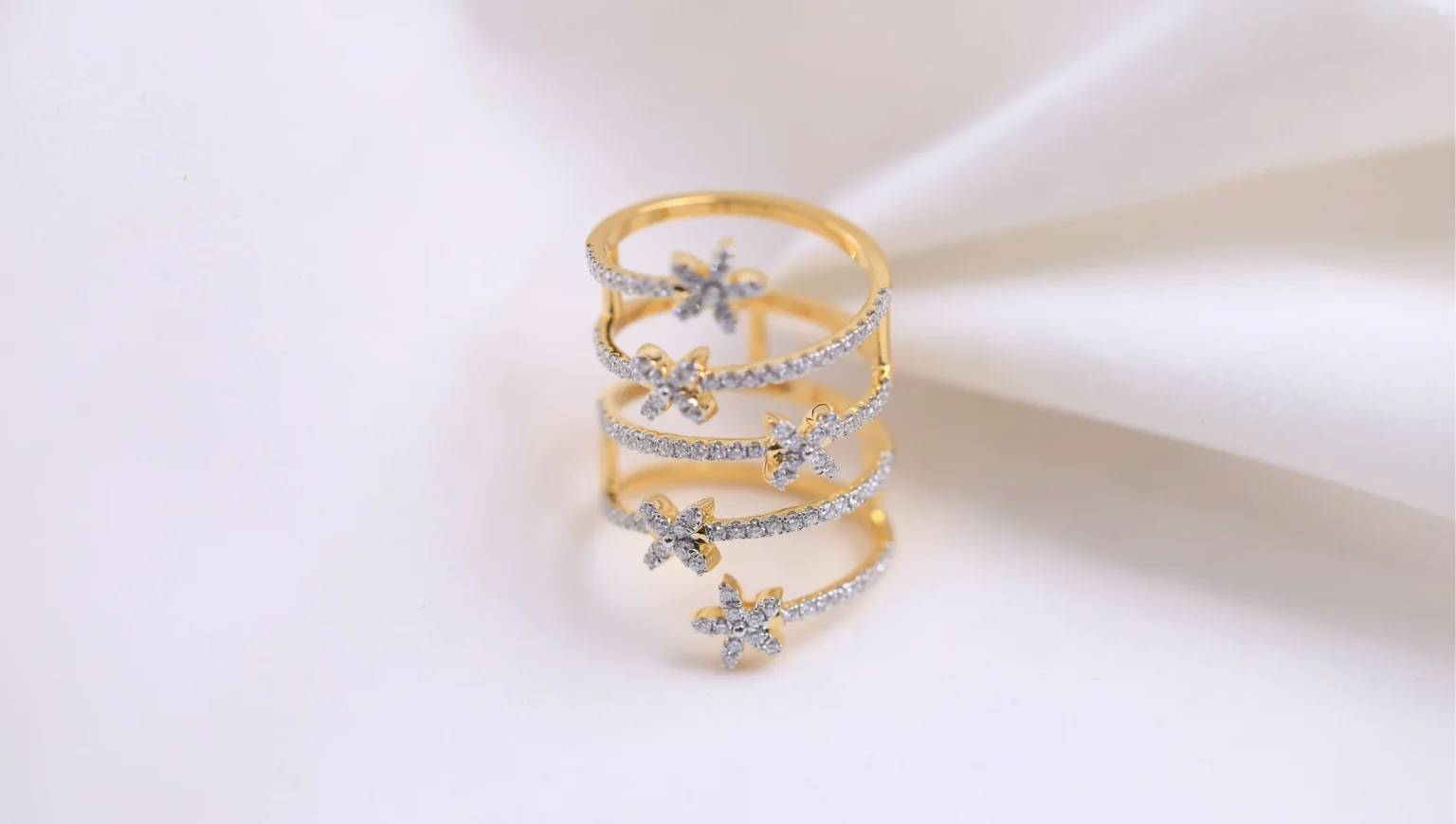
Jewelry photography sounds simple enough. It’s small and it sparkles, so you just need a good zoom feature, right? Not really. Jewelry product photography is one of the most technically demanding niches in ecommerce. The more you explore jewelry photography ideas, the more you realize how much technique and attention to detail the work actually demands.
You’re dealing with reflective metals, tiny prongs, and transparent gemstones that must be shown accurately online, plus fingerprints and smudges that show up like crime-scene evidence. And trust us, your buyers will zoom in 300% before they even consider a piece.

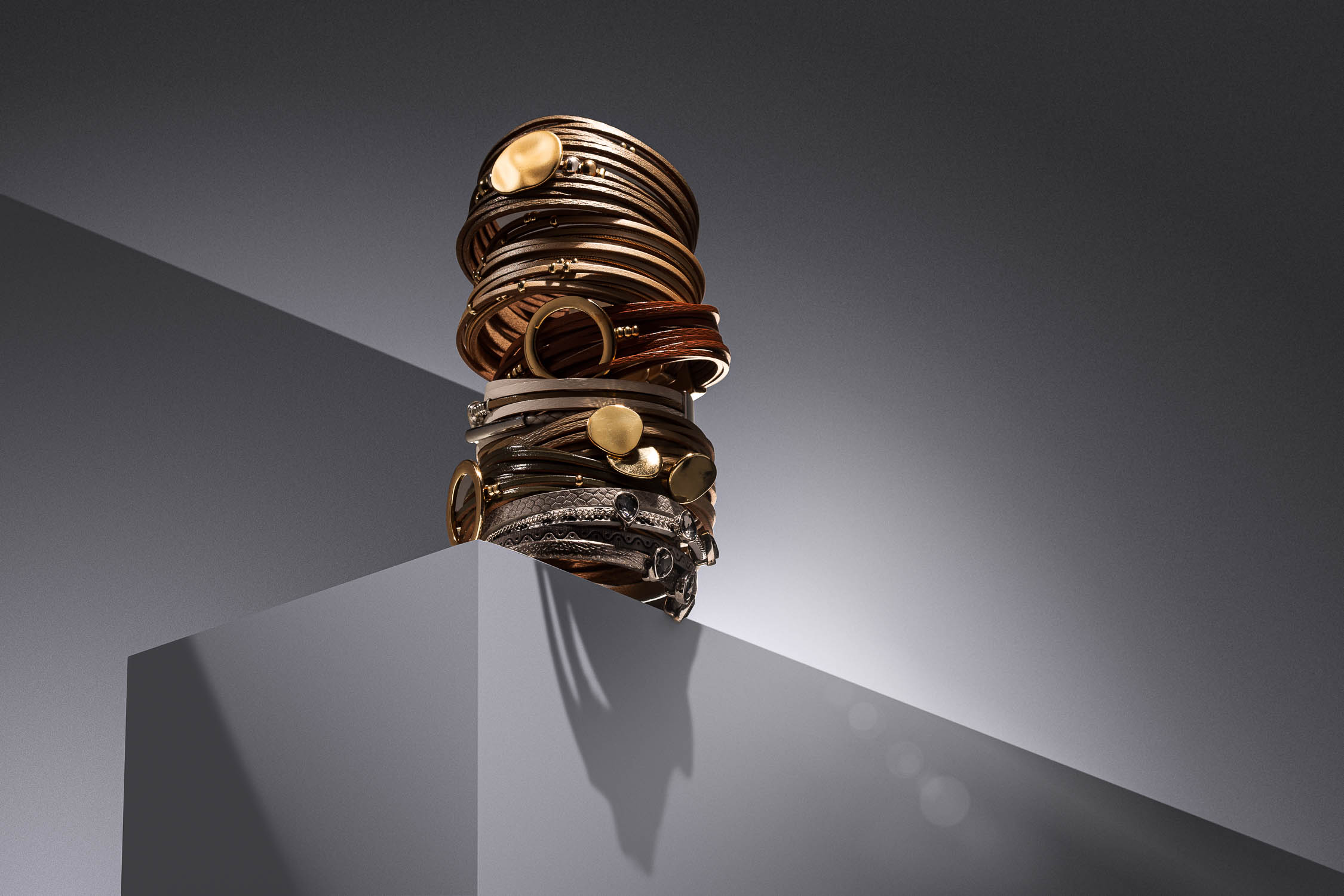
In ecommerce, your visuals are your top sales assistant, whether you’re selling engagement rings, minimalist necklaces, or bold statement earrings. Great photos build trust, and without them, you simply won’t sell. That’s exactly why we’ve made this guide.
What is jewelry photography?
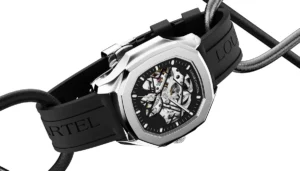
Jewelry photography is the art and science of capturing jewelry in a way that highlights every detail, texture, brilliance, and craftsmanship, with the end goal of driving sales. What makes it unique is the extreme precision it demands. You’re capturing millimeter-level details: diamond cuts, metal polish, gemstone clarity, engraving depth.
This is why the best jewelry photography ideas always start with understanding the piece itself, its metal type, stone setting, and finish, before a single shot is taken. A skilled jewelry photographer has to master lighting control, macro photography, styling, and post-production.
In ecommerce, jewelry product photography usually includes:
- Clean white-background product shots
- Creative jewelry photoshoot setups
- Lifestyle imagery (on models or hands)
- Necklace product photography with natural draping
- High-resolution close-ups for zoom functionality
15 creative styling ideas for jewelry photography
Beyond lighting control and great equipment, styling is one of those layers that can completely transform your jewelry photoshoot. Here are 15 creative jewelry photography ideas we love that you can test.
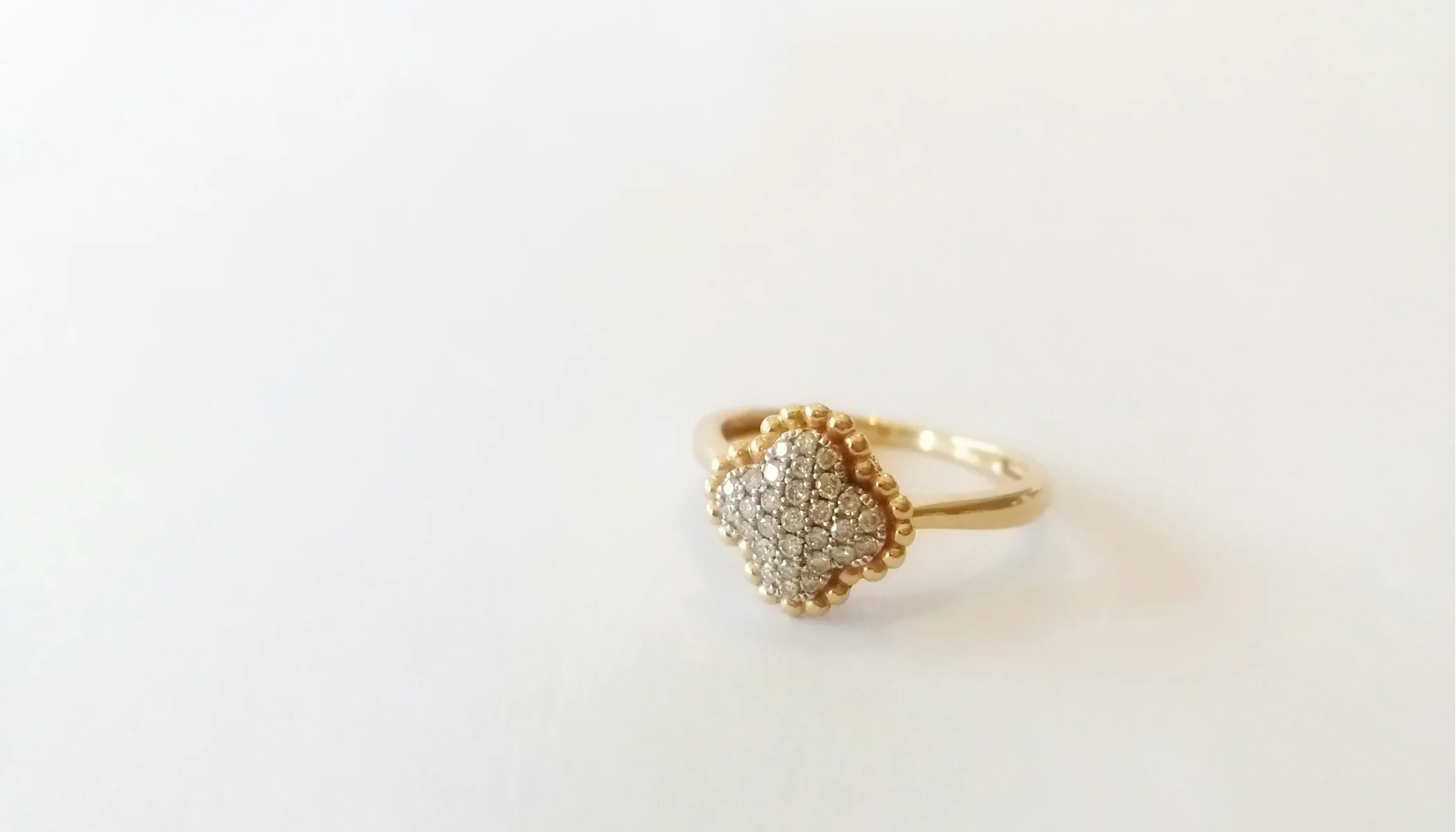
1. Minimalist white-on-white
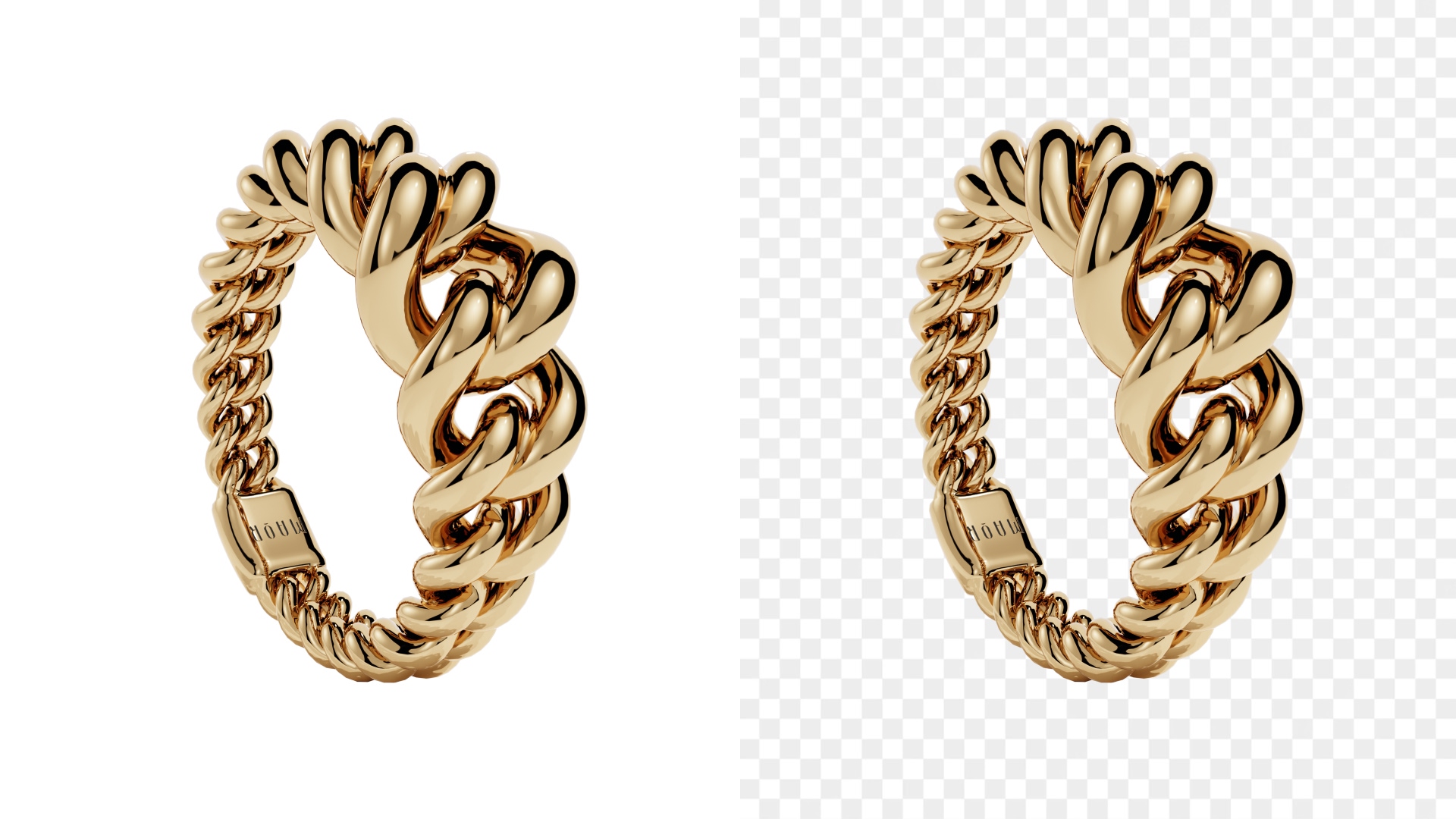
Clean backgrounds keep the focus on your piece’s craftsmanship. This approach works wonders if you have a luxury brand because you’ll probably want to communicate that timeless, professional jewelry photography feel.
2. Natural stone textures
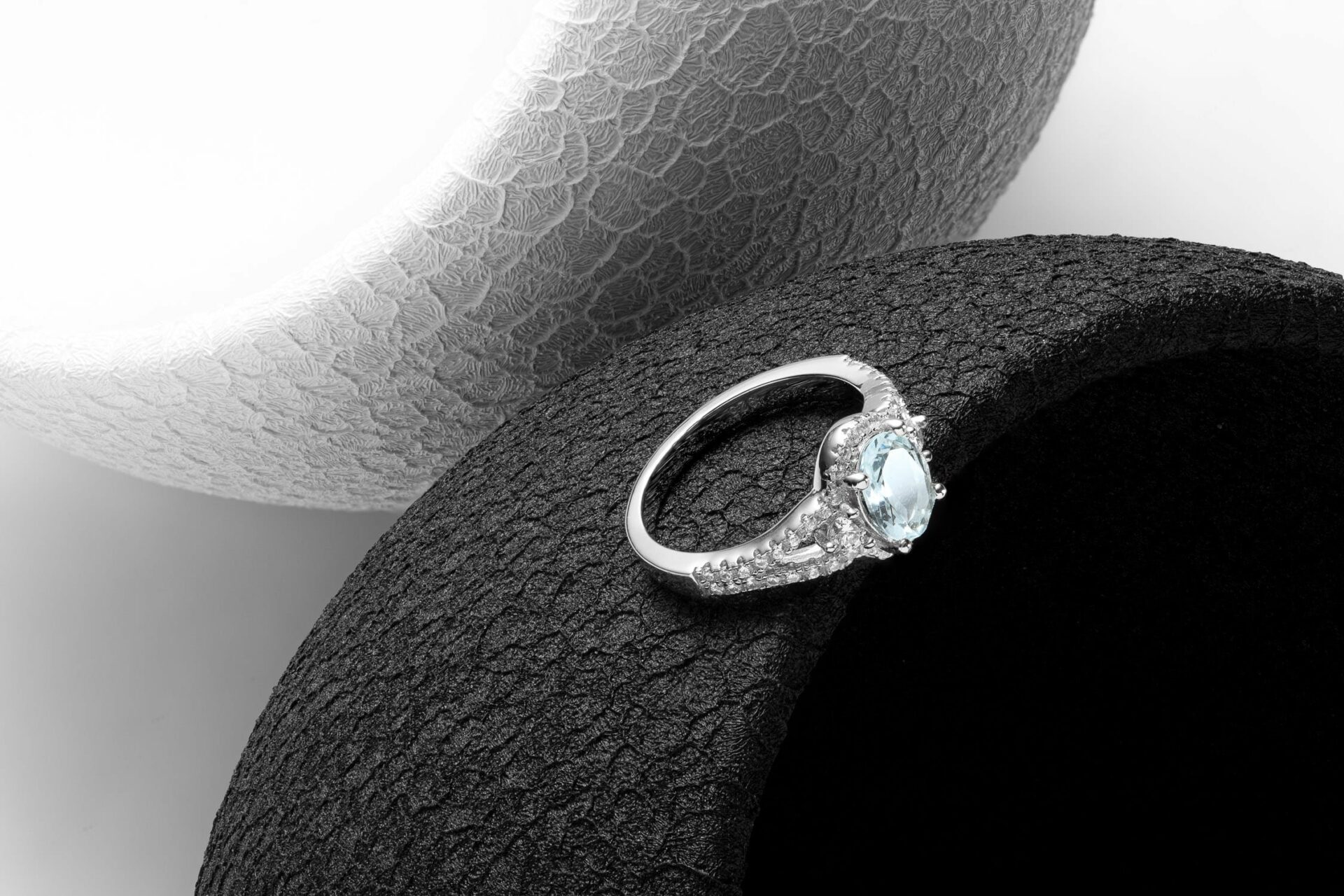
Place rings or bracelets on marble, granite, or slate. The contrast enhances metal shine and makes necklace photography feel grounded and tactile.
3. Reflective acrylic surfaces
A glossy base creates subtle reflections that elevate your jewelry product photography without overwhelming it.
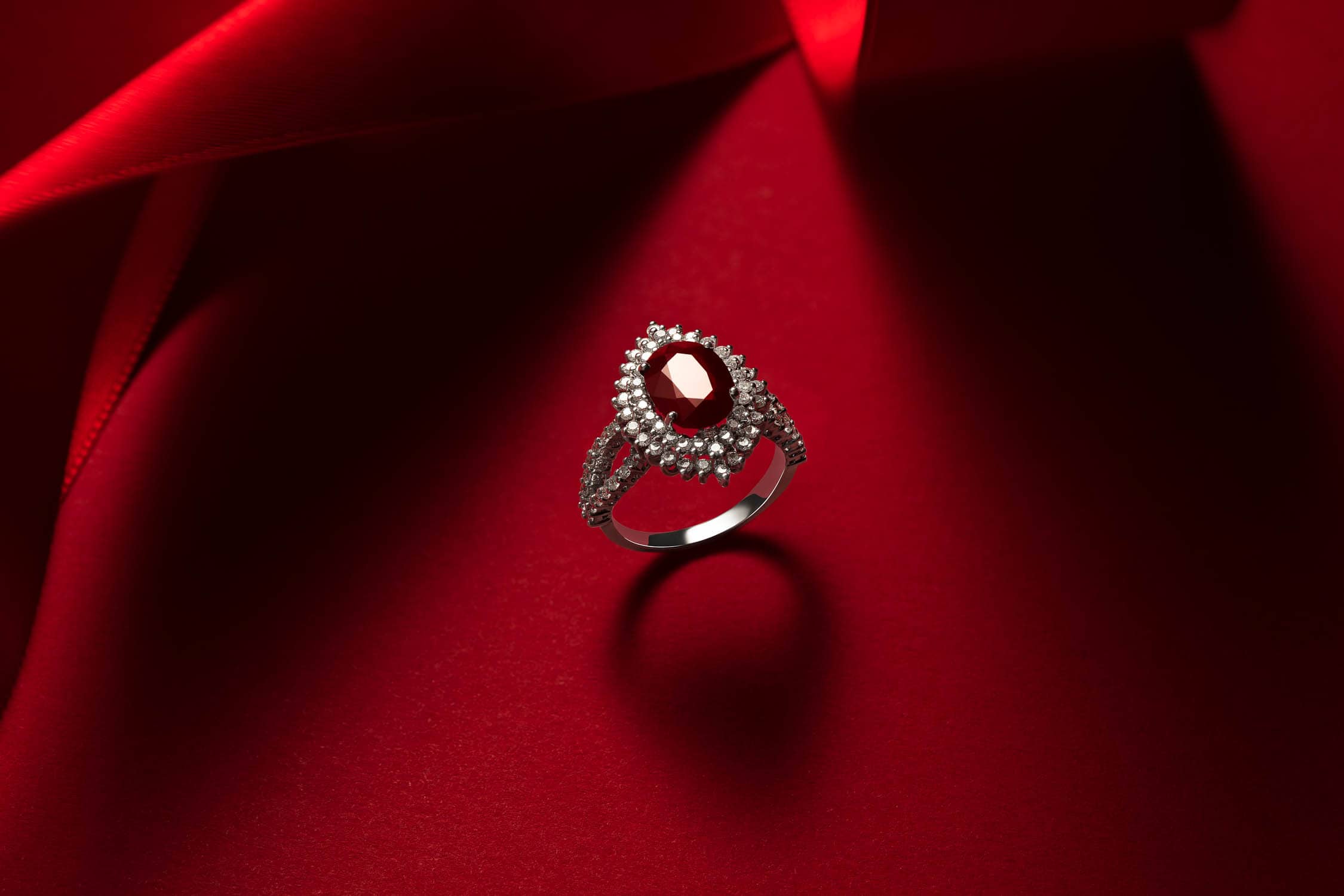
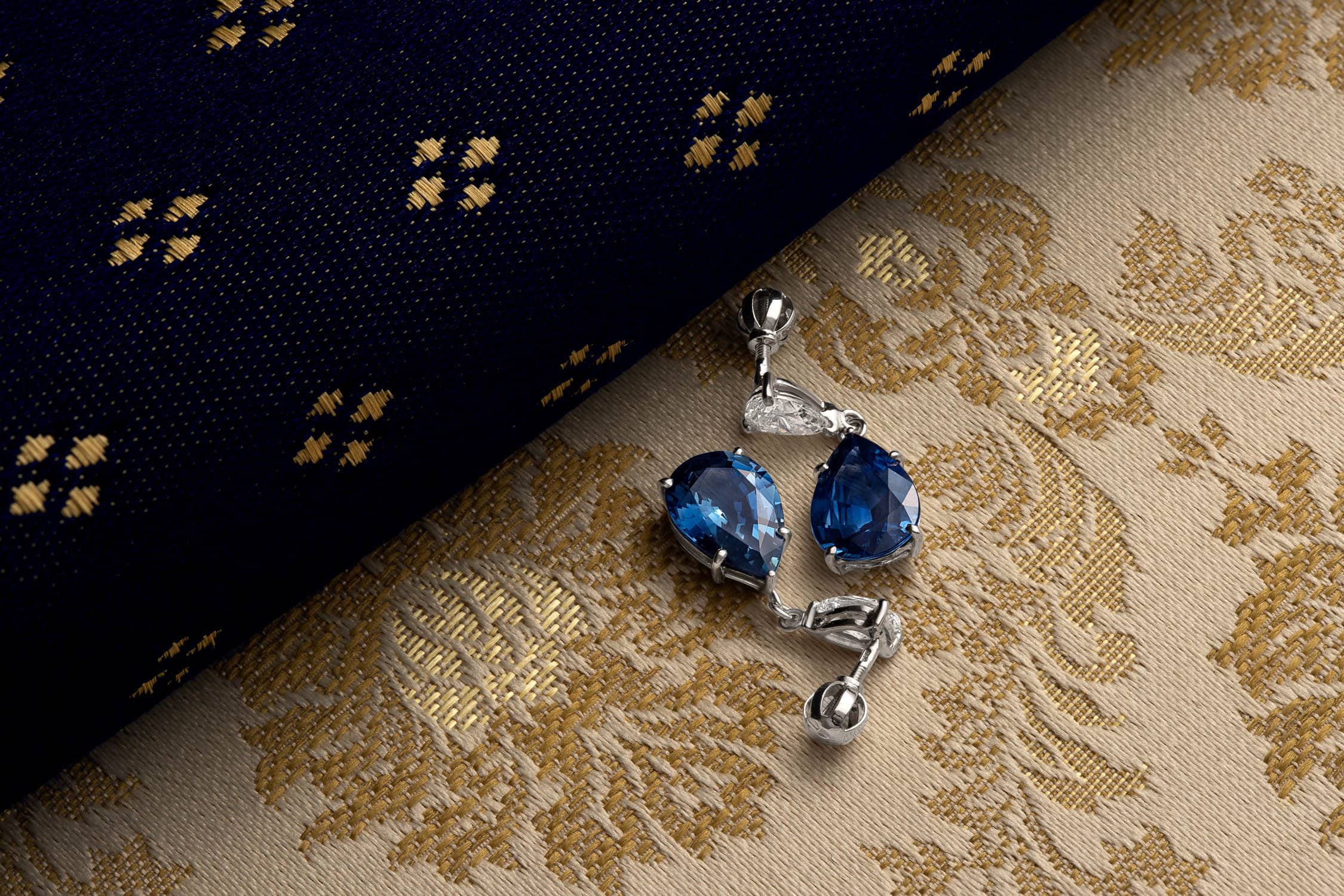
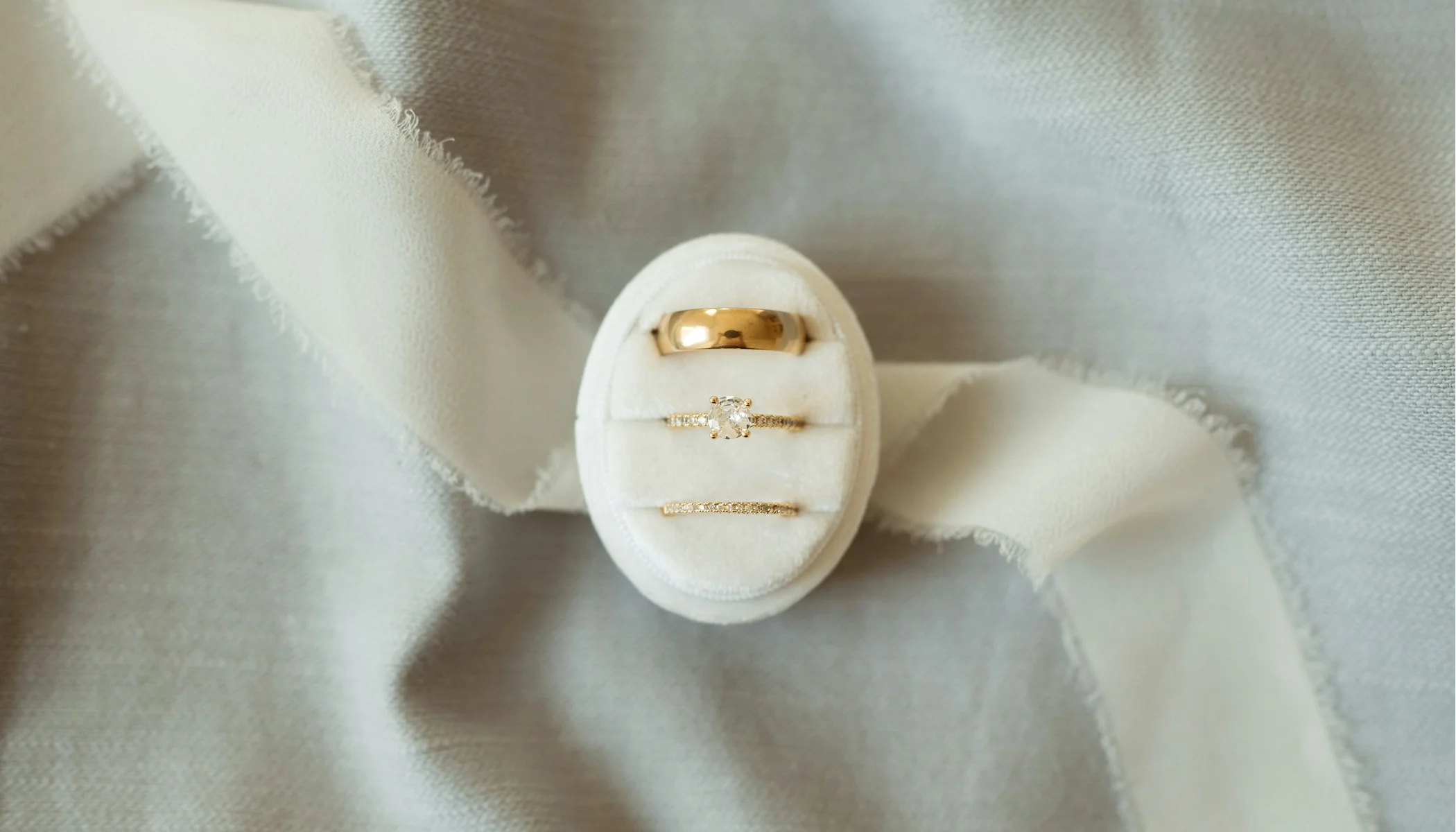
4. Fabric backdrops
Think silk, linen, or velvet —- these can add softness and depth. If you’re photographing jewelry with a romantic or heritage aesthetic, this is a great choice.
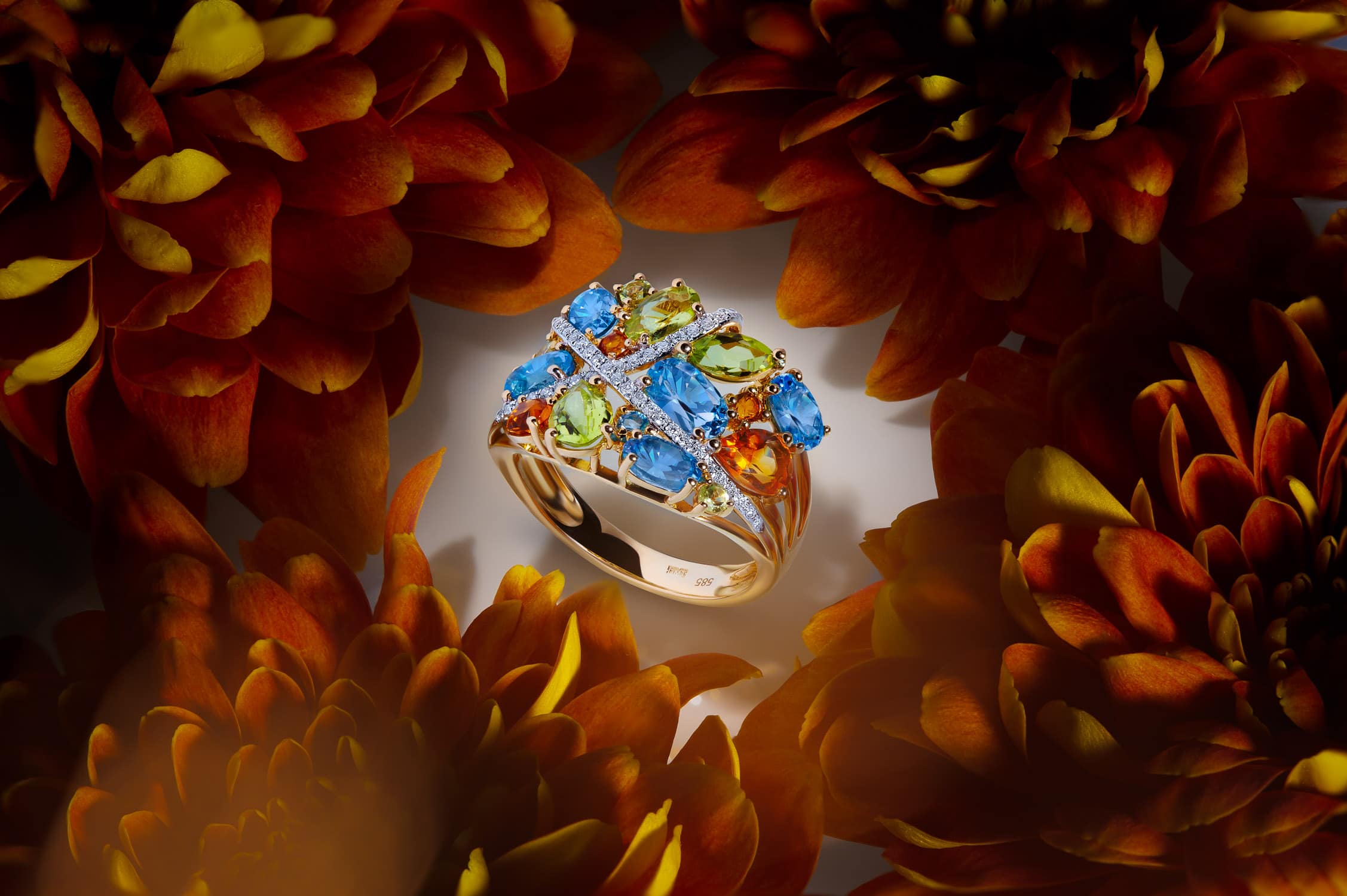
5. Seasonal themes
Snow, sand, flowers, or autumn leaves can create context. These jewelry photography ideas are super powerful for campaign launches.
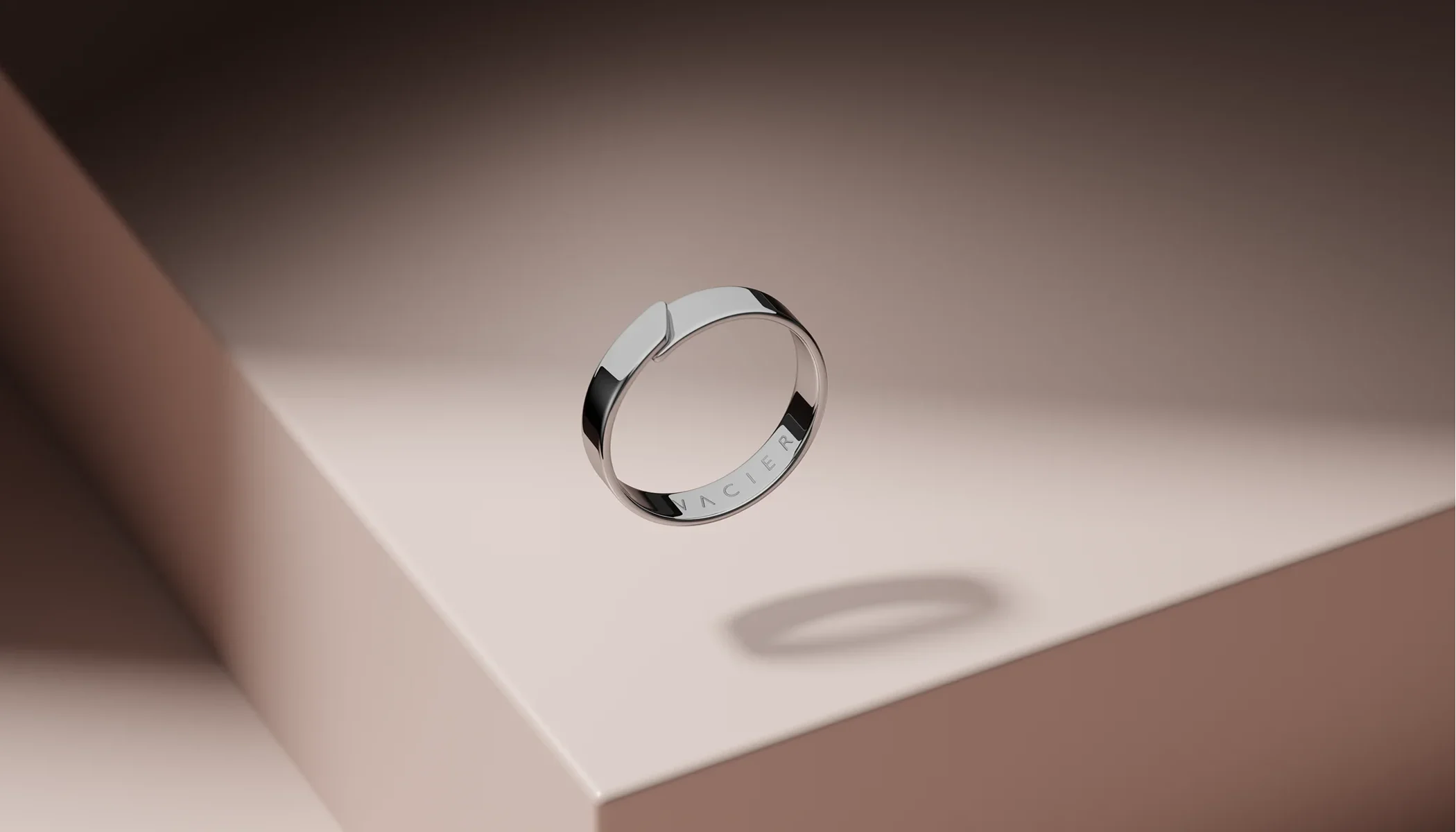
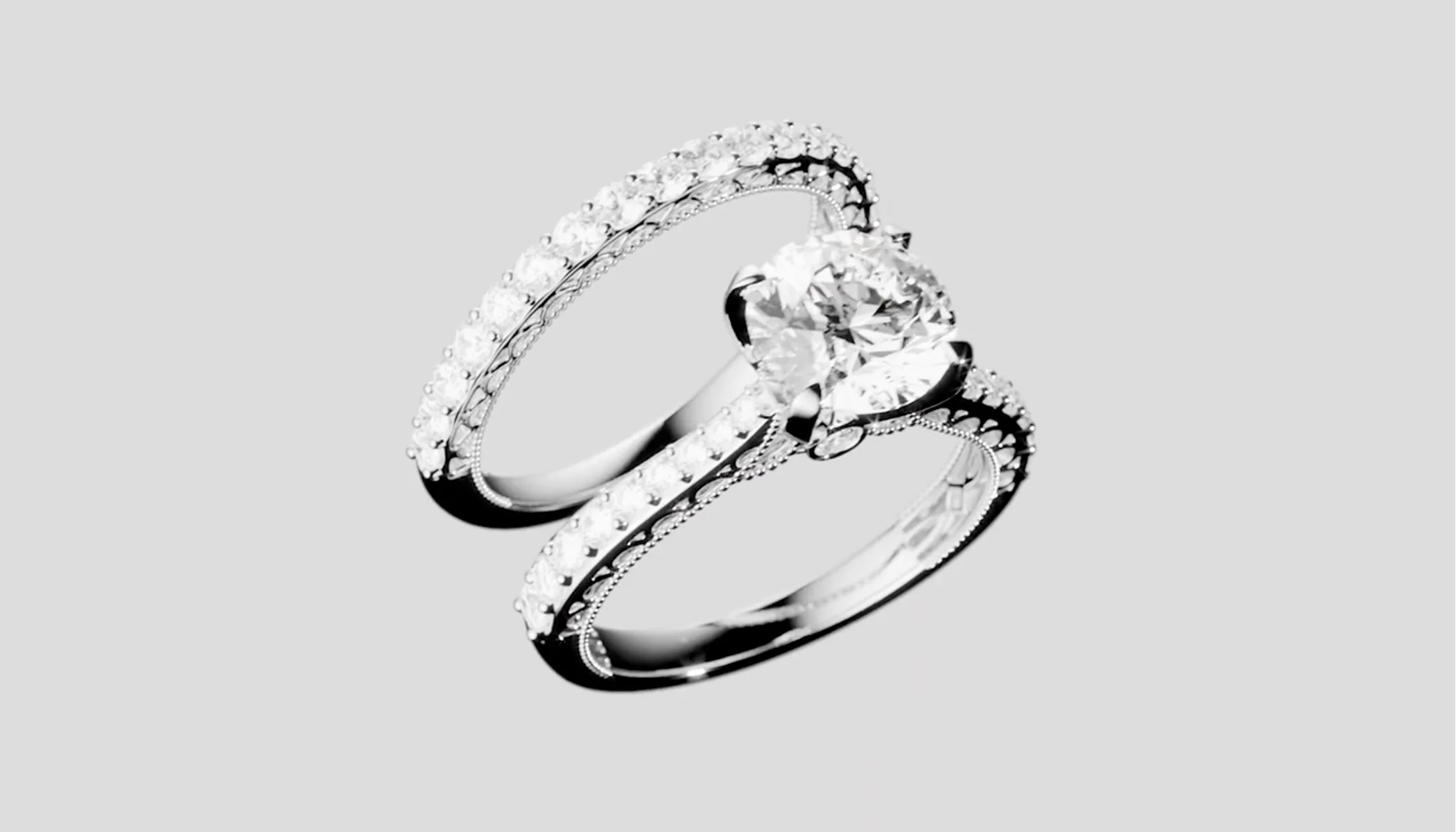
6. Floating jewelry effect
Using invisible threads or 3D techniques creates weightless visuals. Take a look on other jewelry stores right now and you’ll see more and more brands are using this approach in creative jewelry photography.
7. Shadow play
Strong directional light creates dramatic shadows, which is a good choice for bolder product photography jewelry concepts. Just make sure you don’t overdo it — you don’t want those Tumblr 2006 vibes.
8. Monochrome color stories
Always match your background tones to your gemstone’s hues. This keeps attention on the piece while adding visual cohesion.
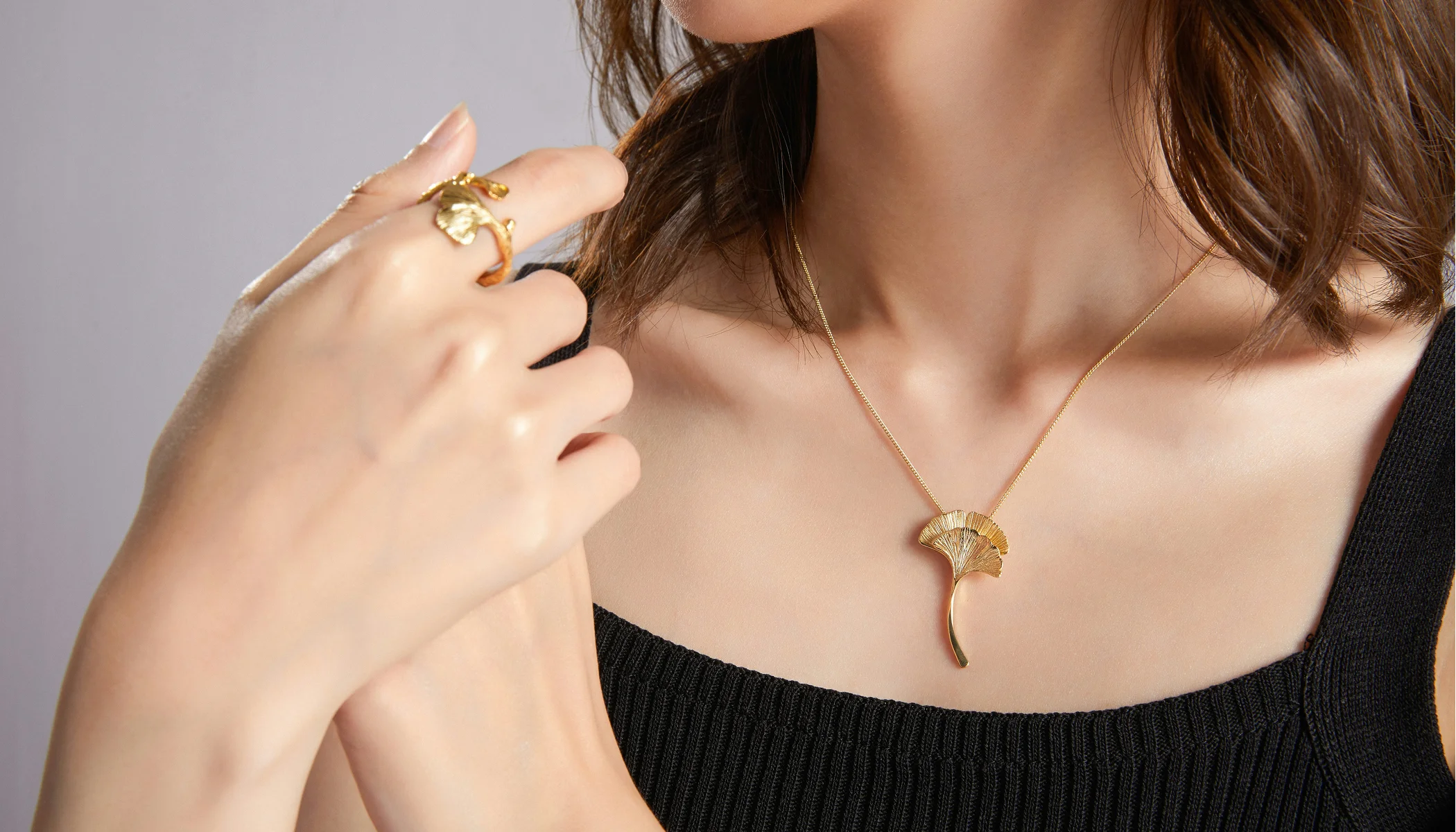
9. Lifestyle close-ups
Hands adjusting a necklace or fastening earrings feel relatable, which creates an emotional connection (which, in turn, drives salves).
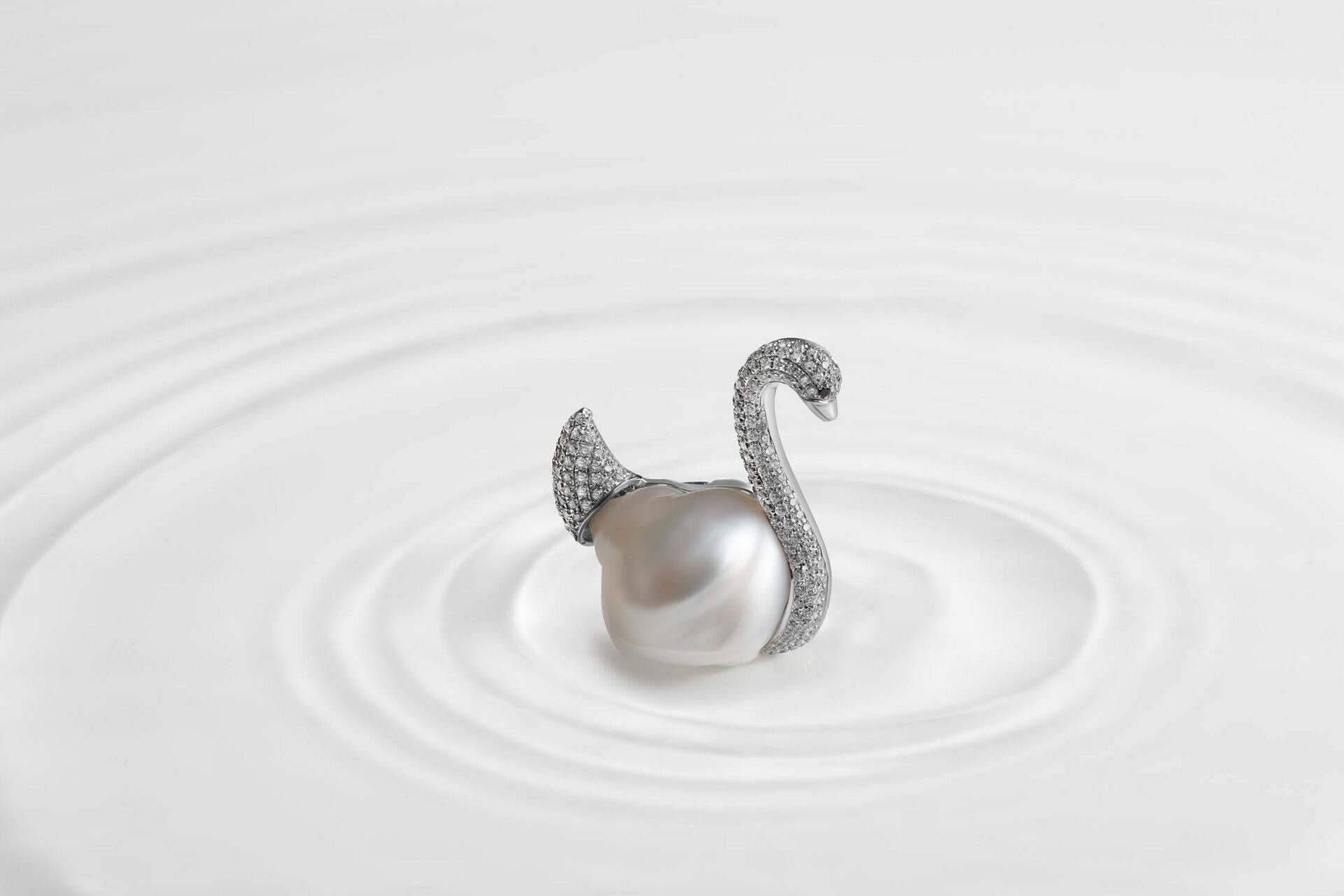
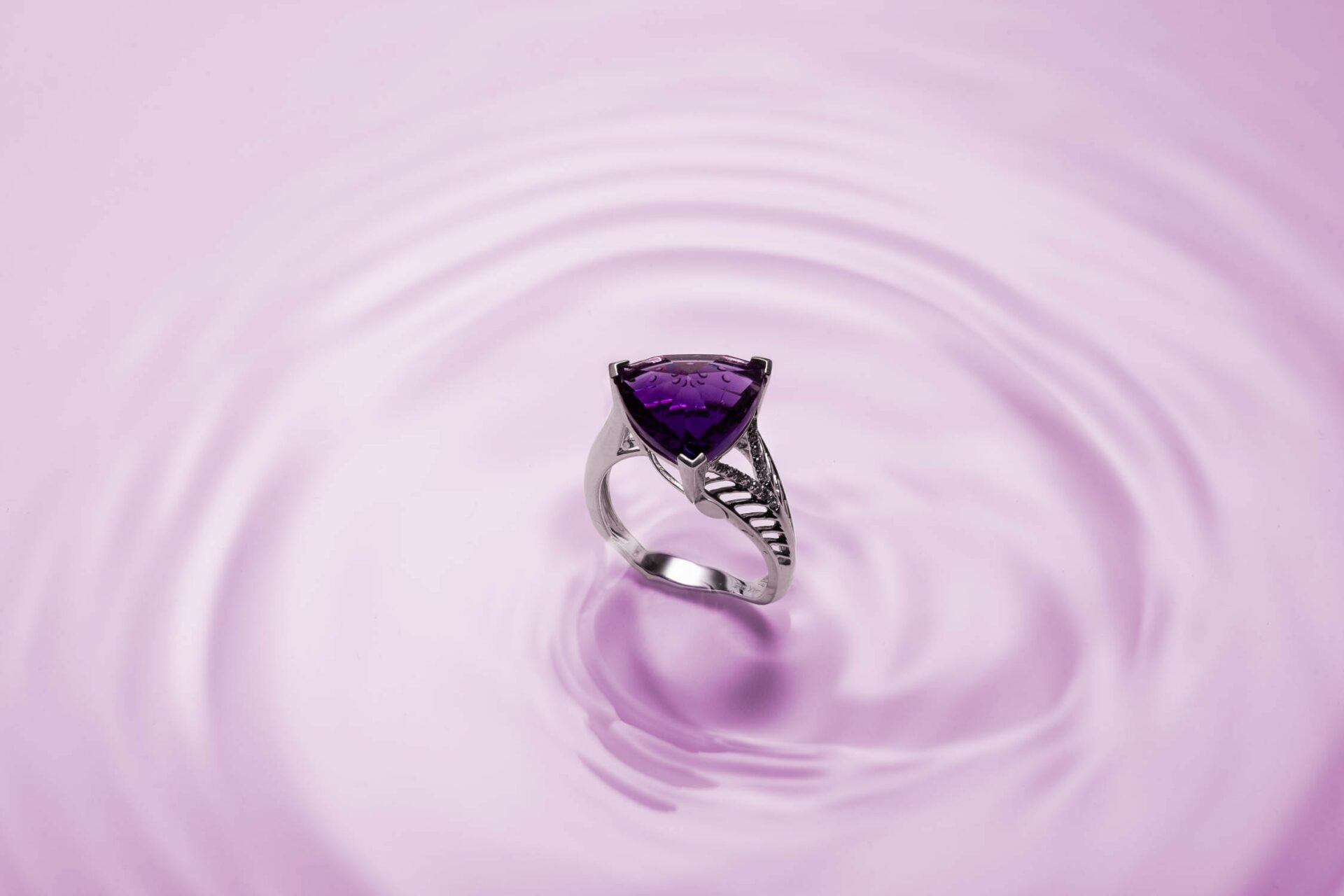
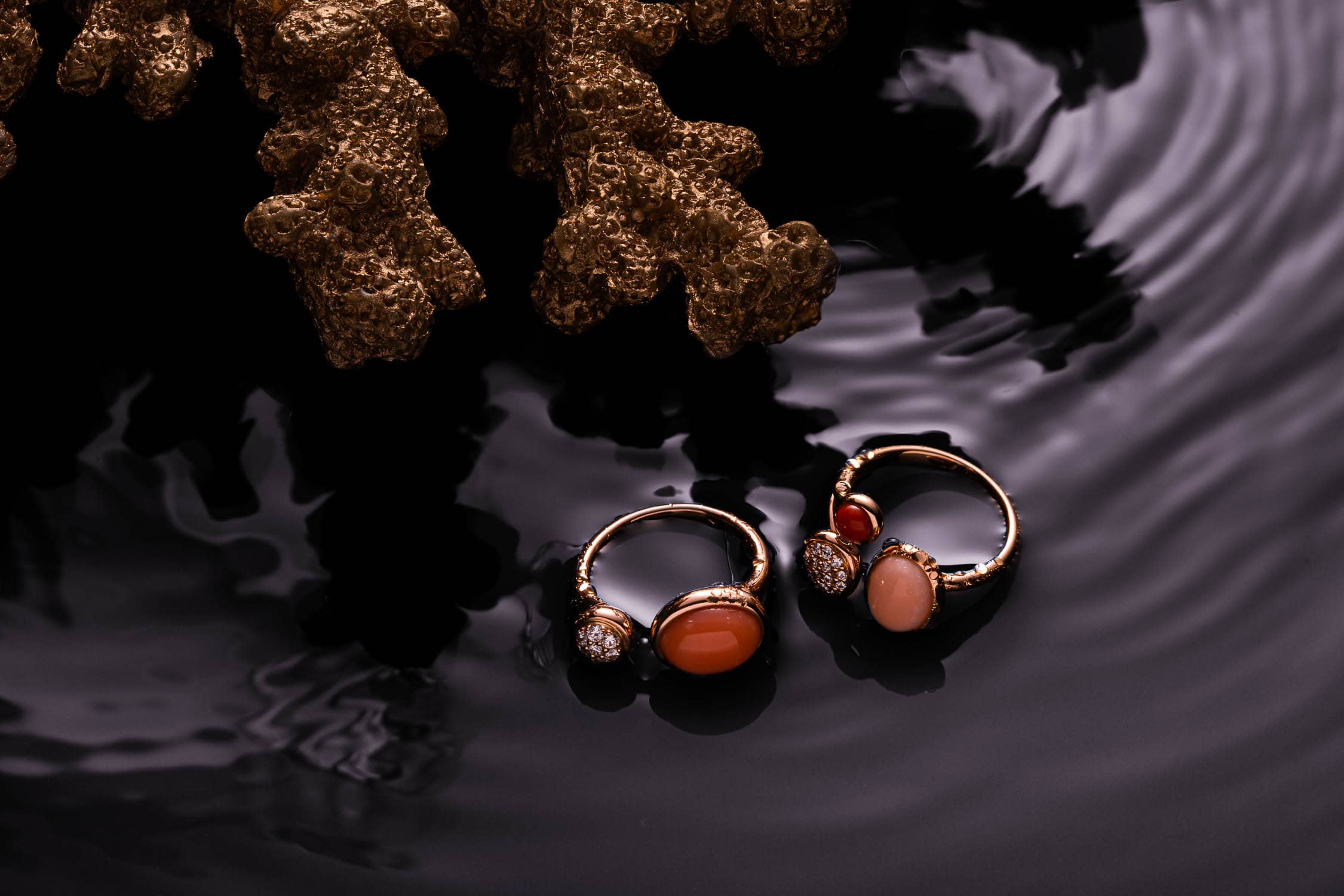
10. Water reflections
Carefully controlled water elements create luxury vibes; this works best for high-end necklace product photography.
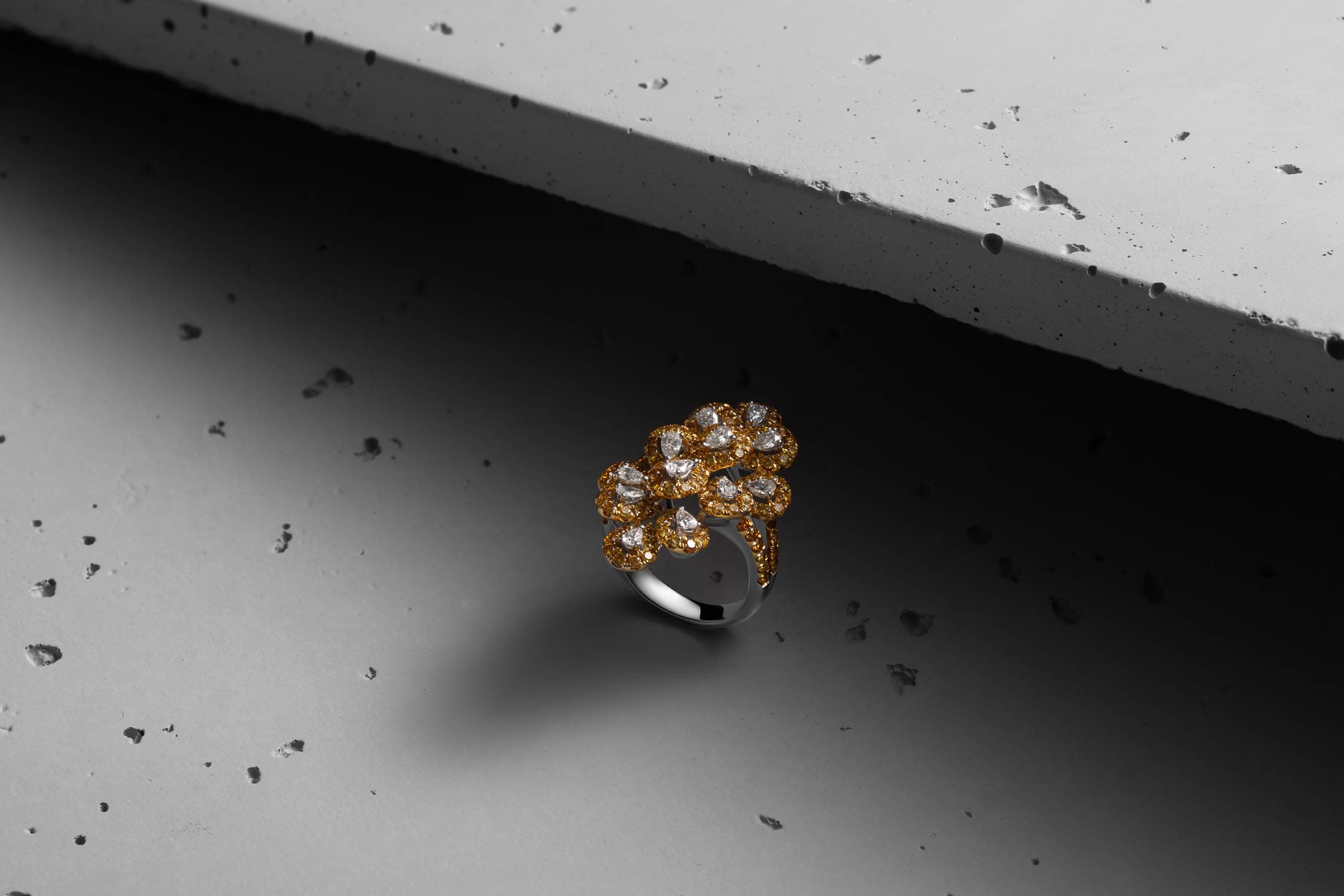
11. Contrast with raw materials
Pair polished jewelry with wood, sand, or concrete. The tension between various materials highlights your pieces’ refinement.
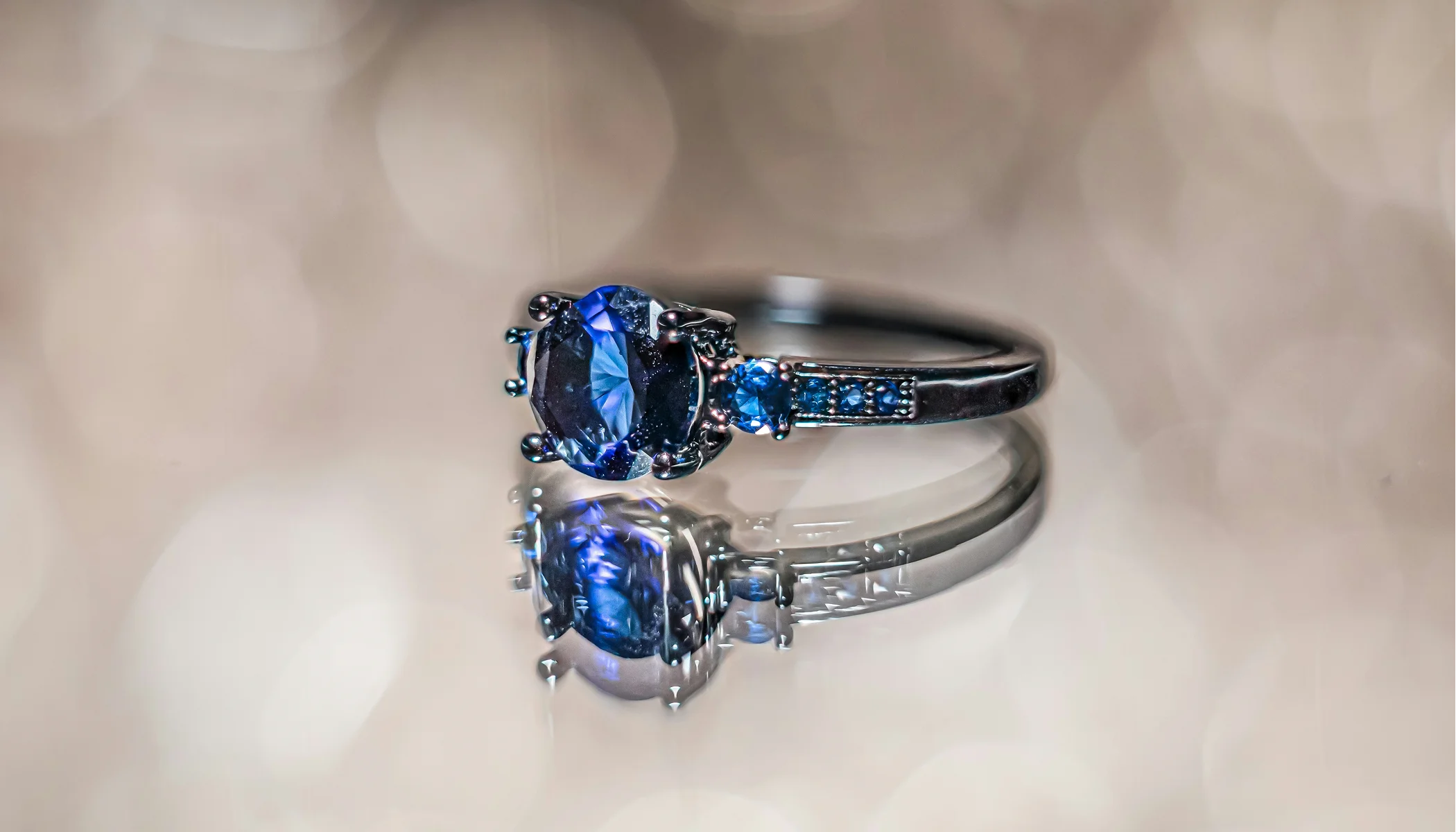
12. Mirror compositions
Strategic mirror use doubles visual impact and shows angles in one frame.
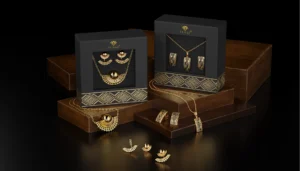
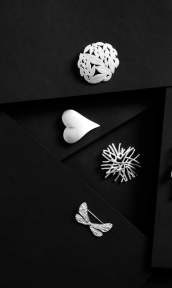
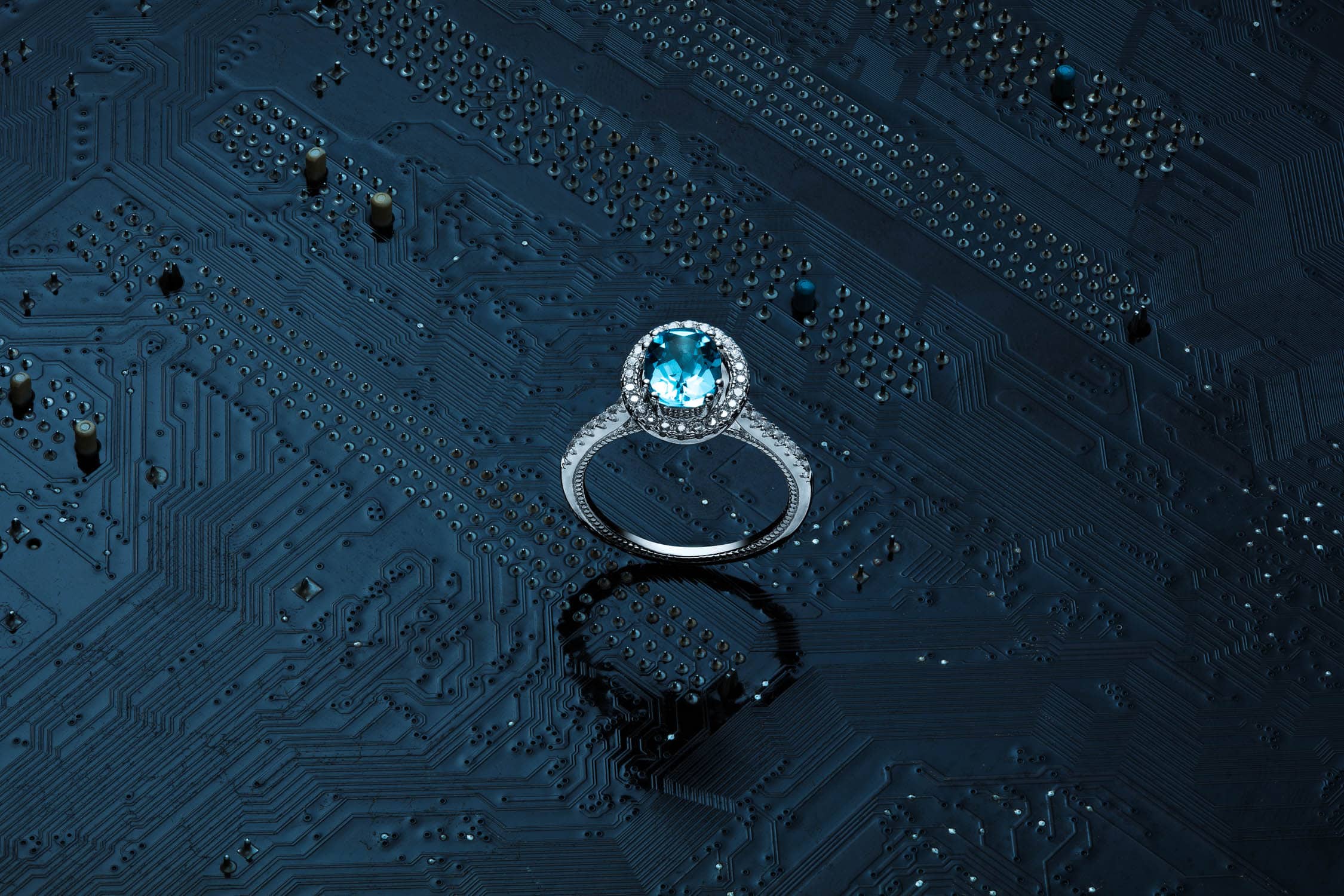
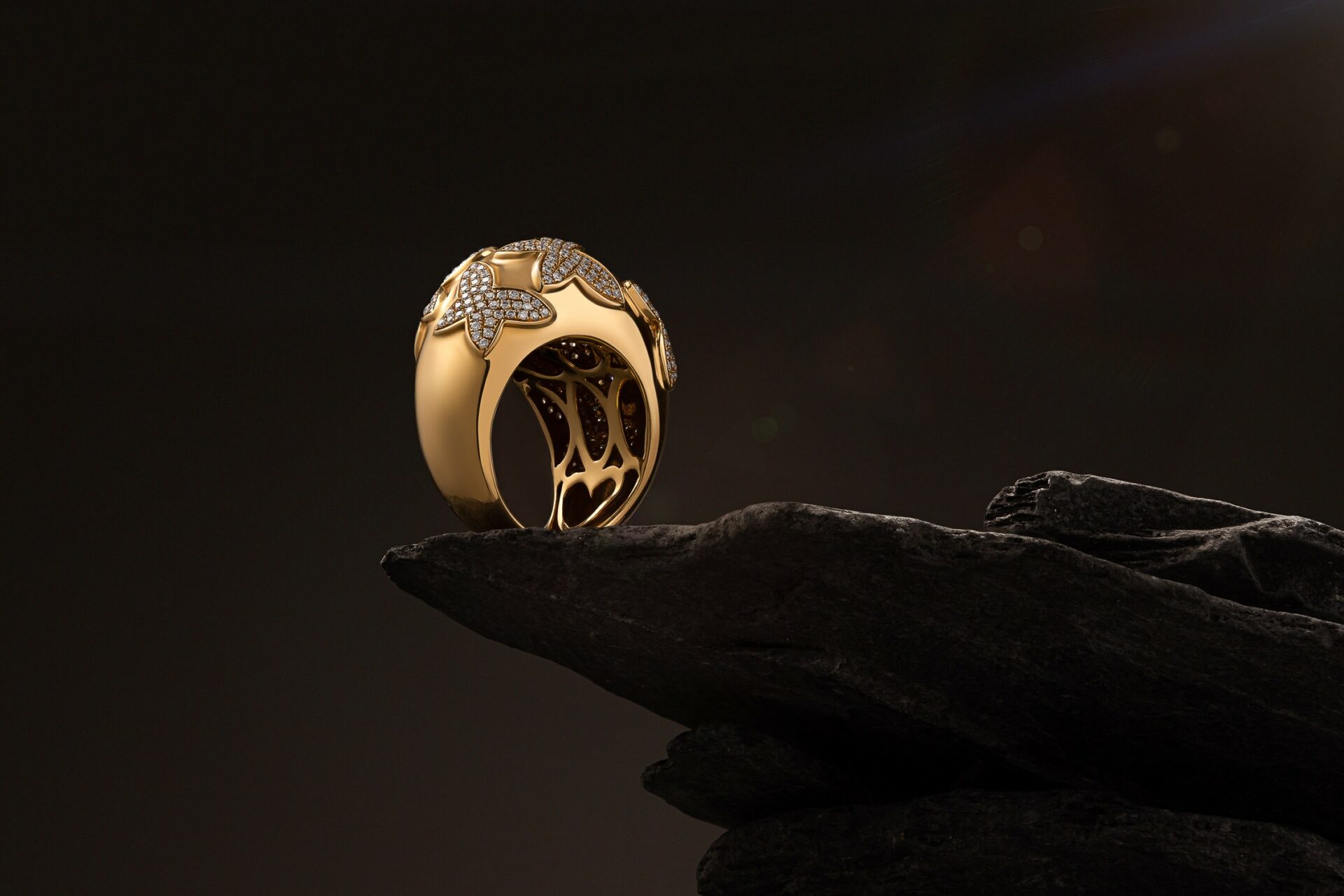
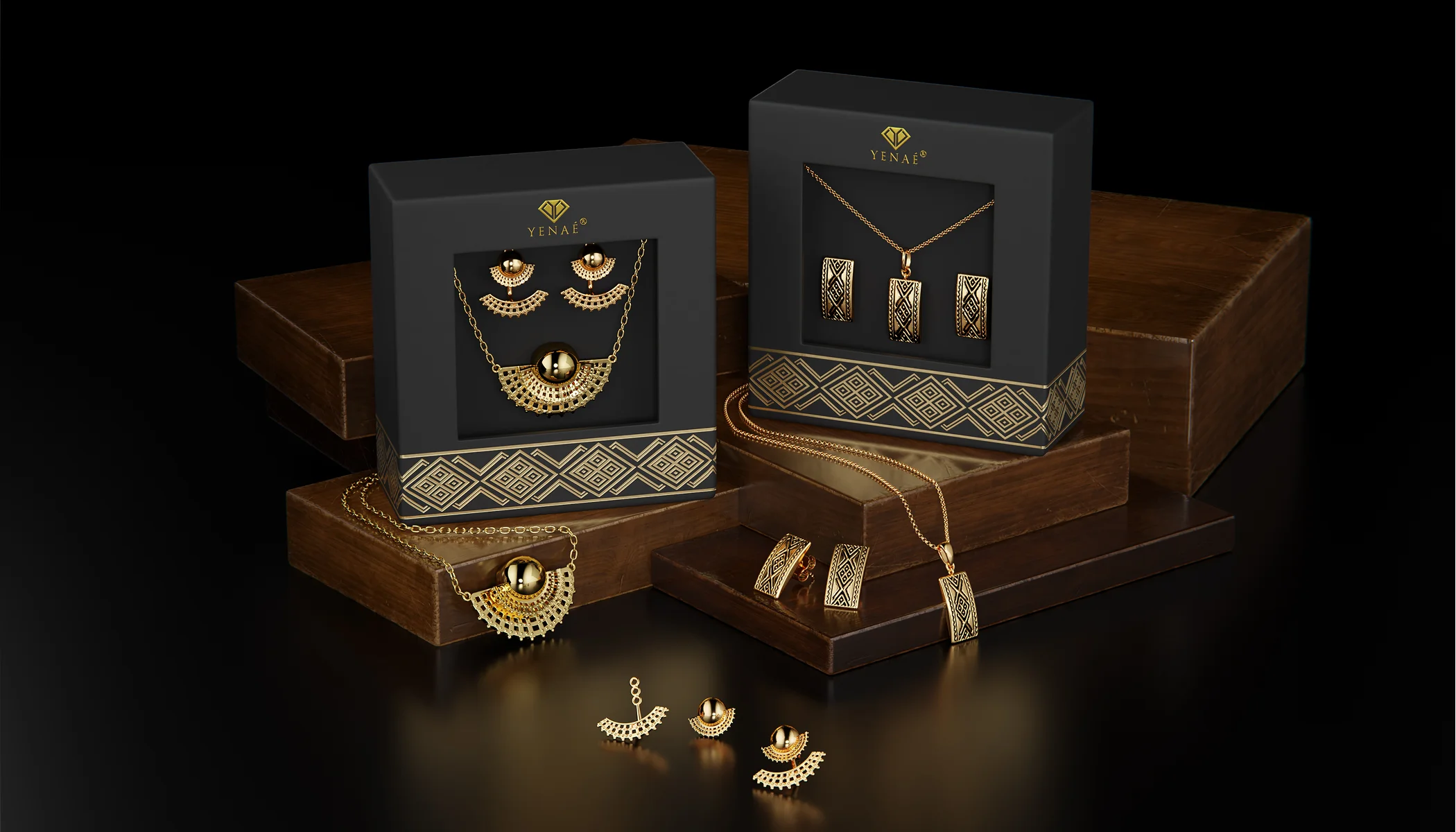
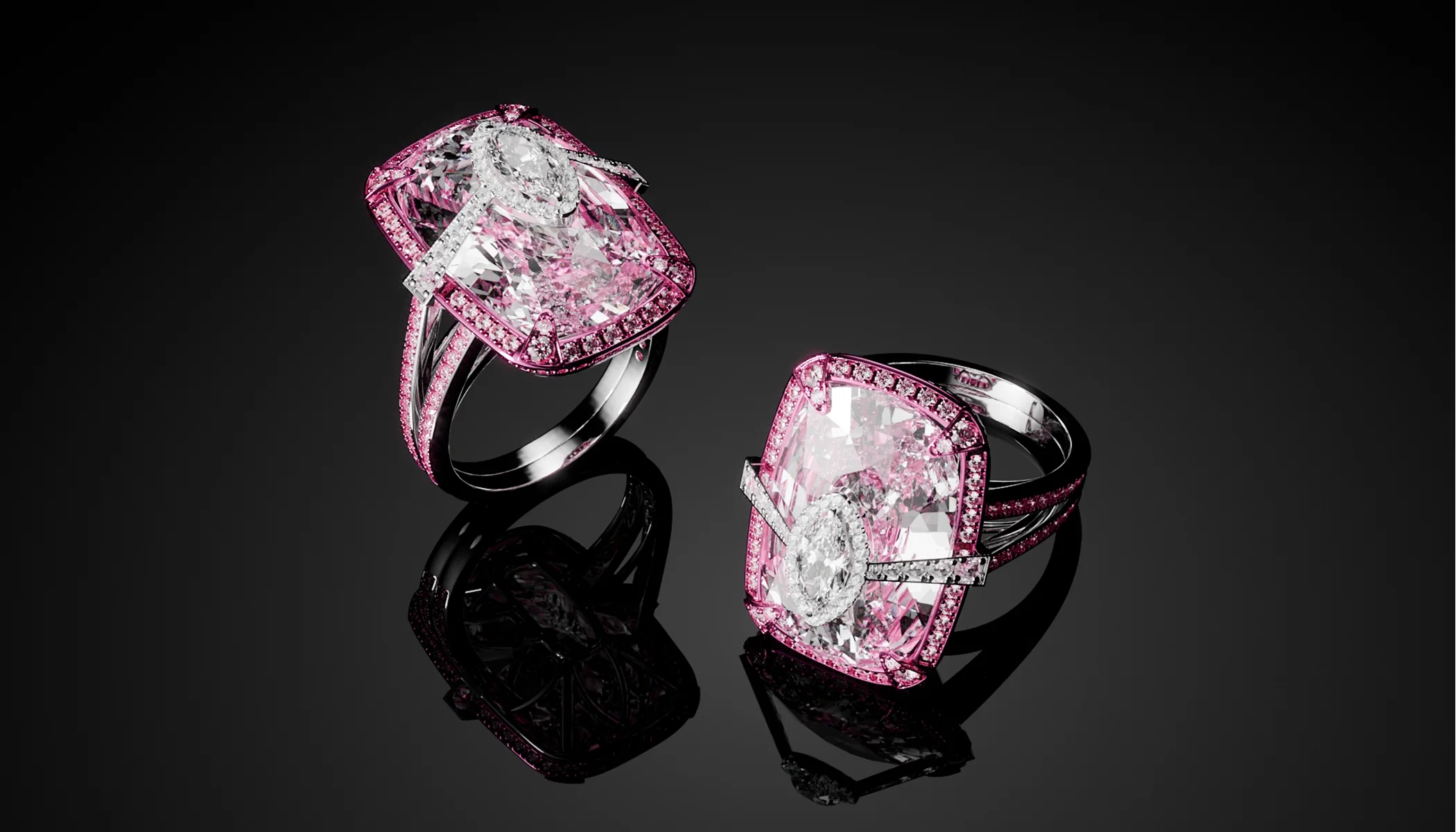
13. Dark luxury aesthetic
Black backgrounds make diamonds and gold pop dramatically. It’s a classic move in professional jewelry photography (but in 2026, there have to be minimalist undertones to this).
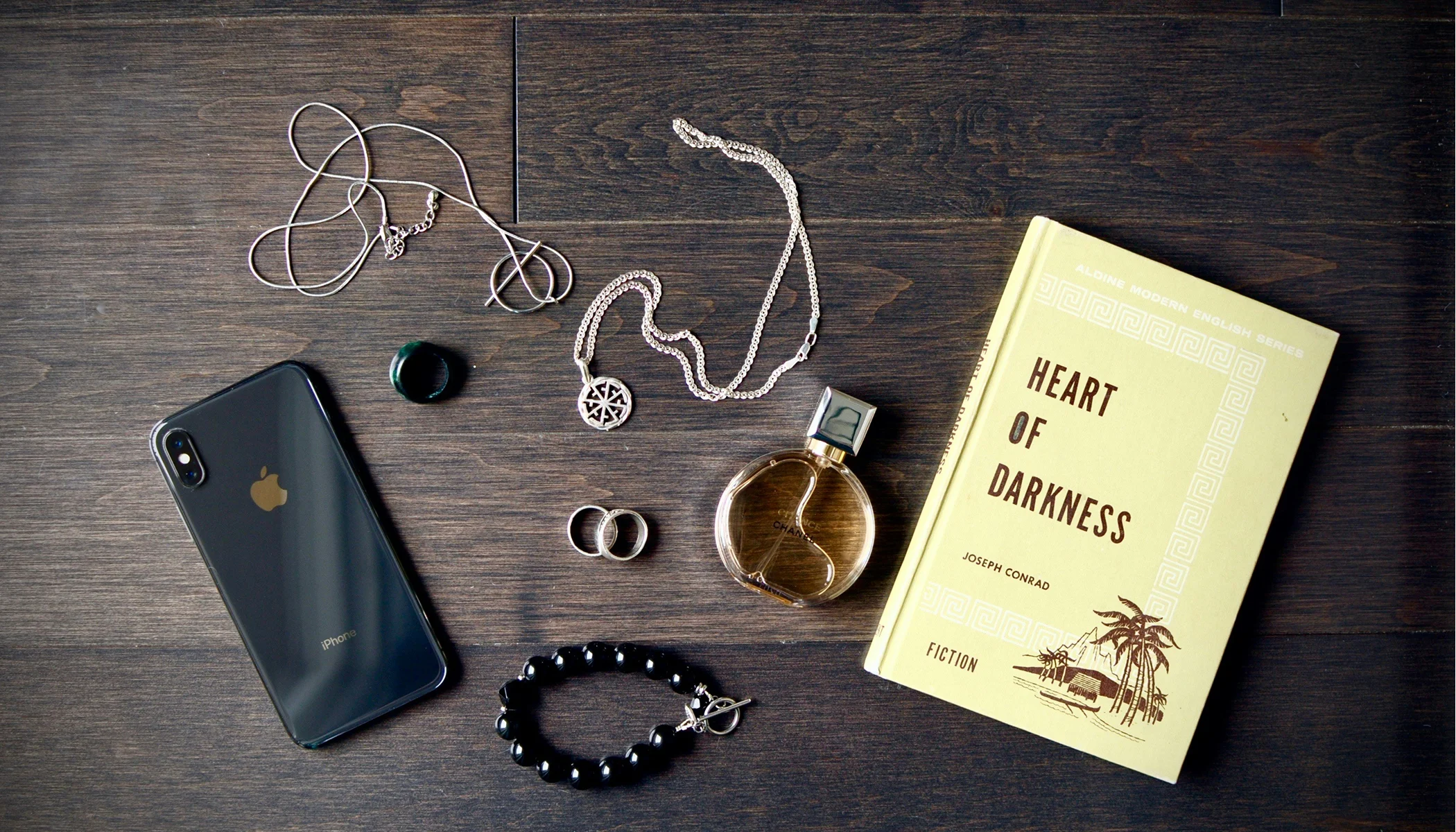
14. Flat lays with symmetry
Organized arrangements feel clean and modern. It’s a really nice touch for catalog-style jewelry product photography.
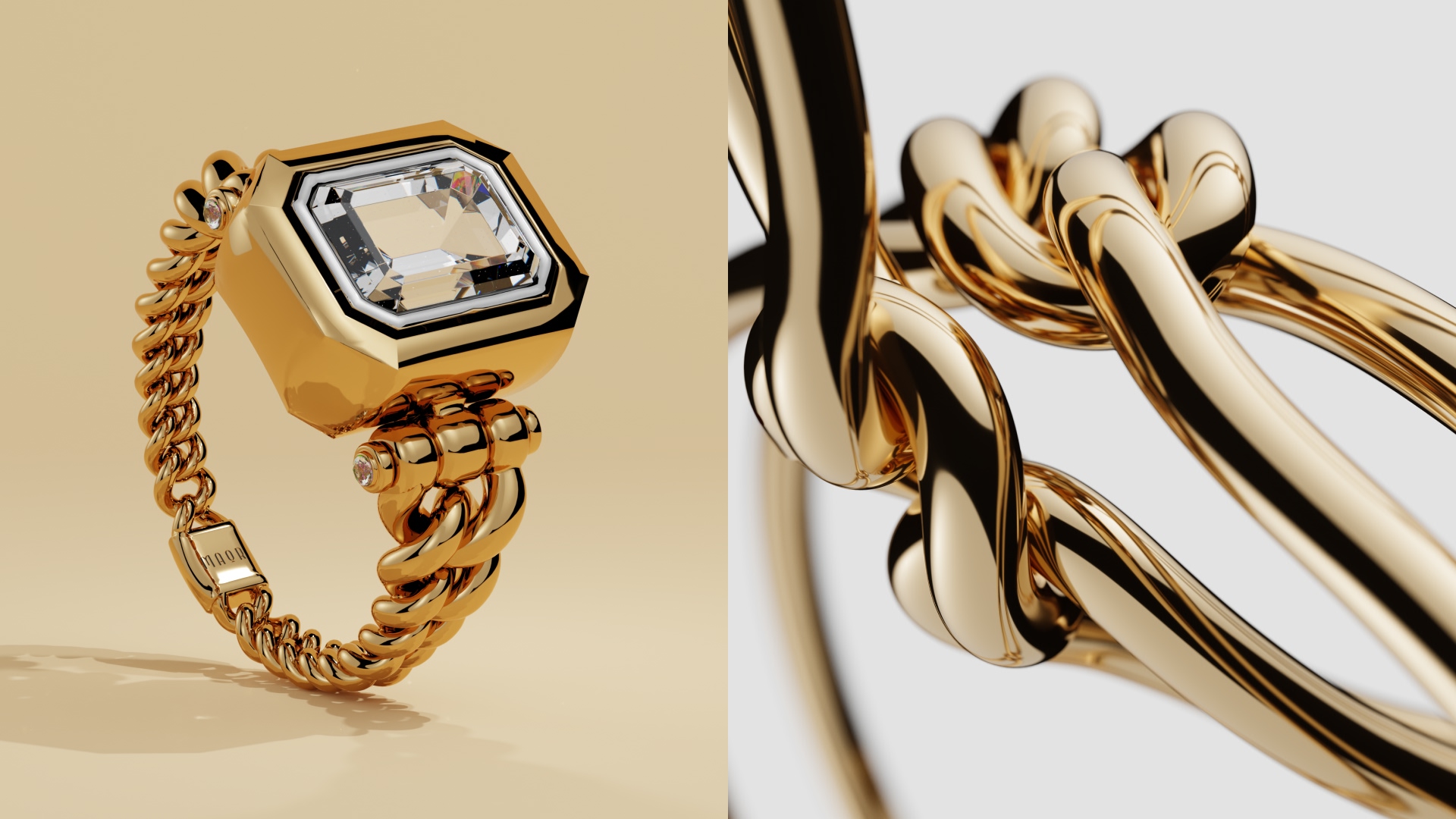
15. CGI-enhanced environments
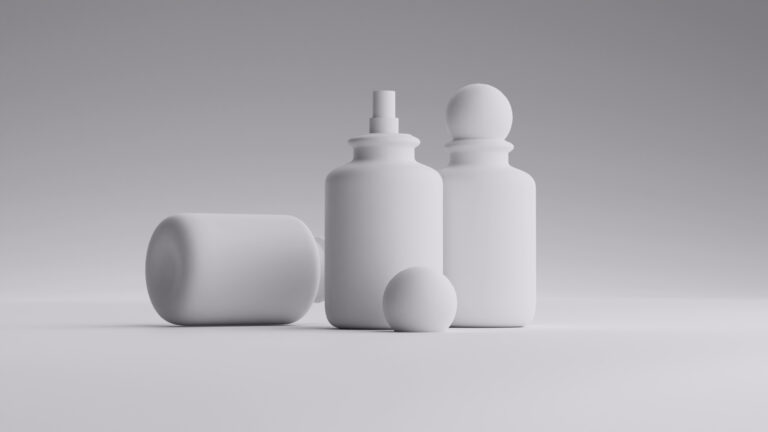
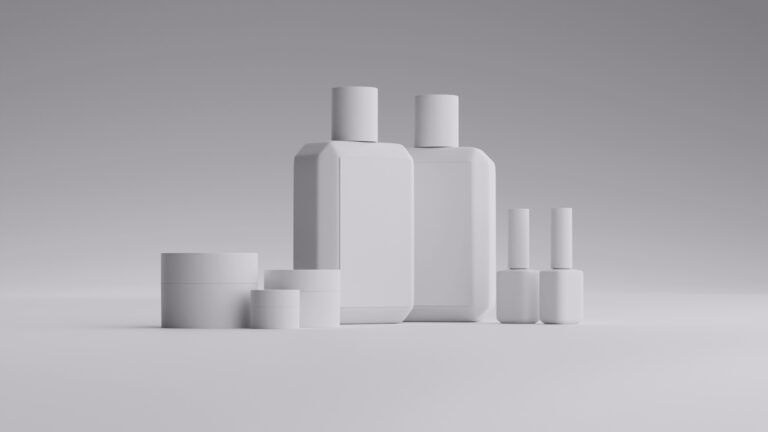
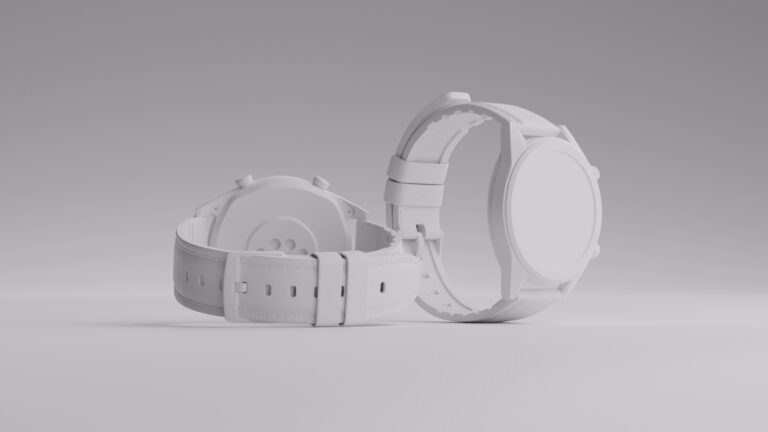
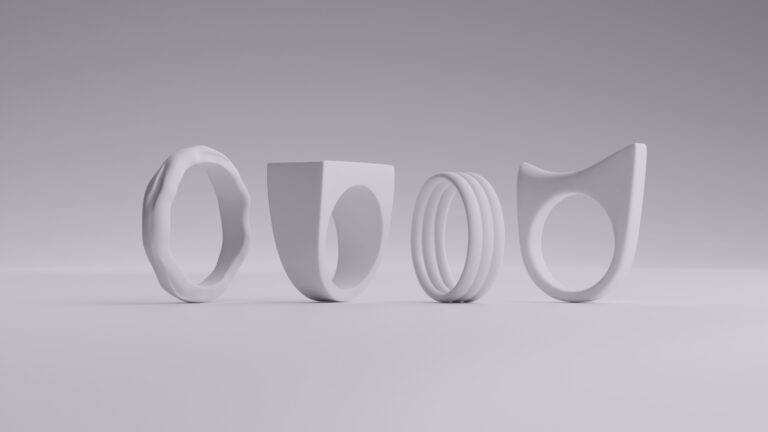
With 3D modeling, you can create impossible sets: floating gemstones, surreal landscapes, perfectly controlled light. It’s endlessly creative jewelry photography without physical limitations. More on this later! Take a look at one of our most recent jewelry works for now:
Lighting techniques for jewelry photography
Lighting is everything in jewelry photography, because expensive pieces have their own unique reflections and refractions. One uncontrolled reflection can ruin an otherwise perfect shot. Here’s all the tips you should keep in mind:
Soft diffused lighting: Soft boxes and diffusers minimize harsh reflections and help gemstones sparkle naturally. This is often the best way to photograph jewelry for ecommerce.
Hard light accents: Strategic hard light adds brilliance and edge definition. Use it carefully to bring forth your pieces’ most special details.
Natural window light: Indirect natural light creates authenticity and warmth. It’s accessible, of course, but it requires precise positioning when you’re photographing jewelry.
Controlled 3D lighting: Yep, we’re a broken record. But with CGI workflows, lighting is infinitely adjustable. You can thus fine-tune reflections, shadows, and sparkle without booking new shoots from scratch. If your brand is scaling fast, this really does change the game.
Top 15 creative jewelry photography tips
If you’re serious about how to photograph jewelry professionally, these tips matter.
1. Clean every piece meticulously
Dust and fingerprints are brutal in macro photography. Make sure you clean before every single shot (and look from up close — a good camera will show what your eyes can’t see easily).
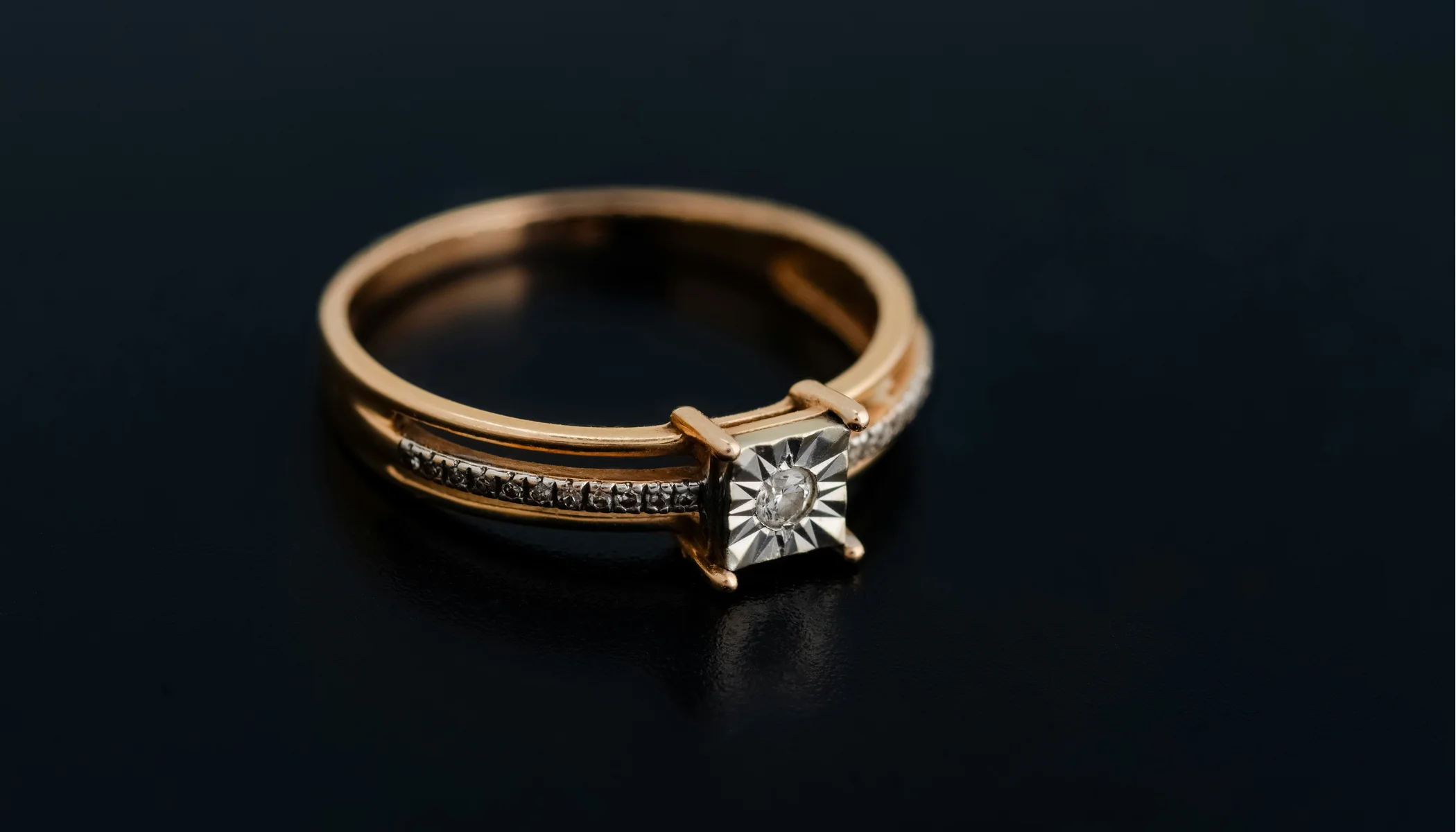
2. Use a tripod: Sharpness is non-negotiable in jewelry product photography.
3. Shoot in RAW: RAW files give you maximum flexibility in post-production.
4. Control reflections
Use white foam boards and diffusers to shape light. Reflections should always be gentle and realistic.
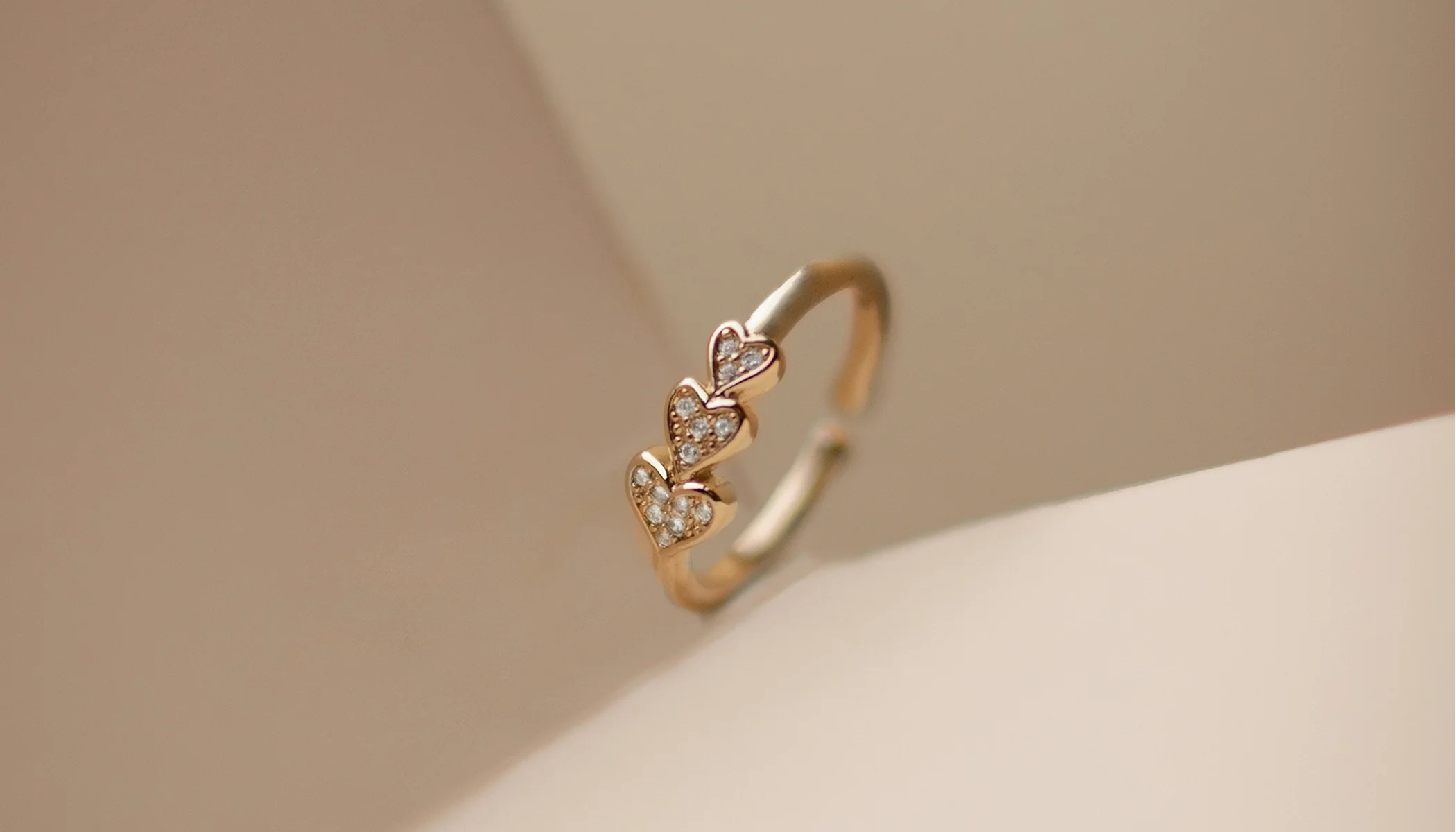
5. Focus stack for depth
Combine multiple focus points to keep your entire piece sharp.

6. Keep backgrounds distraction-free
Jewelry photography ideas fail if your background steals attention. Always think “minimalist” above all else.

7. Match brand tone
Luxury, playful, minimalist… your jewelry photoshoot should reflect identity.
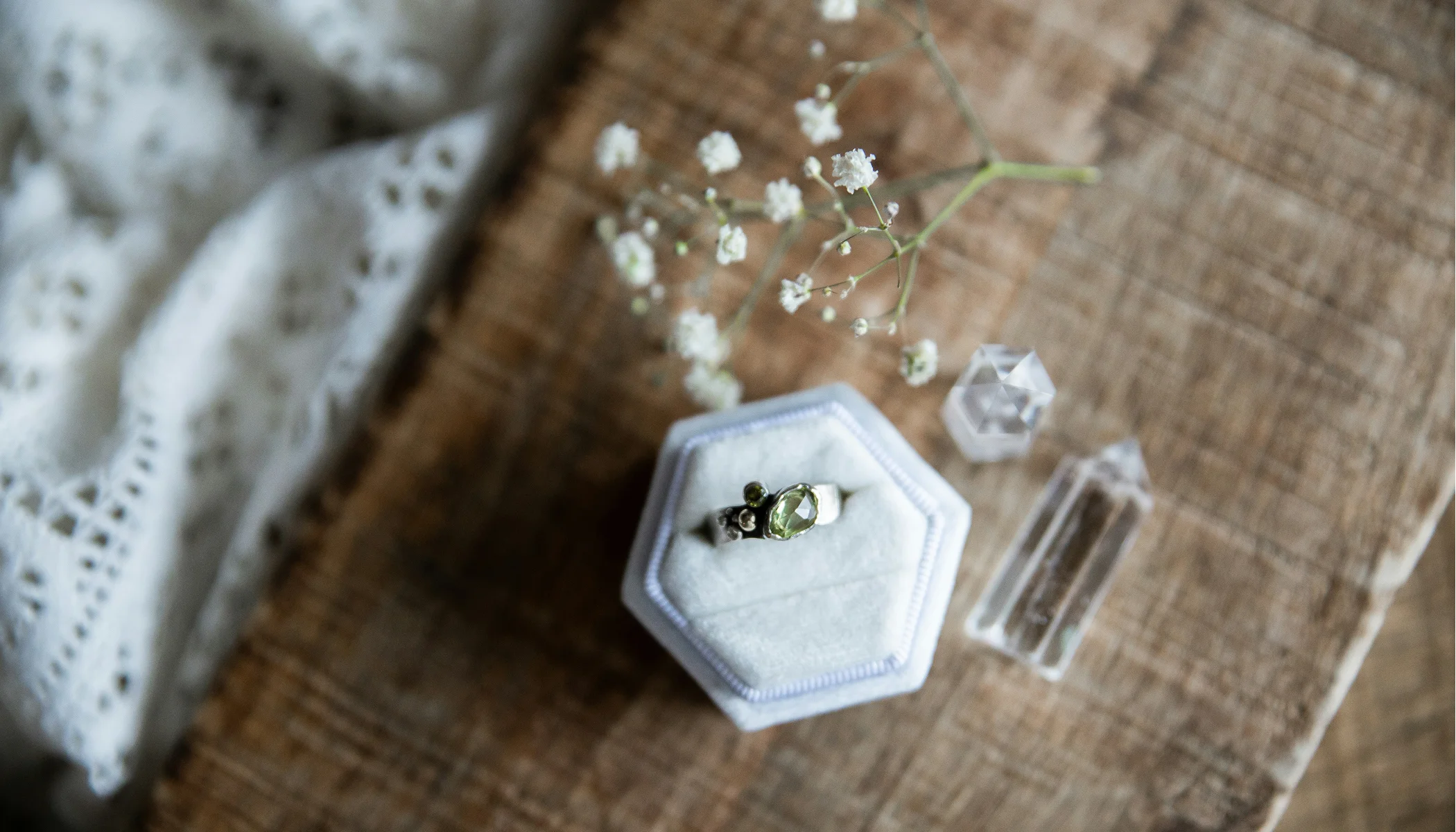
8. Highlight craftsmanship
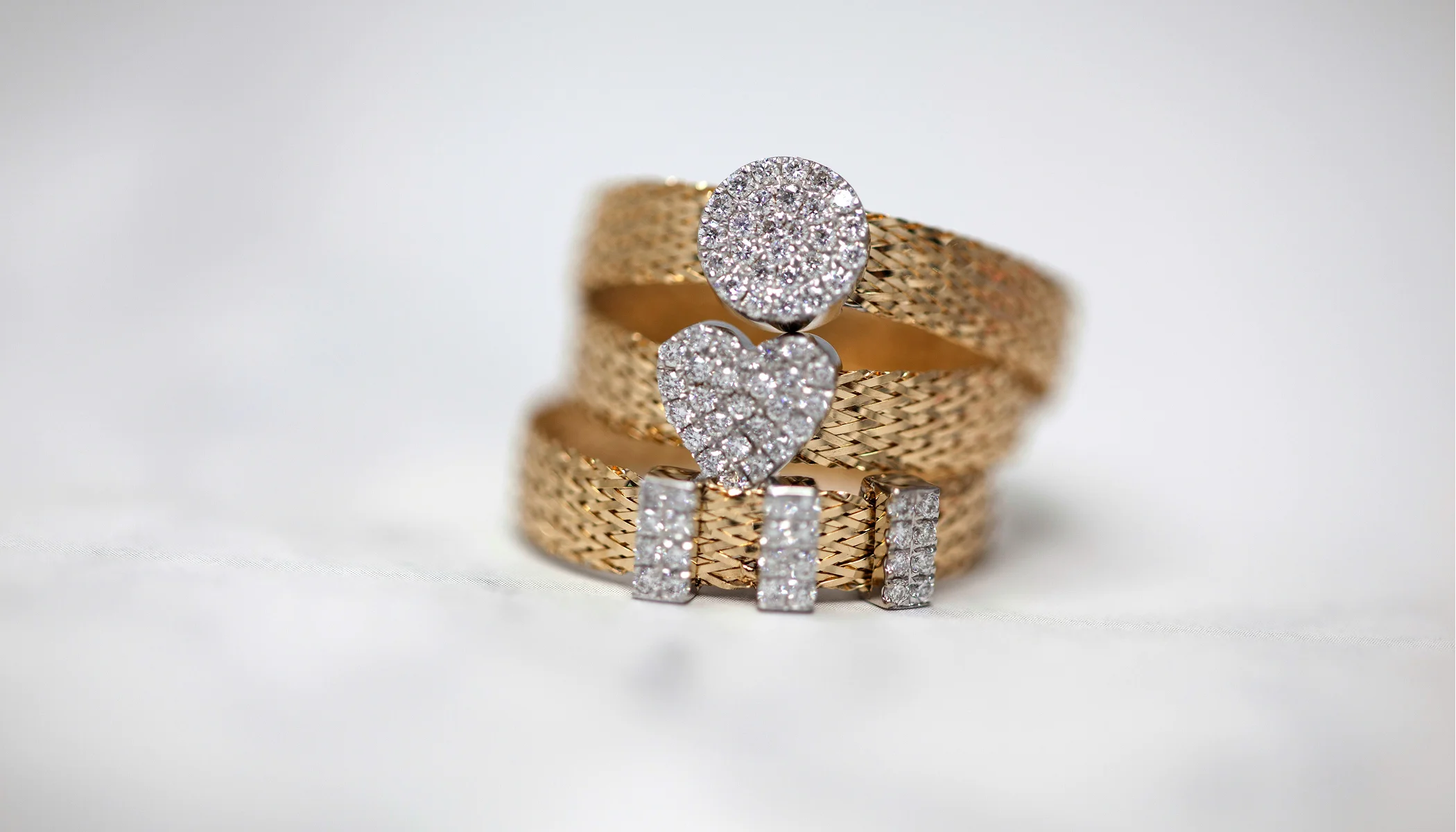
Zoom in on clasps, prongs, engraving… basically all the details that you think will sell.
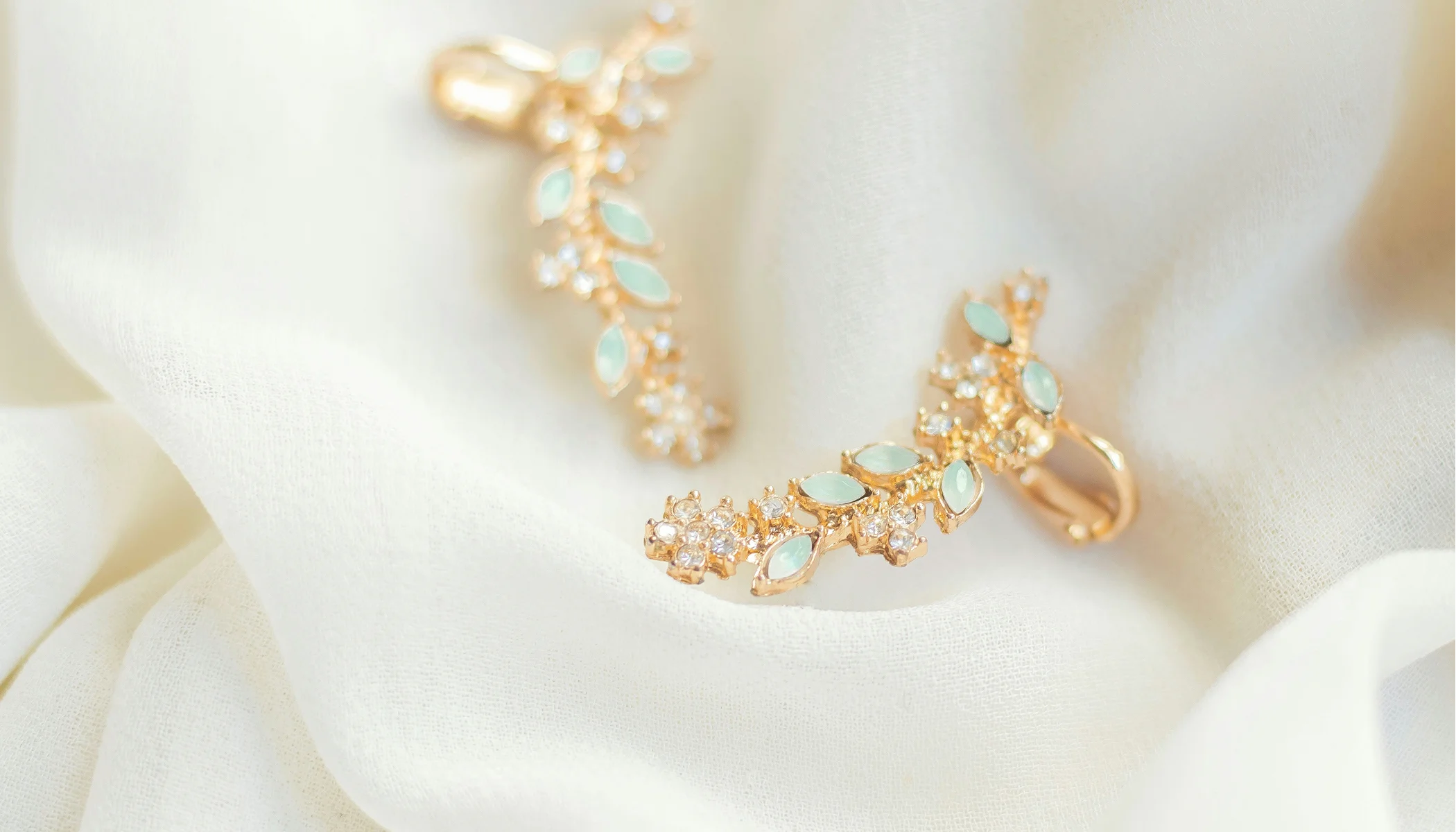
9. Experiment with angles
Top-down works for flat lays. Slight angles add depth for rings and necklace photography. You can definitely test a few angles out before you decide which suits your pieces best.
10. Maintain color accuracy
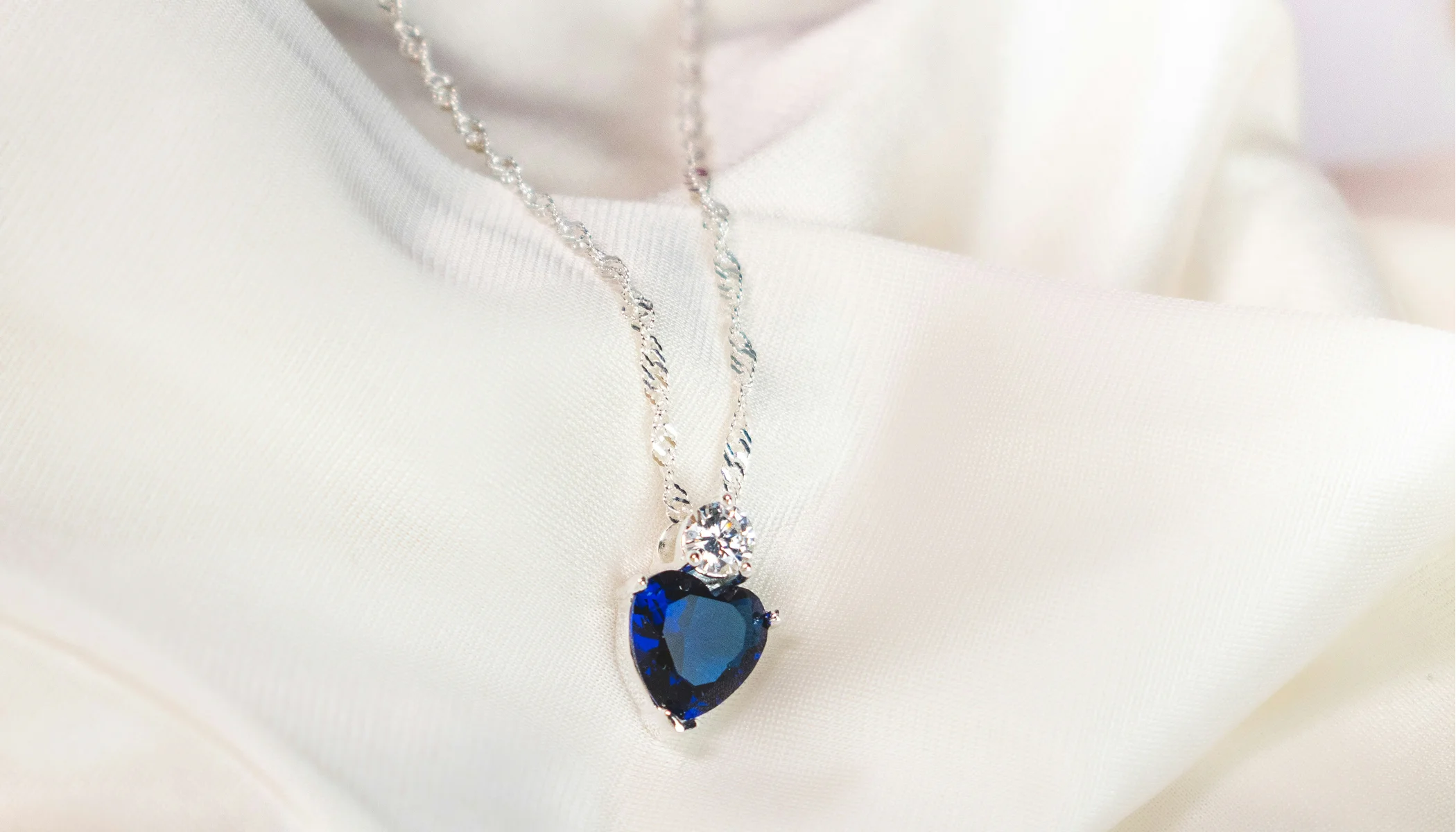
Calibrated monitors matter loads in professional jewelry photography. If your pieces are not as they look in real life, your buyers are very likely to return your product.
11. Shoot multiple variations: Different crops serve ecommerce, social media, and ads.
12. Test gemstone sparkle: Slight lighting adjustments dramatically change brilliance.
13. Avoid mixed light sources: Inconsistent color temperatures ruin jewelry photos. And in fact, inconsistent anything tends to do them harm.
14. Use consistent framing
Uniform visuals improve brand trust in ecommerce. Take a look at any A-list jewelry store online to see how everything is consistent, from color to framing to fonts — these are the details that subconsciously communicate “we know what’s up.”
15. Consider CGI for scalability
If you need 50 color variations, 3D modeling is often the best way to photograph jewelry without repeated (and oh so costly) studio visits.
Common jewelry photography mistakes
Even experienced jewelry photographers slip up. Here’s what to watch for.
Poor lighting control
- Harsh reflections flatten the piece.
- Solution: use diffusers and light-shaping tools.
Ignoring post-production: Professional jewelry photography always includes retouching.
Over-editing: Too much clarity or saturation looks fake. Try to keep it realistic, no matter your current campaign or inspiration.
Cheap equipment shortcuts: Blurry images kill conversions. Rent or buy quality second-hand gear instead.
Inconsistent branding
- Random styling weakens visual identity.
- Solution: build a clear jewelry photography ideas board before shooting.
Cluttered compositions: If props distract from the piece, remove them. It’s as simple as that.
Not planning the shoot: A chaotic jewelry photoshoot wastes time and money. So make sure you plan angles, lighting, and deliverables in advance.
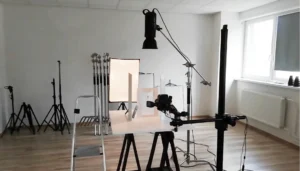
Equipment needed to photograph jewelry

Here’s what you typically need for jewelry product photography:
- DSLR or mirrorless camera – For high-resolution detail capture
- Macro lens (90–105mm) – Essential for close-up jewelry photography
- Tripod – Ensures sharpness and stability
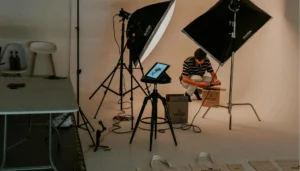
- Softboxes or diffusers – Control reflections and soften light
- Reflectors or foam boards – Shape light precisely
- Light tent – Helpful for photographing jewelry with even lighting
- Editing software – Lightroom for batch edits, Photoshop for precision retouching
Essential tools for jewelry photography
At its core, professional jewelry photography depends on three pillars: camera, lighting control, and post-production software. Master these, and your product photography jewelry is already at the top of its game.


How to take jewelry photography
If you’re starting from scratch, here’s a simple roadmap.
Step 1: Clean the jewelry: Use microfiber cloths and gloves. Tiny smudges become massive in macro shots.
Step 2: Set up controlled lighting: Position soft light sources and test reflections before shooting.
Step 3: Stabilize your camera: Mount your camera on a tripod and fine-tune focus.
Step 4: Compose your frame: Decide whether this is catalog-style jewelry product photography or a creative jewelry photoshoot.
Step 5: Shoot multiple exposures: Bracket exposures to capture both metal shine and gemstone detail.
Step 6: Edit carefully: Apply professional retouching techniques to remove dust, enhance sparkle subtly, control reflections, and maintain realistic color tones.
Step 7: Optimize for ecommerce: Export in high resolution for zoom features and compress appropriately for fast loading.
- 3D modeling
- White bg.
- Minimalistic
- Simple prop
- Custom
- 3D modeling
- White bg.
- Minimalistic
- Simple prop
- Custom
Wrapping up


Jewelry photography is extremely detail-driven and prone to all sorts of small, happy accidents. These, however, can kill your end goal of actually selling your pieces. That’s why it’s important to be nitpicky and consistent.
But here’s the thing we keep trying to hint at: if you’re scaling collections, launching new colorways, or expanding globally, traditional photography can become slow and expensive.
That’s where CGI steps in.
At Welpix, we create jewelry product photography using 3D modeling and controlled digital lighting. This means a few great things: you’re skipping shipping delays, reshoots, and you know, the laws of physics. And you get consistent, scalable, creative jewelry photography. Plus, we work remote, so you can produce your desired visuals from anywhere.
If you want to rethink how you approach photographing jewelry, come talk to us today. You won’t regret it.
FAQ
What is jewelry product photography?
Jewelry product photography is the process of photographing jewelry specifically for ecommerce, catalogs, and marketing materials, with a focus on detail, clarity, and conversion.
What is the best way to photograph jewelry?
The best way to photograph jewelry involves controlled diffused lighting, a macro lens, a tripod, and careful retouching to maintain realism and brilliance.
How do professional jewelry photographers control reflections?
Professional jewelry photography uses diffusers, reflectors, and light shaping tools to manage reflections and enhance gemstone sparkle.
Can I do necklace product photography at home?
Yes, with proper lighting control, a tripod, and a clean background, necklace photography can be done at home, though precision is key.
Is CGI good for jewelry photography?
Yes. CGI allows brands to create scalable, consistent jewelry product photography without repeated studio shoots.
How important is editing in jewelry photography?
Editing is essential. Even the best jewelry photoshoot requires dust removal, color correction, and fine-tuning for ecommerce.
How much does professional jewelry photography cost?
Costs vary based on complexity, number of SKUs, and creative direction. CGI-based jewelry photography can reduce long-term costs by eliminating reshoots and physical studio expenses.