In 2026, professional product photography costs range from €49 for a single shot to several thousand euros for a full-scale commercial production. Gap between a basic listing shot and a high-end creative campaign is massive, not just in quality, but in the logistical overhead that often doubles your final invoice.
How much does product photography cost?
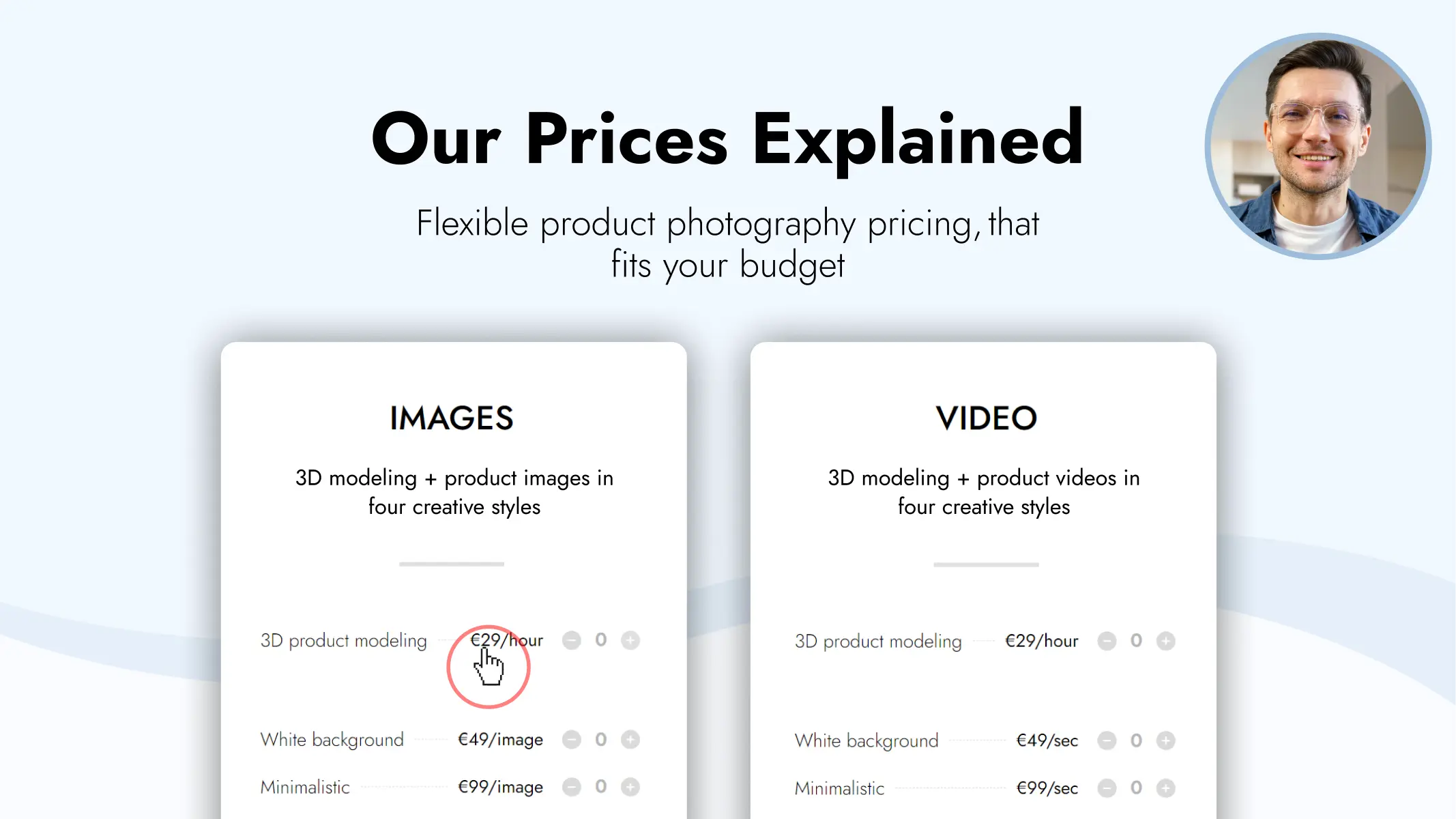
Current market rates for professional images generally fall between $50 and $300 per image. On a global scale, standard variation ranges from $25 to over $500 per shot, depending on geographic location and product technicality.
Pay Attention to the “Real Cost” Multiplier
A common trap for eCommerce managers is the “Real Cost” gap. A studio may quote a $40 per-image rate, but once you factor in advanced retouching, studio rentals, shipping logistics, and the internal time spent coordinating, that $40 per image quietly becomes an $84 per image. In traditional workflows, your final invoice is often 2x to 3x higher than the initial quote.
Image Type
| Price Range (USD/EUR)
|
|---|---|
White Background / Listing | 25–75 |
Styled / Lifestyle | 100–500 |
360-Degree | 150–1,200 |
Hero / Editorial | 200–500+ |
Product photography pricing models explained
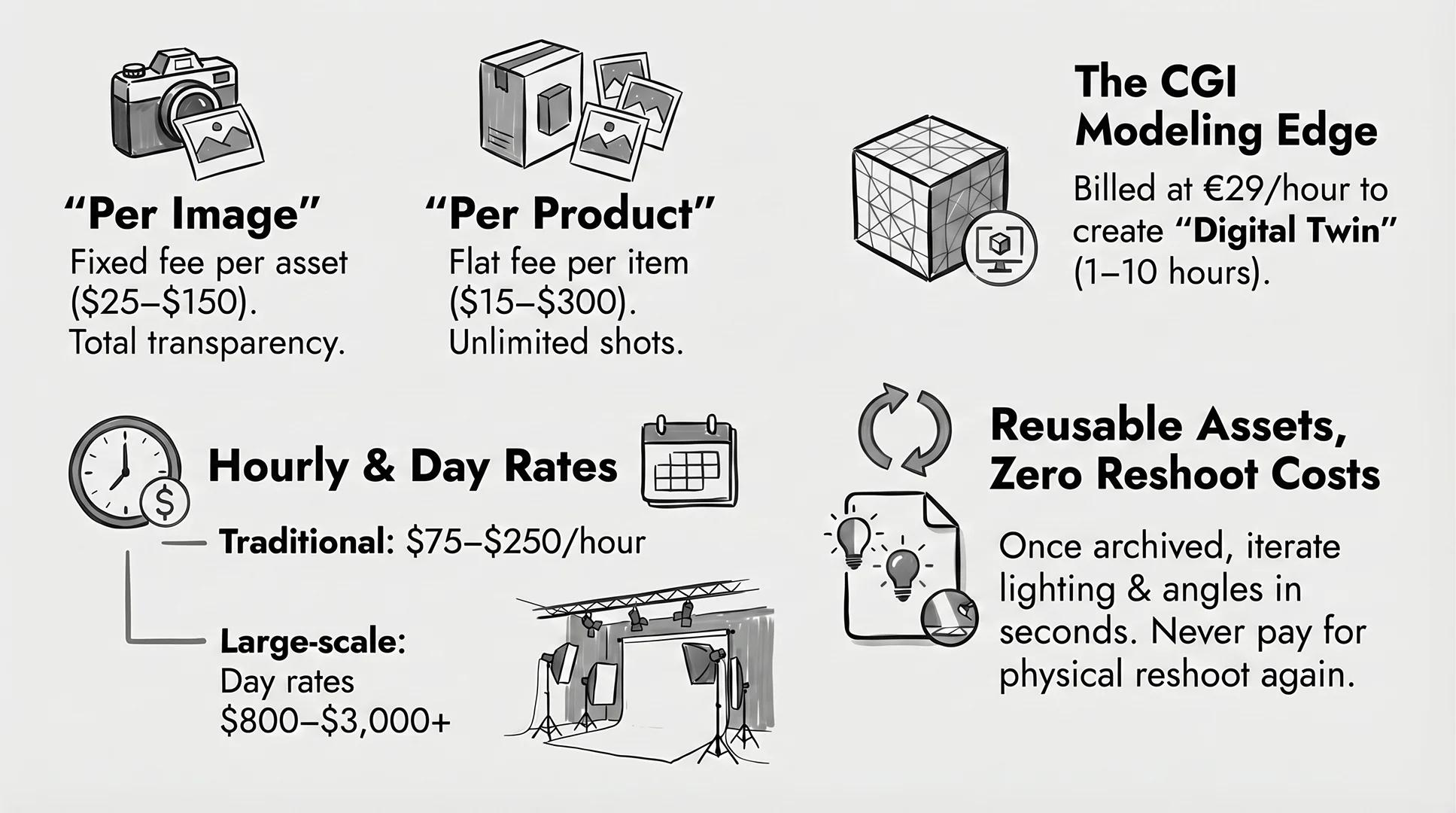
There are four primary ways services are billed in 2026. Choosing the right one depends on whether you value predictability or flexibility.
- Per image pricing: You pay a fixed fee for every delivered asset. This is the most transparent model, ideal for brands with fixed budgets.
- Hourly rate: Industry averages for traditional photographers range from $75 to $250 per hour. In contrast, technical 3D product modeling for CGI photography is billed at a specialized rate of €29 per hour.
- Day rate: Typical for large-scale commercial shoots, ranging from $800 to $3,000+. Note that pro-grade equipment (cameras and lighting) often accounts for up to 40% of this budget.
- Per product pricing: A flat fee per item (usually $15 to $300), regardless of the number of shots.
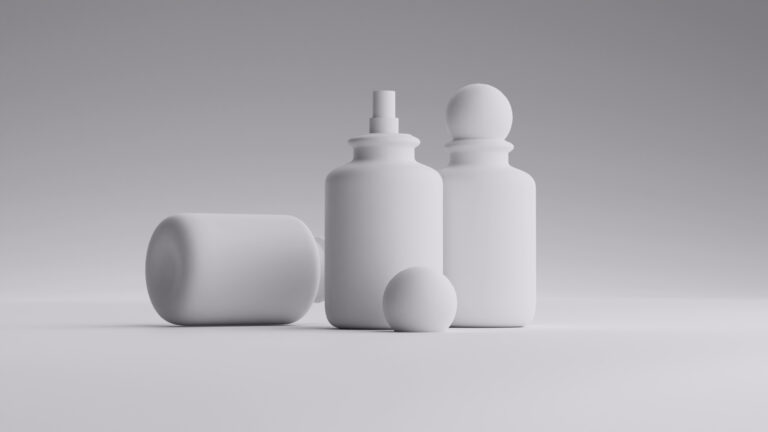
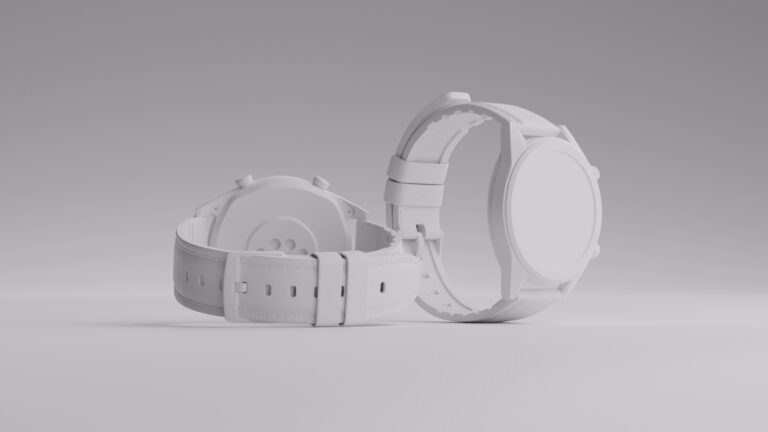
Technical nuance: Welpix modeling logic utilizes a €29/hour modeling fee to create a “Digital Twin” of your product. Complexity dictates time: a perfume bottle may take only 1 hour to model, while an intricate luxury watch can take up to 10 hours. This is a one-time investment; once the model is in the archive, you can iterate on lighting and angles in seconds without ever paying for a reshoot.
Product photography pricing by type
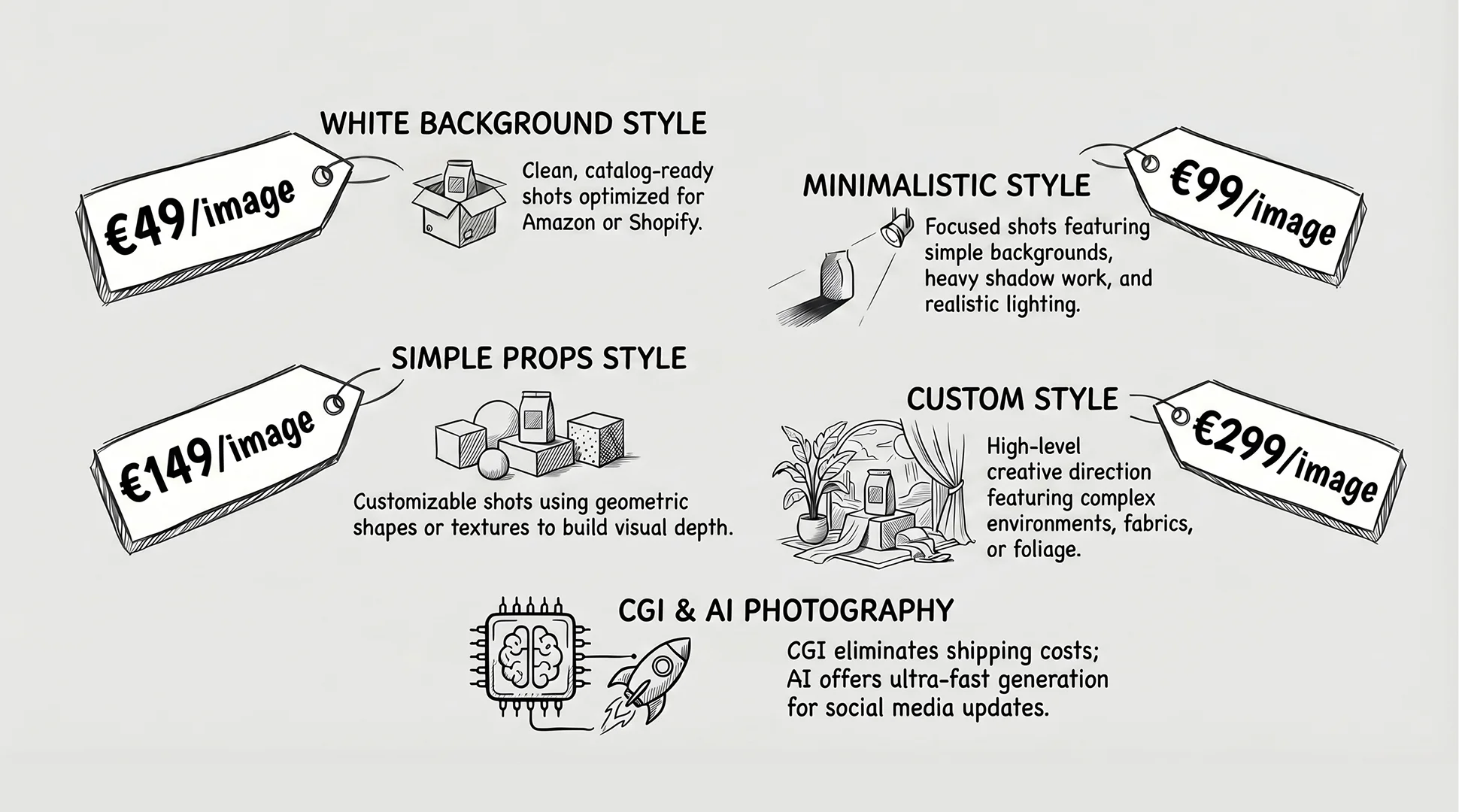
Style you choose directly impacts the resources required. We categorize these into four standard tiers:
- White background style: Clean, catalog-ready shots for Amazon or Shopify. Priced at €49/image.
- Minimalistic style: Focused shots with simple backgrounds, heavy shadow work, and realistic lighting. Priced at €99/image.
- Simple props style: Highly customizable shots using geometric shapes or textures to build depth. Priced at €149/image.
- Custom style: The “sky is the limit” creative direction featuring foliage, fabrics, or complex environments. Priced at €299/image.
CGI & AI Photography: Digital rendering (CGI) eliminates shipping costs, while AI offers ultra-fast generation for social media updates (though at the risk of product distortion).
Average product photography costs (industry data)
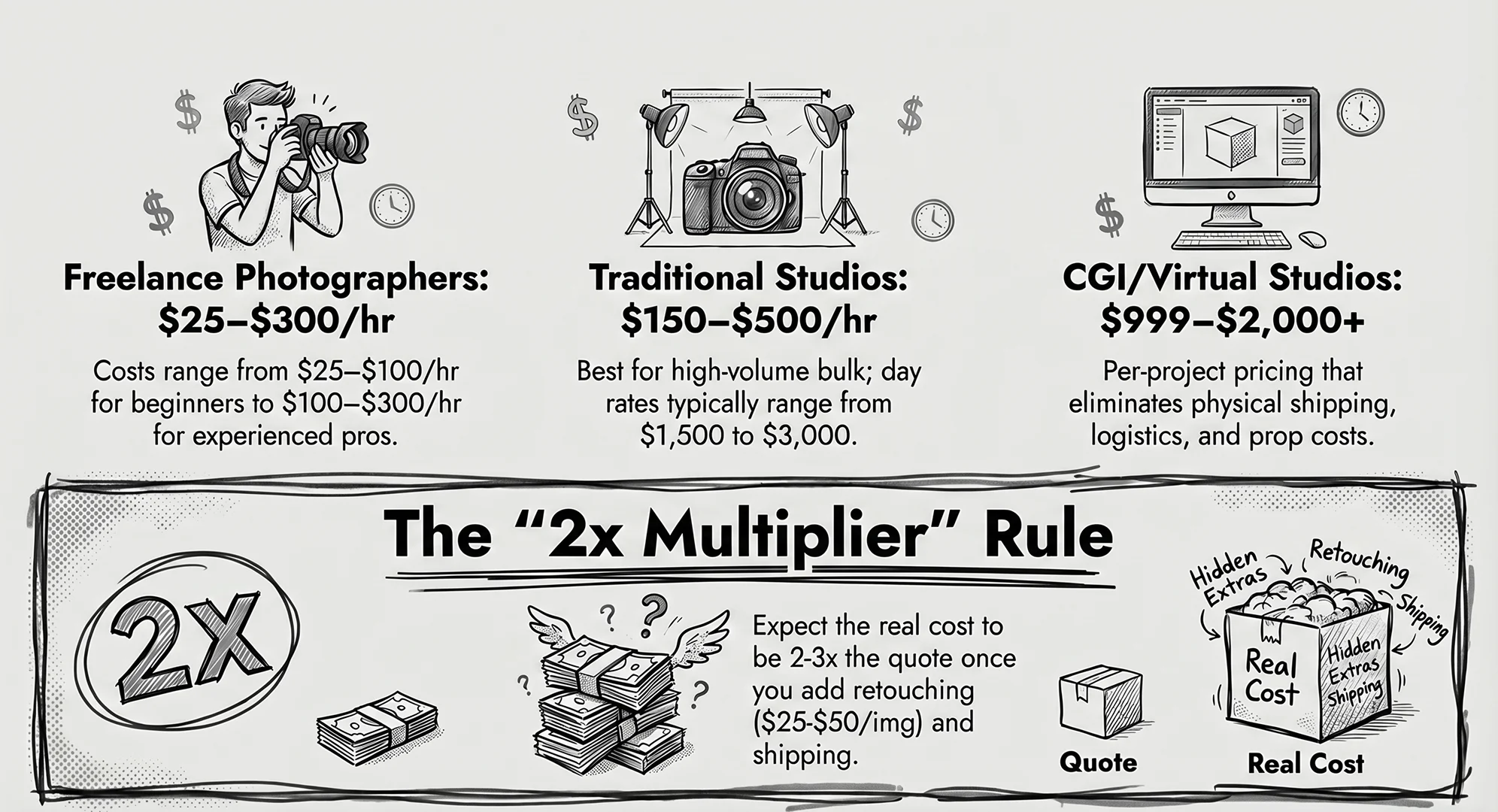
Provider you hire is the biggest variable in your ROI (return on investment)
Type
| Price Range (USD/EUR)
|
|---|---|
Photography freelancer | 25–100/hr (Beginner) to 100–300/hr (Experienced) |
Traditional photography studio | 150–500/hr or 1,500–3,000/day |
CGI photography studio | 999–2000+ /per project |
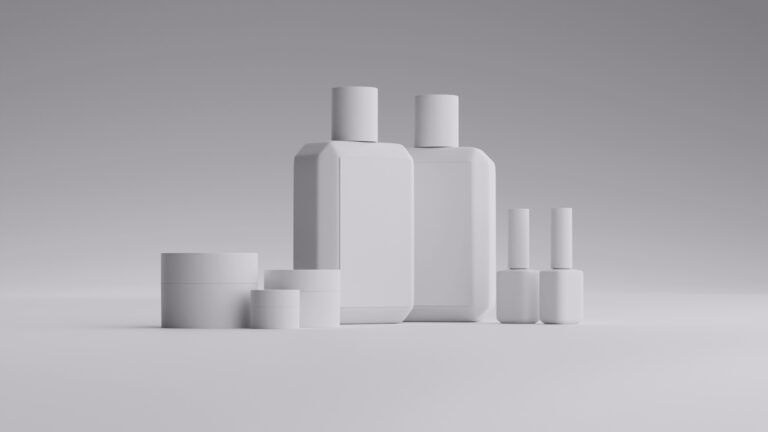
Product Photography Pricing by Industry: Cosmetics, Perfume, Jewelry & Watches
I’ve learned over the years that the style you choose is what actually defines your brand’s personality. While 3D modeling costs are the foundation of CGI, the styling is where we create the “mood” that connects with your customers. Each industry has a specific sweet spot for these creative approaches.
Here is how I apply these styles to get the best results:
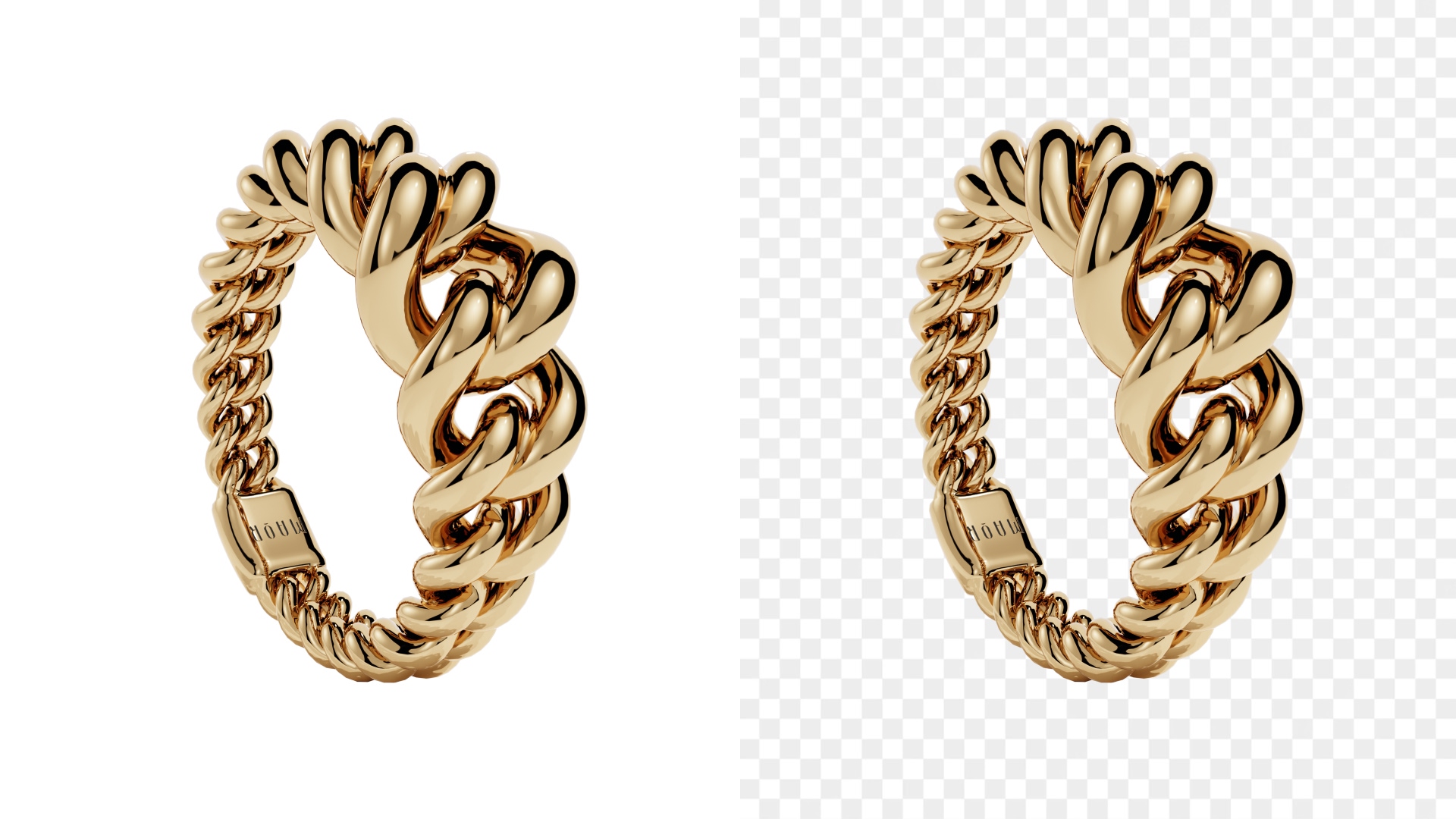
- The Baseline (White Background Images) Whether you sell watches or skincare, clean catalog shots are your essential starting point. At €49 per image, these put the product on a white or transparent background. They give shoppers a clear, distraction-free view of exactly what they are buying. You need these for your shop, but you’ll likely want more character for your marketing.
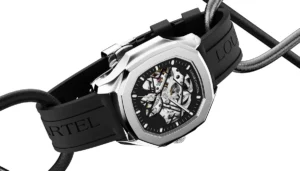
- Watches: (The Minimalistic Approach) I find that luxury watches shine brightest with a minimalistic style at €99 per image. A watch is all about precision. I use a simple background and focus my energy on manipulating shadows and light to make the metal and glass look real. This highlights the texture and movement without any clutter getting in the way.
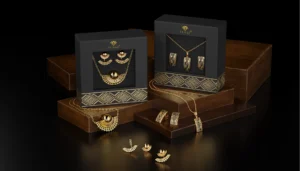
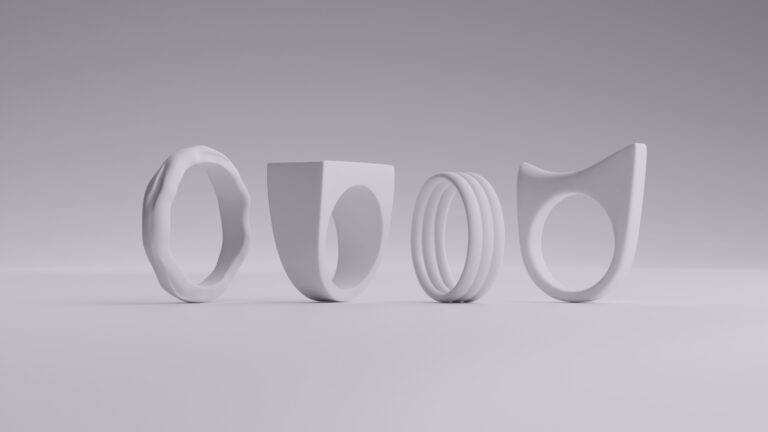
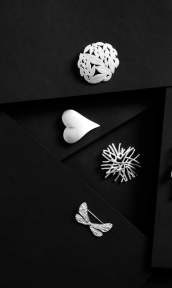
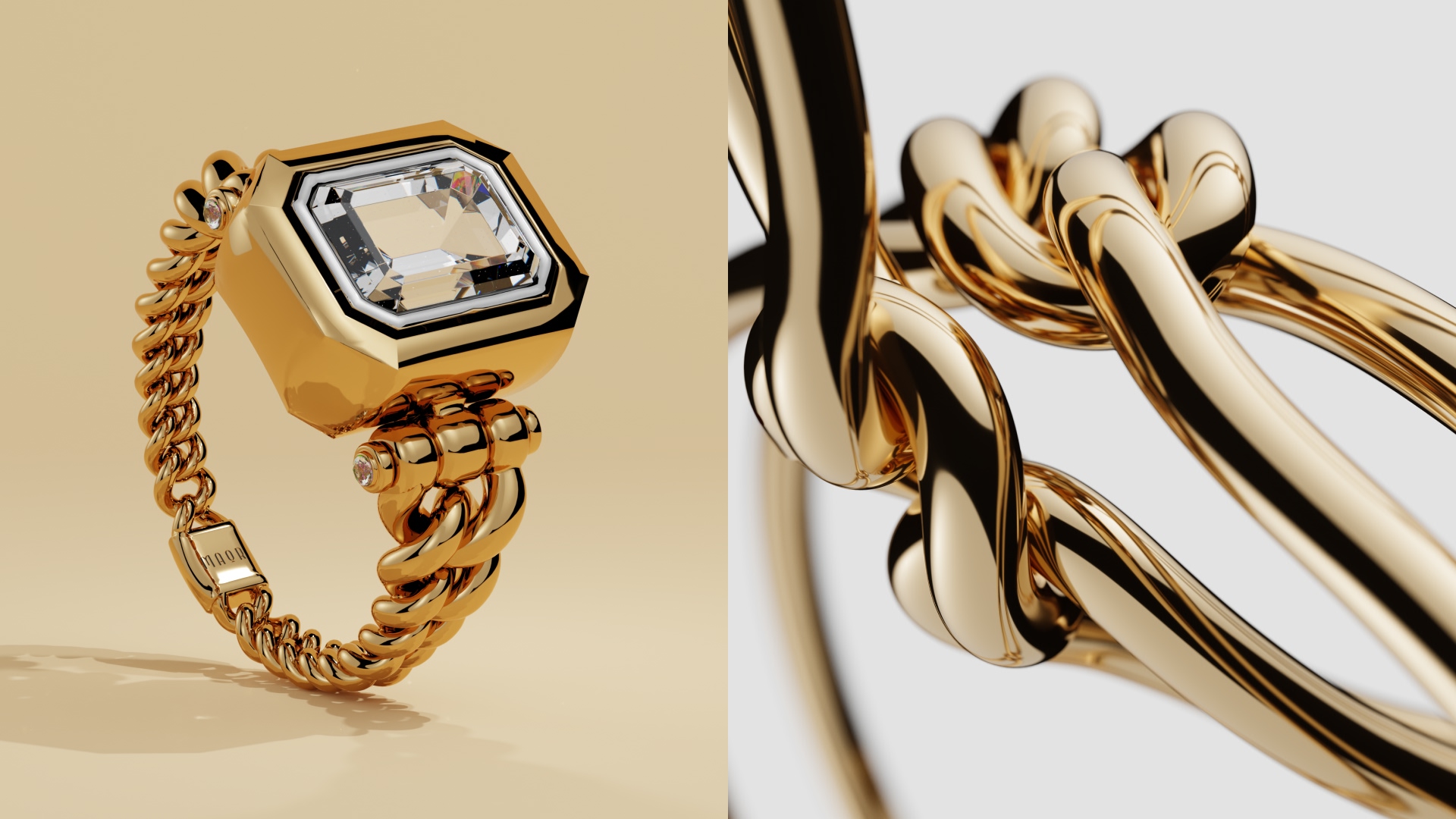
- Perfumes and jewelry: (Using Simple Props) For these pieces, I often move up to the simple props style at €149 per image. I bring in geometric shapes or textured objects to add depth. For a perfume, I might use glass elements to suggest the “vibe” of the scent. For jewelry, these subtle props make the piece feel grounded and expensive, which is the reason that jewelry photography prices vary depending on the level of styling and detail required.
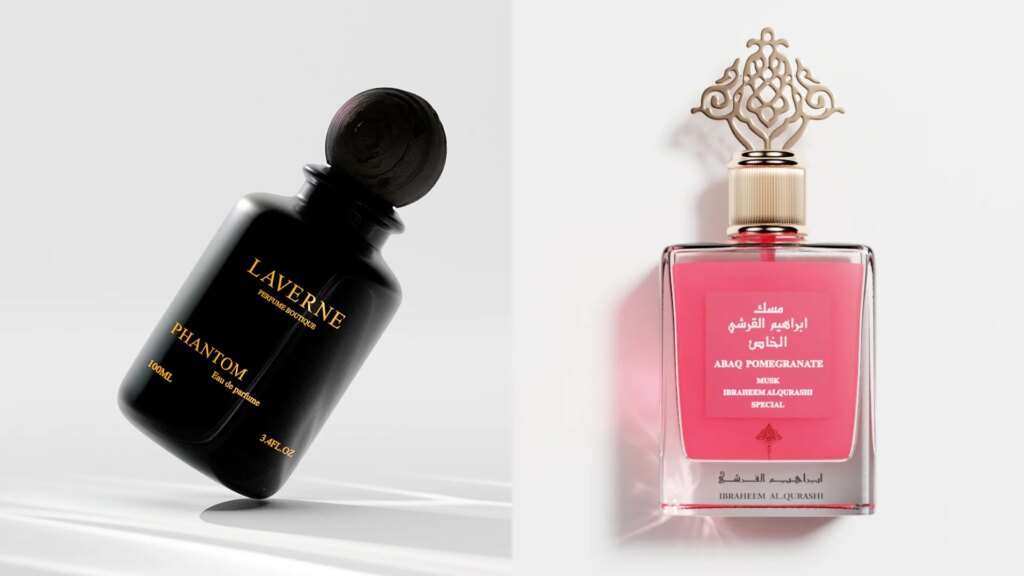
- Cosmetics and perfumes (Custom Imagery) In the beauty and fragrance world, the competition is fierce. Since your customers can’t smell the perfume or feel the cream through a screen, I have to use visual persuasion to spark that desire. This is where custom imagery at €299 per image becomes your most powerful tool.
- Winning the scroll: To stop someone from scrolling past on social media, I build personalized scenes from scratch. I use dynamic elements like fresh foliage, luxury fabrics, or the raw ingredients found in the product. These top-tier setups turn your product into the hero of a story that people actually notice.
Factors affecting product photography pricing
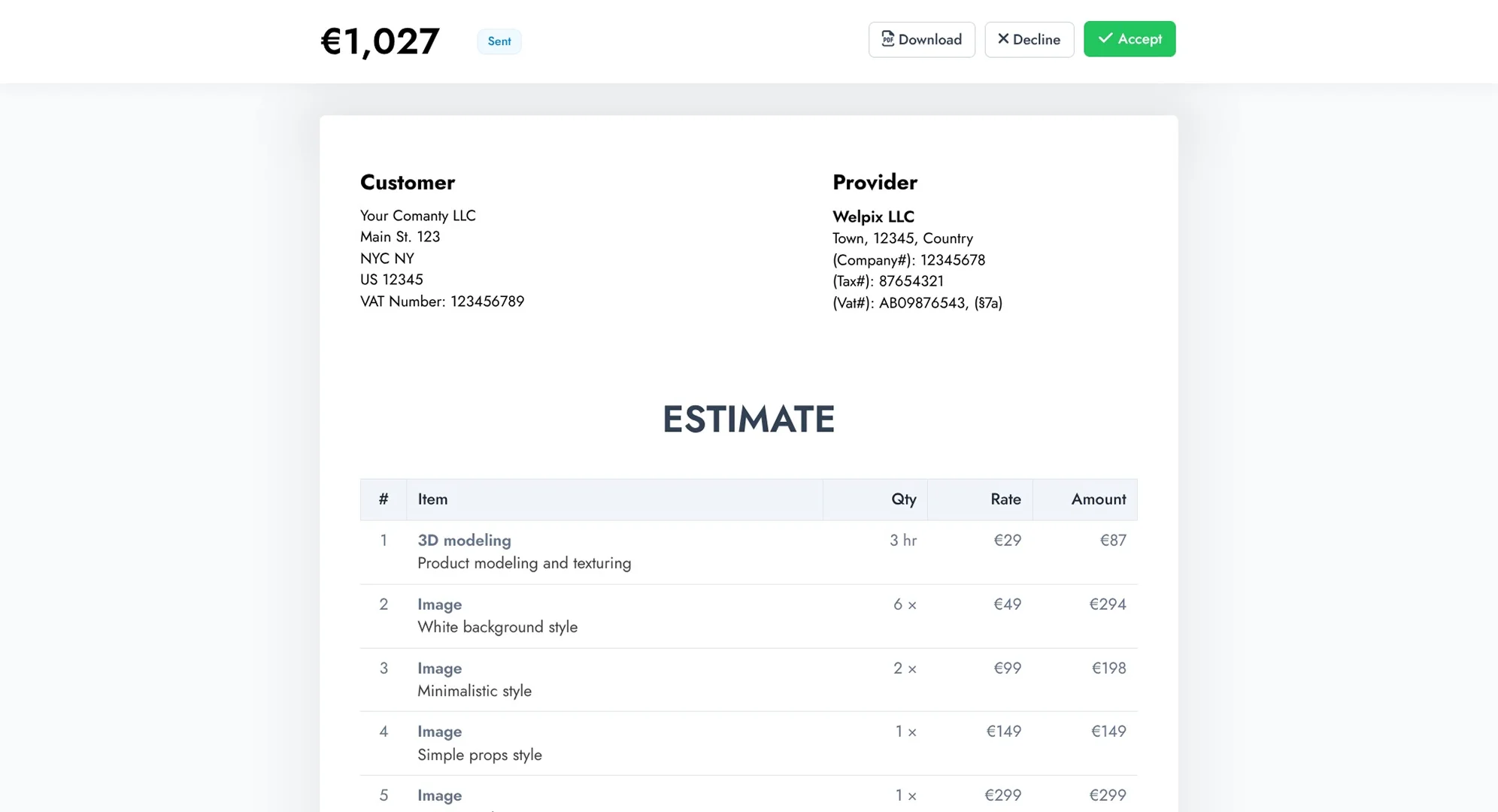
Several variables can inflate your budget if not managed during the briefing phase:
- Product complexity: Reflective surfaces (jewelry, glass) or intricate textures require more modeling and lighting time.
- Volume discounts: High-volume orders (100+ units) typically qualify for lower per-image rates.
- Number of angles: Requesting three angles for one product is billed as three separate images.
- Post-production: Advanced retouching (background removal, compositing) adds 25–50 to the base price.
- Hidden “Budget Killers”: Be wary of Usage Rights (licensing fees for broad advertising) and Rush Fees (25%–200% premiums for tight deadlines).
Traditional vs. AI vs. CGI product photography
Primary risk in traditional photography is “Consistency Tax.” When you shoot across multiple sessions or photographers, “visual drift” occurs; different lighting and angles make your catalog look patched together. CGI eliminates this by using a system-based style.
Comparison: Traditional vs. AI vs. CGI
Factor | Traditional | AI | CGI (Welpix) |
|---|---|---|---|
Cost | High (50–500+) | Lowest (<$1/img) | Moderate (€49/img) |
Turnaround | 10–21 days | Instant | 2–5 days |
Flexibility | Low (Reshoots required) | High (Product distortion) | Infinite (Instant iteration) |
Fidelity | Perfect | Poor (Visual drift) | High-fidelity preservation |
Product photography minimum budget
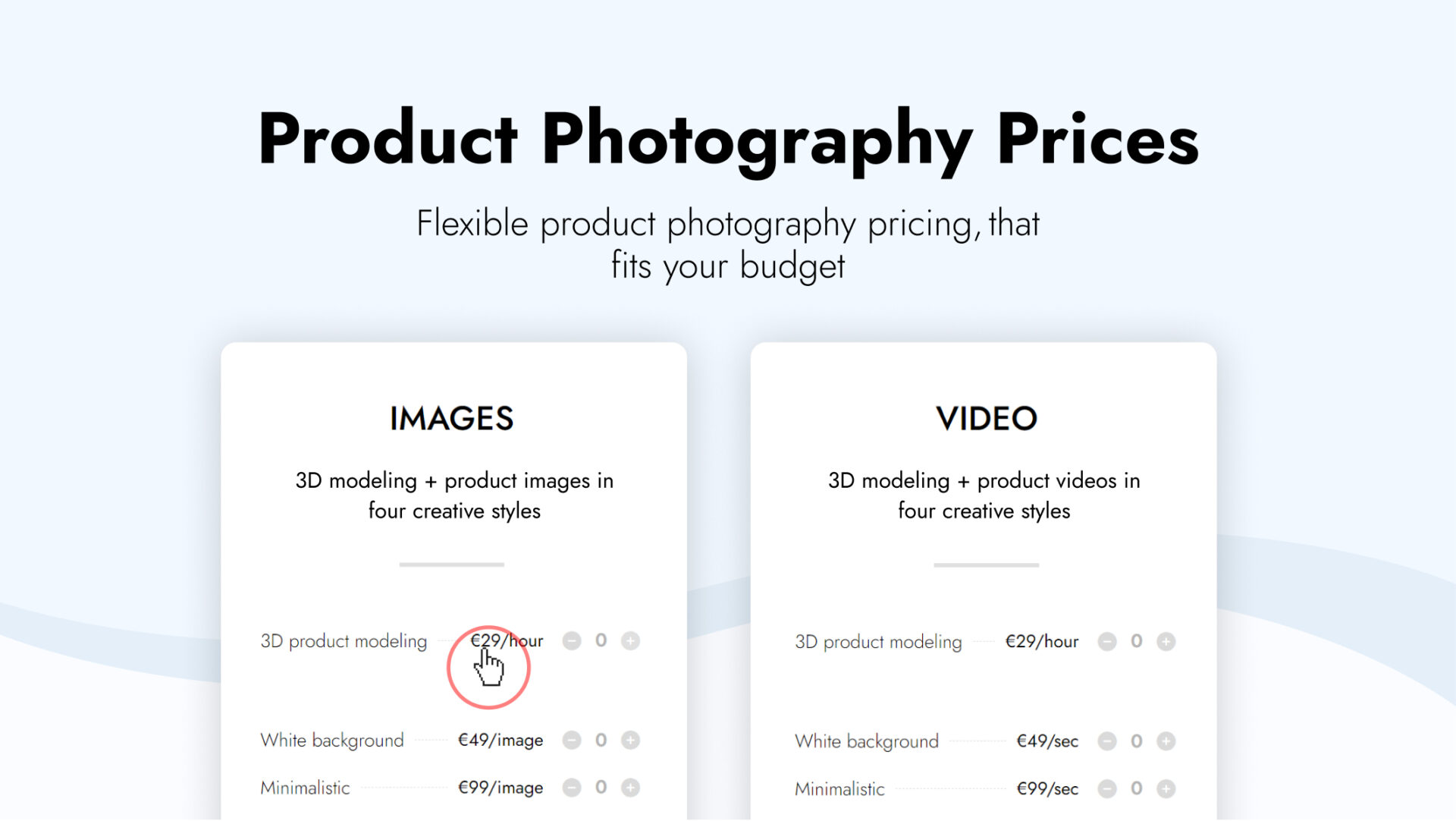
To maintain high-fidelity standards and cover the technical requirements of building a 3D archive, we maintain the following project thresholds:
- Images: Minimum project threshold of €999.
- Animations: Minimum project threshold of €1,499.
Why are animations more expensive? We price by the second because each second of motion requires 30 unique frames (images) to create the illusion of smooth movement.
Tips for choosing a studio
1. Check for remote portals: Ensure the studio offers a digital portal for remote approval to save you the time cost of coordination. Look for studios that offer a flexible customer interface to seamlessly manage your workflow. A comprehensive digital platform allows you to easily control and archive your projects, view past expenses and invoices, and quickly change billing information. This level of organization adds another layer of flexibility and peace of mind that individual freelancers usually cannot offer.

2. Portfolio specificity: Does the photographer have experience in your niche (e.g., cosmetics vs. electronics)?
3. Audit the contract: Specifically look for usage rights, file management fees, and reshoot policies.
How to reduce product photography costs

To effectively reduce product photography costs, consider adopting CGI and 3D modeling, which entirely eliminates the risk of product damage in transit as well as round-trip shipping fees that typically run between $50 and $200 or more per shipment.
Additionally, be sure to consolidate your briefs and batch your shoots efficiently, as this helps you avoid ad-hoc sessions that frequently trigger high minimums and expensive rush fees.
Finally, take full advantage of reusing your digital archive; if you already possess a 3D model of your product from a previous shoot, you can eliminate the standard €29 per hour modeling fee entirely for all future campaigns.
- Adopt CGI/3D modeling: You eliminate round-trip shipping (50-200+) and the risk of product damage in transit.
- Consolidate your brief: Avoid ad-hoc shoots that trigger high minimums or rush fees.
- Reuse your archive: If you already possess a 3D model, you eliminate the €29/hour modeling fee entirely for future campaigns.
Control your budget with brief
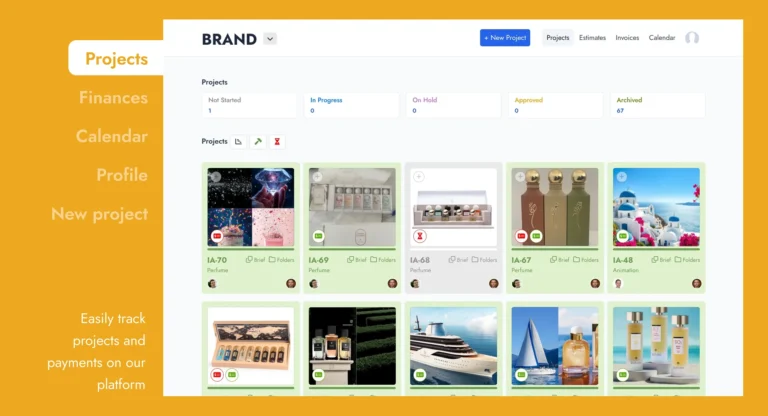
Creating a structured brief on a centralized digital platform helps you clearly communicate your vision and prevents reshoots. When you pair this preparation with a studio’s transparent pricing model, you gain control over your budget.
Here is a streamlined approach to briefing and budgeting:
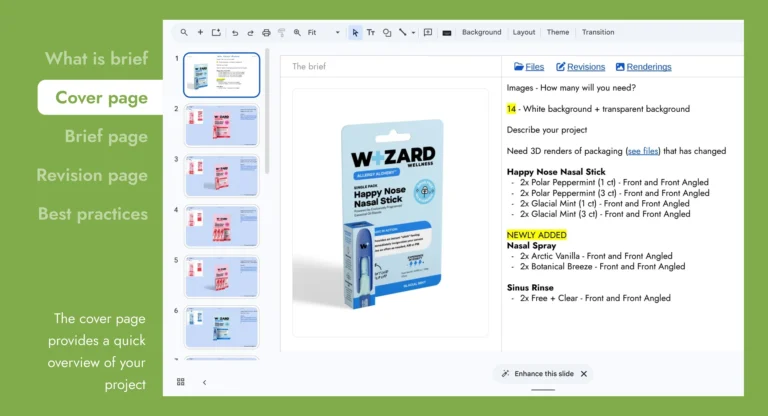
- Organize your brief: Start with a cover page detailing your vision and linking to your files, then create dedicated pages for each product. A three-column layout is highly recommended: place product specifications on the left, a mood board in the center, and detailed requirements on the right.
- Communicate clearly: Detail exactly what products, styles, and angles you need to avoid wasted time. If revisions are necessary, utilize platform tools to draw arrows directly on images, add text annotations, or record your screen using Loom to explain changes.
- Leverage predictable pricing: To prevent hidden fees, work with studios that offer transparent, fixed per-image rates based on complexity, such as €49 for a white background, €99 for a minimalistic style, or up to €299 for custom setups.
- Reuse digital assets to scale: CGI studios typically charge a one-time hourly fee (e.g., €29/hour) to create a 3D model of your product. Because this model is saved in a digital archive, you never have to pay for its creation again, allowing you to affordably order new angles or lighting setups for future campaigns.
Conclusion
Visuals are no longer a “nice-to-have” expense; 93% of consumers state that visual appearance is a key factor in their purchase decision. Investing in high-quality imagery pays off; recent data shows that 66% of marketers using generative and digital tools see a positive ROI of up to 3X. By moving to a CGI-based model, you avoid the “consistency tax” and build a reusable digital asset library that scales with your business.
- 3D modeling
- White bg.
- Minimalistic
- Simple prop
- Custom
- 3D modeling
- White bg.
- Minimalistic
- Simple prop
- Custom
FAQ
What is the average cost of product photography?
Professional rates range from €49 to €299 per image. Total project costs depend on the complexity of the product and the creative style requested.
What does the Welpix service include?
Our service includes 3D modeling, stylized rendering, revisions, and three crop ratios (1:1, 9:16, 16:9) optimized for social media, reels, and YouTube.
Is AI photography better than traditional?
AI is faster and cheaper (<$1), but it suffers from “visual drift” and geometric distortion. CGI remains the superior mid-point for high-fidelity product preservation and long-term catalog consistency.
Why is 3D modeling charged hourly?
Modeling is a labor-intensive technical process. Creating a digital twin for a simple tube takes less time than a complex watch. Charging €29/hour ensures you only pay for the actual time required to build your unique asset.